My article Tourism: A ‘soft' weapon for Chinese hegemony appeared in the Edit Page of The Pioneer.
Here is the link...
While the world talks of Xi's ‘dream', waves after waves of Chinese visitors can suddenly be seen pouring along the Belt and Road. Is Delhi aware of the time bomb at its gates?
A Tibet Work Forum is a conference attended by several hundreds of officials, including the entire politburo, the People’s Liberation Army (PLA), representatives from different Ministries, as well as local satraps; held every five to 10 years, it usually decides the fate of the Roof of the World. The last forum was held in Beijing in 2015, but it is during the previous one in January 2010 that the destiny of Tibet changed, probably forever.
It was then decided to transform Tibet into a paradise for tourists, a Disneyland of Snows, by bringing millions of visitors to the plateau, killing several birds with just one stone.
It would give the People’s Republic of China a good image after the beating it received in the world media following the 2008 unrest on the Roof of the World; Tibetans would be financially better off; they would be ‘occupied’ to entertaining tourists; their heritage would be ‘protected’ and massive infrastructure would be built, keeping an eye on the need of the PLA to ‘defend the borders’ (with India).
The decision once taken, the Chinese propaganda started moving. Chinanews.com, a Government website wrote: “Tibet with its mystery is the spiritual Garden of Eden and is longed by travelers home and abroad. Only by stepping on the snowy plateau, can one be baptised by its splendor, culture, folklore, life, snow mountains, saint mountains, sacred lakes, residences with local characteristics and charming landscape.”
Tibet fast became the largest entertainment park in the world; thousand times larger than Disneyland. The Government in Beijing sold the Land of Snows as the ultimate ‘indigenous’ spot for the Chinese people to spend their holidays, it became Tibet’s Unique Selling Proposition. The leadership in Beijing had found a more sophisticated way to submerge the Tibetan population under waves of Han Chinese.
Tibet’s unique assets were promoted: The beauty of the landscape, the imposing mountain ranges, the purity of the air and the rivers, the dry pure sky (especially when compared to the sky of China’s great metropolis); Tibet is the ideal place to visit and have a break from the fast pace of the polluted Mainland.
The second advantage is the rich historical past of the Roof of the World, the Land of the Lamas. In Tibet, you can find everything, explained the Chinese propaganda: The monasteries and nunneries, seats of a wisdom lost in the mainland; the folkloric yak or snow-lion dances; the beautiful colourful handicrafts; the exotic food, you name it …with a couple of millions of local Tibetans guiding you through the mega-museum.
In 2016, six years after the launch of the scheme, 25 millions Han ‘tourists’ poured in Lhasa and few other places in Central and Southern Tibet.
The Tibet success story gave ideas to the Communist leadership in Beijing; the experiment was worth emulating abroad, even if in a different context; tourism could definitively become the ‘soft’ weapon of the Chinese cultural hegemony in Asia. While the world talks of President Xi Jinping’s ‘dream’, waves, after waves of Chinese visitors can suddenly be seen pouring along the Belt and Road.
Everywhere, the arrival of the Chinese tourists have the same effect, at least in the new Asian Paradises; they help building a much-needed infrastructure for the host country, though in a later stage, they create dependency on the Chinese tourists.
I recently visited Indonesia; the country is not exempt of the new Chinese strategy. By attracting 10 million tourists from China by 2019, the country plans to participate in Xi Jinping'’s ambitious initiative. The latest data from the Indonesian Central Statistics Agency show that 1.43 million Chinese tourists visited Bali in 2016, representing a 25 per cent annual increase over the previous year.
The 10 million-benchmark may be difficult to achieve for the local tourist industry, however, for Indonesia, tourism remains a source of hefty revenue, while for China, it means a presence in South-East Asia. The same scenario can be seen in Nepal, Sri Lanka or the Maldives.
On May 26, Xinhua reported that the Nepal Association of Tour and Travel Agents (NATTA) and China Chamber of Tourism signed a Memorandum of Understanding (MoU) in Kathmandu to promote tourism between the two countries. According to a Press statement, the Chinese side pledged to help in making NATTA’s tourism promotional activities, a success. The NATTA now plans to organise a China sales mission in Chengdu, Guangzhou, Hangzhou and Beijing from June 7-17 in China in coordination with Nepal Tourism Board and Nepali embassy in Beijing.
Once the train will reach Kyirong, at the border between Nepal and Tibet, these plans will take an exponential growth. India may soon have many China towns in its neighbourhood. Is Delhi aware of the time bomb at its gates?
In September 2016, The South China Morning Post quoted a report released by the China Tourism Academy; some 133 million Mainland tourists were to travel abroad in 2016, a figure up to an 11.5 per cent rise on 2015. Traditionally, Hong Kong, Macau and Taiwan were the first choices for Chinese tourists, followed by Thailand, South Korea and Japan. But lately Asian nations such as Nepal, Sri Lanka, Mauritius, or even Bhutan have seen a double-digit growth in arrivals. This trend is bound to grow. This brings the other aspect of mass Chinese tourism.
The Agence France Press (AFP) recently called tourism as China’s new weapon in the economic war; it explains: “Slapping import bans on products like mangoes, coal and salmon has long been China’s way of punishing countries that refuse to toe its political line. But Beijing has shown that it can also hurt others by cutting a lucrative Chinese export, tourism.”
The article quotes the example of South Korea over an US anti-missile shield and the ban on Chinese tour groups from visiting Korea. Similarly, tourism to Taiwan has also fallen sharply as relations across the strait worsened. Countries submitting to China’s demands are rewarded and those who do not ‘behave’ are punished.
Pakistan wants to jump in the bandwagon, earlier this month The Dawn published the ‘hidden’ report on CPEC. One of the chapters speaks about the development of a ‘coastal tourism’ industry; a long belt of coastal enjoyment industry that includes yacht wharfs, cruise homeports, nightlife, city parks, public squares, theaters, golf courses and spas, hot spring hotels and water sports. The report adds: “for the development of coastal vacation products, Islamic culture, historical culture, folk culture and marine culture shall all be integrated.”
This may not happen, but can you imagine if tens of thousands of Chinese tourists start arriving in Gilgit Baltistan, invited by the Islamabad Government. It will mean an International airport in the area, new roads, hotels, entertainment places, etc.
What will Delhi do?
The time has perhaps come to think about this likely eventuality.
Showing posts with label Chinese tourists. Show all posts
Thursday, June 8, 2017
Sunday, January 8, 2017
Cashless 'modern' Tibet
While Indians are struggling with the demonetization scheme introduced by the Narendra Modi Government on November 8, Cashless Tibet is blooming, at least according to Xinhua.
On January 4, the official news agency reported: “While Tibet evokes images of ancient traditions for many tourists, people are discovering they don't have to give up modern conveniences when they travel in the far western region.”
The article cites a tourist from Fujian Province who was able to pay through Alipay at a fast food chain in downtown Lhasa. Xinhua adds: “The restaurant opened in March, and within a month, customers no longer had to pay in cash.”
Alipay.com is a third-party online payment platform launched in 2004 by Alibaba Group and its founder Jack Ma.
A store manager explains: “Mobile payments have not only improved efficiency, but also save tourists a lot of time withdrawing money from the ATM."
For Xinhua, “Going cashless has become the new normal for Tibetans,” adding “restaurants, souvenir shops, and movie theaters all provide online payment services.”
The number of Internet users in Tibet would have reached 1.639 million in March 2016.
According to Alipay, 83.3 percent of payments in Tibet were conducted via mobile phones in 2015, topping the country for four years in a row.
Norbu, a Tibetan who works at the Lhasa branch of the People's Bank of China is quoted as saying: “This year's online transactions rose significantly compared to previous years. Partly because more stores accept online payments, but more importantly, it shows a change in consumption and payment habits among the public in Tibet."
In another article, Xinhua quotes Alibaba's financial branch Ant Financial saying that the company's 2016 annual report shows that 90 percent of online payments in Tibet were made on mobile devices.
It is far higher than in the more developed coastal provinces of China.
China now boasts that due to communication signal coverage, farmers and herdsmen, even the remotest villages in Tibet can use cell phones to purchase daily necessities online.
It is probably an exaggeration.
Xinhua also said that over 80 percent of mobile payment users were born in the 1980s and 1990s. Shigatse Township ranked first in online shopping in Tibet, with consumption per person exceeding 10,000 yuan (1,430 U.S. dollars) for the year. QR codes are used for payment are common in restaurants and shops.
Airlines booming
In the meantime, Chinese statistics, for what they are worth, say that in 2016, the Tibet civil aviation set a new record with more than 4 million passengers flying to Tibet. According to the Tibetan Autonomous Region’s Bureau of Civil Aviation Administration, the number of passengers had crossed 3 millions in December 2014.
The same statistics say the airports have grown from one to five, airline companies increased from one to nine, airline routes from one to 71, cities connections from one to 41 and staff from 16 to more than 2,300.
Wang Zhaojun, head of the TAR's Planning and Statistics Department stated that Tibet has now gained a valuable experience of operation on the plateau.
During the 13th Five Year Plan Period (2016-2020), the airports of Lhasa Gongkar, Nyingtri Mainling and Chamdo Bangda will be ‘reconstructed and expanded’.
I mentioned earlier on this blog, the design of Terminal 3 of Lhasa Gongkar Airport is ready. By 2025, the capacity of the new terminal will be 9 million passenger and 80,000 tons of cargo.
SF Airline should officially launch all-cargo flights from Chengdu to Lhasa in March 2017 “to meet the consumer demand for air cargo transport as the online shopping has become a part of Tibetan people’s lives.”
There is no doubt that Tibet is changing.
Is it for the good? It is another question.
New highway, Lhasa-Nyingtri and Gongkar-Lhasa.
On January 4, the official news agency reported: “While Tibet evokes images of ancient traditions for many tourists, people are discovering they don't have to give up modern conveniences when they travel in the far western region.”
The article cites a tourist from Fujian Province who was able to pay through Alipay at a fast food chain in downtown Lhasa. Xinhua adds: “The restaurant opened in March, and within a month, customers no longer had to pay in cash.”
Alipay.com is a third-party online payment platform launched in 2004 by Alibaba Group and its founder Jack Ma.
A store manager explains: “Mobile payments have not only improved efficiency, but also save tourists a lot of time withdrawing money from the ATM."
For Xinhua, “Going cashless has become the new normal for Tibetans,” adding “restaurants, souvenir shops, and movie theaters all provide online payment services.”
The number of Internet users in Tibet would have reached 1.639 million in March 2016.
According to Alipay, 83.3 percent of payments in Tibet were conducted via mobile phones in 2015, topping the country for four years in a row.
Norbu, a Tibetan who works at the Lhasa branch of the People's Bank of China is quoted as saying: “This year's online transactions rose significantly compared to previous years. Partly because more stores accept online payments, but more importantly, it shows a change in consumption and payment habits among the public in Tibet."
In another article, Xinhua quotes Alibaba's financial branch Ant Financial saying that the company's 2016 annual report shows that 90 percent of online payments in Tibet were made on mobile devices.
It is far higher than in the more developed coastal provinces of China.
China now boasts that due to communication signal coverage, farmers and herdsmen, even the remotest villages in Tibet can use cell phones to purchase daily necessities online.
It is probably an exaggeration.
Xinhua also said that over 80 percent of mobile payment users were born in the 1980s and 1990s. Shigatse Township ranked first in online shopping in Tibet, with consumption per person exceeding 10,000 yuan (1,430 U.S. dollars) for the year. QR codes are used for payment are common in restaurants and shops.
Airlines booming
In the meantime, Chinese statistics, for what they are worth, say that in 2016, the Tibet civil aviation set a new record with more than 4 million passengers flying to Tibet. According to the Tibetan Autonomous Region’s Bureau of Civil Aviation Administration, the number of passengers had crossed 3 millions in December 2014.
The same statistics say the airports have grown from one to five, airline companies increased from one to nine, airline routes from one to 71, cities connections from one to 41 and staff from 16 to more than 2,300.
Wang Zhaojun, head of the TAR's Planning and Statistics Department stated that Tibet has now gained a valuable experience of operation on the plateau.
During the 13th Five Year Plan Period (2016-2020), the airports of Lhasa Gongkar, Nyingtri Mainling and Chamdo Bangda will be ‘reconstructed and expanded’.
I mentioned earlier on this blog, the design of Terminal 3 of Lhasa Gongkar Airport is ready. By 2025, the capacity of the new terminal will be 9 million passenger and 80,000 tons of cargo.
SF Airline should officially launch all-cargo flights from Chengdu to Lhasa in March 2017 “to meet the consumer demand for air cargo transport as the online shopping has become a part of Tibetan people’s lives.”
There is no doubt that Tibet is changing.
Is it for the good? It is another question.
New highway, Lhasa-Nyingtri and Gongkar-Lhasa.
Friday, June 3, 2016
China is getting ready
As the Tibetan Sikyong (Prime Minister) begins his second term with a new Kashag (Cabinet) in Dharamsala, (all of the ministers were approved after a majority vote during the first day session of the 16th Tibetan Parliament), the Chinese Government continues to reinforce its presence on the plateau.
Of course, Beijing does not appreciate much democracy; Foreign Ministry spokesperson Hong Lei reiterated that what he calls the ‘so-called Tibetan government-in-exile’ has no legitimacy; the democratic elections-in-exile are considered by China a ‘political slapstick’.
Nothing new!
We know that Xi Jinping’s regime is not very fond of democracy.
Hong Lei even commented on the ‘separatist political group in India’ (i.e. the Central Tibetan Administration or CTA in Dharamsala) by pointing out that the CTA was not recognized by any country.
The deluge continues
In the meantime and perhaps more critical for the survival of the Tibetan identity, the deluge of Chinese tourists continues in Tibet.
According to Lhasa’s Tourism Bureau, Lhasa received 176,100 tourists during the May Day holiday (April 30-May 2); this represents a year-on-year growth of 11.52 percent. Tourism revenue during this period was 1.1 billion yuans (about 169 million U.S. dollars), up by 18.49 percent compared to the previous year.
Mainland’s travel agencies promote package such as “Three-day tour to Nyingchi for enjoying peach blossoms”, “Three-day tour to Mt. Qomolangma (Everest)”, “One-day tour to Namtso”, etc.
The promotions tell the tourists that they will not only “enjoy beautiful scenery but also visit local families and taste unique Tibetan delicacies.”
With more serious consequence for India, Bayi’s Tourism Bureau announced that the district received more than 174,000 tourists from January to March in 2016, up by 53.23 percent.
Bayi lays just at India’s doors.
Bayi (it translates by ‘8-1’, meaning that the area belongs to the People’s Liberation Army whose anniversary fall on 8-1 or August 1) is located north of Indian border of Arunachal Pradesh.
During the same period, the tourism revenue for the area reached 157 million yuans (about 24.13 million U.S. dollars), a year-on-year increase of 37.3 percent.
Xinhua says “Tourism is developing steadily and rapidly”.
An understatement!
The Chinese government promotes "Pure Land, Beautiful Nyingchi" or the “The Switzerland of Tibet” or the gorges of the Yarlung Tsangpo (Brahmaputra).
Beijing says that the area: “enjoys unique ethnic culture, biological culture and beautiful scenery. Bayi District has developed rural tourism, folk custom tourism and other forms of tourism.”
In the meantime, the Indian Government sticks with its archaic mindset; an antiquated ‘Inner Line Permit’ dating from the Raj still prevails and there is no will to change this in Delhi. India is unable to emulate China (in this field at least).
Infrastructure Development
In order to welcome millions of tourists, the infrastructure has developed at fast pace on the plateau.
On May 23, China Tibet Online asserted: “News World's most beautiful highway, Lhasa-Nyingchi Super Highway”
A spectacular picture is captioned. “Ecology corridor, green gallery, landscape avenue ...stunning scenery of the Lhasa-Nyingchi Super Highway attracts lots of people.”
And of course, the road leads to the Indian border.
Then, China plans a new railway between Chengdu and Lhasa.
The Economist recently wrote: “Plans for a new railway line into Tibet pose a huge technological challenge—and a political one.”
The London-based publication noted: “A COLOSSAL roller-coaster is how a senior engineer described it. He was talking about the railway that China plans to build from the lowlands of the south-west, across some of the world’s most forbidding terrain, into Tibet. Of all the country’s railway-building feats in recent years, this will be the most remarkable: a 1,600-kilometre (1,000-mile) track that will pass through snow-capped mountains in a region racked by earthquakes, with nearly half of it running through tunnels or over bridges. It will also be dogged all the way by controversy.”
The Economist added: “It will be just under half as long again as the existing line to Tibet, but will take three times longer to build. The second line’s estimated cost of 105 billion yuan ($16 billion) is several times more than the first one. Lhasa is about 3,200 metres (10,500 feet) higher than Chengdu, yet by the time the track goes up and down on the way there—crossing 14 mountains, two of them higher than Mont Blanc, Western Europe’s highest mountain—the cumulative ascent will be 14,000 metres.”
It does not seem to be a problem for the Chinese planners.
Once the railway is functional, the ‘Middle Path’ approach of the Dalai Lama will have no meaning as the entire plateau will be integrated to the Mainland and 100 million Chinese tourists will pour into the Roof of the World every year.
Is the new Kashag of Dharamsala aware of this?
Other developments
In parallel to the new railway line, smaller projects are going on.
For example, the Gonggar Railway Station at the Lhasa Airport, now under construction.
Xinhua reported: “At present, station projects of Gonggar Railway Station in Tibet Autonomous Region of the Sichuan-Tibet Railway is stepping up its construction, and expected to be completed by the end of 2016.”
The news agency adds that the new station will be adjacent to 101 Provincial Highway, 15 km distance from Gonggar/Lhasa Airport, “It will provide convenience for many domestic and overseas tourists in and out of Tibet after the completion of the railway station.”
The building of a sophisticated electricity grid is also progressing at fast pace.
According to China Tibet Online: “Key western development projects—the Qinghai-Tibet networking project has been in operation for 5 years, withstanding the cold, low atmospheric pressure, high winds and sand, and other harsh environmental tests. Operations have remained safe and stable, bringing benefits to the people along the ‘bright, heavenly road’ in Qinghai and Tibet.”
The National Grid Qinghai Electric Power Company provided some data: since its inception, the Qinghai-Tibet networking project has already conveyed 3.3billion kW/h to Tibet, equivalent to 416,900 tons of standard coal transport, which is a reduction in carbon emissions of 1.03 mlillion tons.
More interestingly: “The Qinghai-Tibet D.C. power system successfully carried out reverse-carry loads. The Tibet power grid achieved 332 million kW/h of hydropower delivery during the high water level periods, all of which was consumed within Qinghai Province.”
It means that once a few dams, now under construction are operational (particularly on the Yarlung Tsangpo/Brahmaputra), Tibet will be able to supply China with electricity.
The Chinese website further describes the project: “The Qinghai-Tibet networking project is a key western development project. It is also the world’s highest D.C. electricity transmission project and the longest transmission line across frozen ground. Located mostly in a low atmospheric pressure area with a lack of oxygen, cold, high winds, and radioactive hot spots, at an average elevation of 4,500 meters high, the highest elevation point is at 5,300 meters high. More than 900 kilometers of the line are located in areas above 4,000 meters high.”
All this has important strategic implications for India.
Why?
Implications for India
In an article titled “Across China: Heavenly road brings the high life to Tibetan Plateau”, Xinhua explains the reason.
The article is about the Xinjiang-Tibet Highway, known in China as National Highway 219 and in India by his infamous name ‘the Aksai Chin road’. Infamous because the Nehru government took more than 5 years to discover that the PLA had built a road on Indian territory.
Xinhua remarks: “It is the melon season in neighboring Xinjiang Uygur Autonomous Region, fresh fruit is stacked up at the roadside, waiting to be ferried through the Kunlun Mountains and up to the plateau along the Xinjiang-Tibet Highway.”
This road has not only linked the two most strategic (and restive) provinces of China (Tibet and Xinjiang) but also helped to tremendously cut the cost for the occupation Western China by the PLA.
Xinhua takes an example: “Less than a decade ago, a kilogram of melon could sell for 60 yuan (about 10 U.S. dollars) on the plateau.”
It then quotes Zhang Lei, head of an armed police transport detachment stationed in Ritu County along the highway: “Last year the price was just a little over 10 yuan.”
National Highway 219 is built at an average altitude of over 4,500 meters and is the world's highest motorable road.
The Chinese news agency gives a historic background: “Originally covered by gravel in 1950s, the 2,340-kilometer highway was almost fully paved by 2013, slashing the travel time between Yecheng County in southern Xinjiang and Ngari Prefecture in Tibet from 15 days to just one day, with another day to reach Lhasa. Accidents and fatalities also decreased dramatically.”
Song Shibing, chief of a transport police troop, says that the area has seen dramatic changes in the lifestyles of local people: “Back in 2003, he tried to buy an axe from a herdsman for 100 yuan (several times the price of an axe in a shop), but the herdsman refused his money and brandished an empty 5-liter bottle instead. He wanted diesel.”
The article concludes: “The highway today looks to me like an airport runway -- wide, flat and smooth - a heavenly road, indeed.”
It is certainly a great boon for the PLA and China’s border management in general.
Xinhua explains: “With a safe, modern highway, transportation costs from Yecheng to Ngari have fallen by 55 percent, leading to cuts of about 40 percent in the price of commodities in the Tibetan town. Better yet, the number of tourists in Ngari has surged five-fold.”
In other words, the ‘Indian front’ will get its supplies faster and cheaper.
The time has perhaps come for Delhi to wake up and study what is happening on the other side of the LAC.
It is particularly important at a time, when the 2 fronts facing India (in Ladakh and Arunachal) have been merged into one Western Theater Command, greatly improving the management of the borders with India.
A telling image: last week photos of 15th Airborne's Corps exercising in Tibet appeared on the Chinese Net.
A caption says: “a mechanized regiment of 15th Airborne Corps, conducted a battalion size rapid deployment into the Tibetan Plateau. Pictures from this ‘independent action’ exercise.”
China is clearly getting ready.
Watch the 15th Airbone Corps practicing on the plateau.
Of course, Beijing does not appreciate much democracy; Foreign Ministry spokesperson Hong Lei reiterated that what he calls the ‘so-called Tibetan government-in-exile’ has no legitimacy; the democratic elections-in-exile are considered by China a ‘political slapstick’.
Nothing new!
We know that Xi Jinping’s regime is not very fond of democracy.
Hong Lei even commented on the ‘separatist political group in India’ (i.e. the Central Tibetan Administration or CTA in Dharamsala) by pointing out that the CTA was not recognized by any country.
The deluge continues
In the meantime and perhaps more critical for the survival of the Tibetan identity, the deluge of Chinese tourists continues in Tibet.
According to Lhasa’s Tourism Bureau, Lhasa received 176,100 tourists during the May Day holiday (April 30-May 2); this represents a year-on-year growth of 11.52 percent. Tourism revenue during this period was 1.1 billion yuans (about 169 million U.S. dollars), up by 18.49 percent compared to the previous year.
Mainland’s travel agencies promote package such as “Three-day tour to Nyingchi for enjoying peach blossoms”, “Three-day tour to Mt. Qomolangma (Everest)”, “One-day tour to Namtso”, etc.
The promotions tell the tourists that they will not only “enjoy beautiful scenery but also visit local families and taste unique Tibetan delicacies.”
With more serious consequence for India, Bayi’s Tourism Bureau announced that the district received more than 174,000 tourists from January to March in 2016, up by 53.23 percent.
Bayi lays just at India’s doors.
Bayi (it translates by ‘8-1’, meaning that the area belongs to the People’s Liberation Army whose anniversary fall on 8-1 or August 1) is located north of Indian border of Arunachal Pradesh.
During the same period, the tourism revenue for the area reached 157 million yuans (about 24.13 million U.S. dollars), a year-on-year increase of 37.3 percent.
Xinhua says “Tourism is developing steadily and rapidly”.
An understatement!
The Chinese government promotes "Pure Land, Beautiful Nyingchi" or the “The Switzerland of Tibet” or the gorges of the Yarlung Tsangpo (Brahmaputra).
Beijing says that the area: “enjoys unique ethnic culture, biological culture and beautiful scenery. Bayi District has developed rural tourism, folk custom tourism and other forms of tourism.”
In the meantime, the Indian Government sticks with its archaic mindset; an antiquated ‘Inner Line Permit’ dating from the Raj still prevails and there is no will to change this in Delhi. India is unable to emulate China (in this field at least).
Infrastructure Development
In order to welcome millions of tourists, the infrastructure has developed at fast pace on the plateau.
On May 23, China Tibet Online asserted: “News World's most beautiful highway, Lhasa-Nyingchi Super Highway”
A spectacular picture is captioned. “Ecology corridor, green gallery, landscape avenue ...stunning scenery of the Lhasa-Nyingchi Super Highway attracts lots of people.”
And of course, the road leads to the Indian border.
Then, China plans a new railway between Chengdu and Lhasa.
The Economist recently wrote: “Plans for a new railway line into Tibet pose a huge technological challenge—and a political one.”
The London-based publication noted: “A COLOSSAL roller-coaster is how a senior engineer described it. He was talking about the railway that China plans to build from the lowlands of the south-west, across some of the world’s most forbidding terrain, into Tibet. Of all the country’s railway-building feats in recent years, this will be the most remarkable: a 1,600-kilometre (1,000-mile) track that will pass through snow-capped mountains in a region racked by earthquakes, with nearly half of it running through tunnels or over bridges. It will also be dogged all the way by controversy.”
The Economist added: “It will be just under half as long again as the existing line to Tibet, but will take three times longer to build. The second line’s estimated cost of 105 billion yuan ($16 billion) is several times more than the first one. Lhasa is about 3,200 metres (10,500 feet) higher than Chengdu, yet by the time the track goes up and down on the way there—crossing 14 mountains, two of them higher than Mont Blanc, Western Europe’s highest mountain—the cumulative ascent will be 14,000 metres.”
It does not seem to be a problem for the Chinese planners.
Once the railway is functional, the ‘Middle Path’ approach of the Dalai Lama will have no meaning as the entire plateau will be integrated to the Mainland and 100 million Chinese tourists will pour into the Roof of the World every year.
Is the new Kashag of Dharamsala aware of this?
Other developments
In parallel to the new railway line, smaller projects are going on.
For example, the Gonggar Railway Station at the Lhasa Airport, now under construction.
Xinhua reported: “At present, station projects of Gonggar Railway Station in Tibet Autonomous Region of the Sichuan-Tibet Railway is stepping up its construction, and expected to be completed by the end of 2016.”
The news agency adds that the new station will be adjacent to 101 Provincial Highway, 15 km distance from Gonggar/Lhasa Airport, “It will provide convenience for many domestic and overseas tourists in and out of Tibet after the completion of the railway station.”
The building of a sophisticated electricity grid is also progressing at fast pace.
According to China Tibet Online: “Key western development projects—the Qinghai-Tibet networking project has been in operation for 5 years, withstanding the cold, low atmospheric pressure, high winds and sand, and other harsh environmental tests. Operations have remained safe and stable, bringing benefits to the people along the ‘bright, heavenly road’ in Qinghai and Tibet.”
The National Grid Qinghai Electric Power Company provided some data: since its inception, the Qinghai-Tibet networking project has already conveyed 3.3billion kW/h to Tibet, equivalent to 416,900 tons of standard coal transport, which is a reduction in carbon emissions of 1.03 mlillion tons.
More interestingly: “The Qinghai-Tibet D.C. power system successfully carried out reverse-carry loads. The Tibet power grid achieved 332 million kW/h of hydropower delivery during the high water level periods, all of which was consumed within Qinghai Province.”
It means that once a few dams, now under construction are operational (particularly on the Yarlung Tsangpo/Brahmaputra), Tibet will be able to supply China with electricity.
The Chinese website further describes the project: “The Qinghai-Tibet networking project is a key western development project. It is also the world’s highest D.C. electricity transmission project and the longest transmission line across frozen ground. Located mostly in a low atmospheric pressure area with a lack of oxygen, cold, high winds, and radioactive hot spots, at an average elevation of 4,500 meters high, the highest elevation point is at 5,300 meters high. More than 900 kilometers of the line are located in areas above 4,000 meters high.”
All this has important strategic implications for India.
Why?
Implications for India
In an article titled “Across China: Heavenly road brings the high life to Tibetan Plateau”, Xinhua explains the reason.
The article is about the Xinjiang-Tibet Highway, known in China as National Highway 219 and in India by his infamous name ‘the Aksai Chin road’. Infamous because the Nehru government took more than 5 years to discover that the PLA had built a road on Indian territory.
Xinhua remarks: “It is the melon season in neighboring Xinjiang Uygur Autonomous Region, fresh fruit is stacked up at the roadside, waiting to be ferried through the Kunlun Mountains and up to the plateau along the Xinjiang-Tibet Highway.”
This road has not only linked the two most strategic (and restive) provinces of China (Tibet and Xinjiang) but also helped to tremendously cut the cost for the occupation Western China by the PLA.
Xinhua takes an example: “Less than a decade ago, a kilogram of melon could sell for 60 yuan (about 10 U.S. dollars) on the plateau.”
It then quotes Zhang Lei, head of an armed police transport detachment stationed in Ritu County along the highway: “Last year the price was just a little over 10 yuan.”
National Highway 219 is built at an average altitude of over 4,500 meters and is the world's highest motorable road.
The Chinese news agency gives a historic background: “Originally covered by gravel in 1950s, the 2,340-kilometer highway was almost fully paved by 2013, slashing the travel time between Yecheng County in southern Xinjiang and Ngari Prefecture in Tibet from 15 days to just one day, with another day to reach Lhasa. Accidents and fatalities also decreased dramatically.”
Song Shibing, chief of a transport police troop, says that the area has seen dramatic changes in the lifestyles of local people: “Back in 2003, he tried to buy an axe from a herdsman for 100 yuan (several times the price of an axe in a shop), but the herdsman refused his money and brandished an empty 5-liter bottle instead. He wanted diesel.”
The article concludes: “The highway today looks to me like an airport runway -- wide, flat and smooth - a heavenly road, indeed.”
It is certainly a great boon for the PLA and China’s border management in general.
Xinhua explains: “With a safe, modern highway, transportation costs from Yecheng to Ngari have fallen by 55 percent, leading to cuts of about 40 percent in the price of commodities in the Tibetan town. Better yet, the number of tourists in Ngari has surged five-fold.”
In other words, the ‘Indian front’ will get its supplies faster and cheaper.
The time has perhaps come for Delhi to wake up and study what is happening on the other side of the LAC.
It is particularly important at a time, when the 2 fronts facing India (in Ladakh and Arunachal) have been merged into one Western Theater Command, greatly improving the management of the borders with India.
A telling image: last week photos of 15th Airborne's Corps exercising in Tibet appeared on the Chinese Net.
A caption says: “a mechanized regiment of 15th Airborne Corps, conducted a battalion size rapid deployment into the Tibetan Plateau. Pictures from this ‘independent action’ exercise.”
China is clearly getting ready.
Watch the 15th Airbone Corps practicing on the plateau.
Tuesday, March 15, 2016
Tourism Development on the Plateau ... and in Arunachal
![]() |
| Chinese trekkers near Metok |
Xi said: “The ecological environment has irreplaceable value. We should treat it as our lifeline and protect it like the apple of our eye."
He exhorted the delegates to treat environment 'as our lifeline'.
Let us see if the President's words will be followed by acts.
A day later, Xinhua reported that Beijing had ‘poured’ some 3.44 billion U.S. dollars into water conservancy infrastructure in the Tibet Autonomous Region (TAR) during the past five years.
According to ‘local authorities’ of the Water Resources Department, this has benefited about 1.8 million farmers and nomads; it has stabilized grain output, and also ensured safe drinking water and power supply in remote areas.
The ‘local’ statistics are often difficult to check in China.
It was also announced that from 2011 to 2015, the TAR saw its capacity of water supply increase by 700 million cubic meters and some 100,000 hectares of irrigation land had been ‘created or improved’.
Further, 773,000 ‘rural’ residents, students, teachers and monks were provided with clean drinking water while hydropower helped 270,000 people in accessing electricity.
Is it true or just propaganda? It is difficult to say.
Also during the proceedings of the National People’s Congress, officials from Yunnan announced that no new small-scale hydropower plants will be built on the Nu (Salween) River in order to restore the environment.
This is a clear admission that environment has been damaged in the past.
Li Jiheng, Yunnan’s party boss, even spoke of turning the river into ‘China’s Grand Canyon’.
Is it a change of policy? From dams to tourism?
Li told China National Radio: “The Nu River will become a world-level tourism destination in five to 10 years. It will succeed and even surpass the Grand Canyon in the United States.”
The South China Morning Post (SCMP) was more cautious in its approach, “the fate of the country’s last free-flowing river is still unclear as the officials remained tight-lipped on whether they would go ahead with plans to build a series of dams on the upper reaches of the Nu”.
It however confirmed that the Yunnan government will stop exploiting ‘small mines’ and building ‘small hydropower projects’ to help restore vegetation on river banks.
What about larger dams?
For years, environmentalists had pleaded for scrapping plans to construct large dams the river.
Wang Yongchen, an environmentalist, who believes in keeping the natural state of the Nu river, told the SCMP: “Their comments are rather vague and tricky. No one would confirm plans for large dams. They say it’s up to the central leaders if large dams will be built.”
The plans to dam the upper reaches of the Nu had been shelved in 2005 by Wen Jiabao, the Chinese Premier who had expressed concerns for the environment …and the safety of the dams.
Plans were however revived in 2013.
In 2013, the State Council surprised the environmentalists and scientists by mentioning new plans to construct 13 dams on Nu River.
The SCMP says: “Since then, local officials have admitted preparatory work – such as building roads around the planned sites – has started. But no real progress had been made on dam construction so far.”
Scientists have discovered that some 40 per cent of aquatic species have already disappeared from the Nu River, mainly due to human activities such as overfishing, mining and dam construction.
Closer to India
In an earlier post, I mentioned the development on the Yarlung Tsangpo/Siang/Brahmaputra river.
The development in Nyingchi/Nyingtri prefecture, north of the Indian border in Arunachal has critical implications for India.
Nyingchi plans to have an international ecotourism zone during the ‘13th Five-Year Plan’ (2016-2020) in order to receive six million tourists by 2020 …and get a hefty 1.2 $ billion revenue from the Chinese tourists.
According China Tibet Online, Nyingchi will build 10 national-level rural tourism demo villages in the next five years, with more than 20,000 people involved in the tourism industry, adding 70,000 jobs with an average of per capita income increase of 10,000 yuan.
The Chinese figures demonstrate that tourism has become the major force in developing the economy and infrastructure of the area; it is also ‘crucial’ to improve the Tibetan income, says the Plan.
The Chinese website, affiliated to Xinhua, says that in 2015 for the first time, Nyingchi GDP has crossed 10 billion yuan to reach 10.4 billion yuan (1.67 US $ billion), with a growth rate of 11.2%; it is the highest among cities on the plateau.
Some 25% of the prefecture’s revenue comes from tourism: “there were 3.2 million tourists in Nyingchi in 2015, a 20% increase from 2014. Over 5,000 local residents work in tourism, running 219 family inns. Per capita income in the pasturing area surpassed 10,000 yuan for the first time to reach 10,800 yuan, which is 1,600 yuan (258 $) more than the Tibet average,” says the local officials.
Is India sleeping?
On the southern side of the plateau, India seems to be sleeping, busy with mega-cultural events or ‘tolerance’ in the Indian Universities.
While north of the McMahon Line, the number of tourists grows every year by 15% to 20% , the infrastructure south of the McMahon Line is going at snail pace.
Let us not forget that the infrastructure in Tibet can be used by the People’s Liberation Army at any point in time.
China Tibet Online asserts that “the local government began to focus on improving their ability to accommodate the tourists and make the environment sustainable, various measures were introduced, including ecological protection and improvement of the tourism industry to ensure honest practices.”
About improving the environment, this is to be seen.
Though India has just been able to ‘reopen’ two Advanced Landing Grounds in Ziro and Along in Arunachal Pradesh, thereby slightly improving the Indian Air Force's operational capability, still the two ALGs are located far-away from the border.
Air Marshal C. Hari Kumar, Air Officer Commanding-in-Chief, Eastern Air Command announced that "The ALGs will further enhance our existing operational capabilities in Eastern Air Command," adding that the new capacity build-up will enable operations by some of the force's new inductions including the C-130J Super Hercules.
This is good news.
The Air Marshal also asserted that “Besides enhancing air maintenance capability of the IAF in the region, the new airfield will also facilitate civil air connectivity soon.”
![]() |
| North of the McMahon Line |
On the other side of the Line, during the 13th Five Year Plan, “Nyingchi will strengthen the transportation networks via air, rail, highways, and waterways, as well as the building of starred hotels, economy hotels, motels, theme hotels, family inns, and RV parks to diversify the type of accommodations.”
The China Tibet Online further reports: “Last year, fixed investment in Nyingchi reached 16.3 billion yuan. The Lhasa-Nyingchi highway was put in use by the end of 2015, while the Lhasa-Nyingchi railway is also under construction. Renovations of the Lhasa's airport are in full swing. There are now seven direct flights reaching Nyingchi, with possible new routes added from Xi’an, Shanghai, and Xiamen this year. In addition, Mainling Airport could become an international airport with more flights and routes in the future.”
Once again, India is left behind in terms of infrastructure development, though the Army has recently showed its capacity of build ‘environment-friendly’ pontoons on the Yamuna, construction is much slower on the banks of the Subansiri, Dibang or other rivers of Arunachal.
It is truly a national tragedy.
Saturday, March 5, 2016
China prepares the 'after-Dalai Lama' era
China continues to prepare the ‘after-Dalai Lama’ era.
On March 2, Xinhua reported that, a day earlier, Sun Chunlan, a member of the Politburo of the CPC Central Committee and boss of the United Front Work Department dealing with Tibetan affairs, had met Gyaltsen Norbu, the Chinese-selected Panchen Lama in Beijing.
As usual, Sun lauded Norbu’s patriotism and his 'increasing' influence in the Tibetan society.
She asked him to continue “to contribute to national unification and ethnic solidarity.” Norbu was also complimented for his diligence and commitment in Buddhist studies.
Now comes the interesting part.
Xinhua says: “Sun expressed the hope that the Panchen Lama will follow the instructions of the CPC Central Committee's general secretary Xi Jinping during their meeting in June last year and carry forward the fine tradition of his predecessors.”
Why to ‘hope’ only?
Does it mean that it is not a certitude for Beijing?
It appears that with Gyaltsen Norbu, Beijing often ‘hopes’.
Regarding the Panchen Lamas’ ‘fine tradition’ to serve China, it is well-known that of the 10th Panchen Lama revolted against the Party.
See my post Does history always repeat itself?
Norbu replied to Madam Sun that he will “bear in mind the care from the CPC Central Committee and the central government as well as Xi's instructions.”
It is clear that China does not want to put all its eggs in the same basket, by betting everything on 'their' Panchen Lama.
The restoration of Shide monastery
This probably explains why the Communist leadership has decided to 'diversify' its tactics and restore the ancient Shideling (or Shilde) Temple in Lhasa.
Yesterday, China Tibet Online reported that “the Shideling Temple in the heart of Lhasa have long displayed a desolate scene. Now, this thousand-year-old ancient temple will welcome its first major facelift.”
It is clearly a political facelift.
Shide monastery, built during the 9th century, used to be the Lhasa residence of the Reting Rinpoches.
The 5th Reting, one of the two Regents of Tibet died in mysterious circumstances in 1947 in Lhasa.
The Cultural Relics Bureau of the Tibet Autonomous Region (TAR) announced that Beijing plans to ‘invest’ 15 million yuan “in special subsidies from the national cultural relic protection fund for restorations to the ancient Shideling Temple.”
And guess what Shideling will become?
A museum open to the public; in other words, a touristic site for the Chinese wanting to learn the history of Tibet.
Truzhen, a deputy director of the TAR Cultural Relics Bureau, stated that the restorations will use historical photos from the mid-20th century “to maintain the original shape, layout, style, and artistic elements of the temple.”
The Chinese website explains that the buildings and the walls which have been seriously damaged and pose a danger to construction safety, will be torn down and rebuilt and “existing rare murals will be repaired by specially-qualified professionals”.
The project will “not change the original appearance of the cultural relic …[it will be rebuilt] in strict accordance with traditional construction methods, adhering to traditional construction materials, and using multiple methods to ensure the ancient temple will reappear as it did in olden times,” says the official.
The Shide Monastery
It was Reting Rinpoche's Lhasa residence.
Originally, Shide was the name of a monastic community established in Lhasa during the time of King Ralpachen in the 9th century.
In the thirteenth century, the Shide monastic community was appointed caretakers of Ramoche Temple; this lasted till 1842 when the Reting regent was disgraced.
Shide was reestablished in its present location in Lhasa in the mid eighteenth century under the Seventh Dalai Lama.
When the Third Reting became regent in 1845, he restored the monastery which became his seat in Lhasa. The Reting rinpoches belonged to a high-ranking incarnation lineage which could be selected as Regent of Tibet during the minority of the Dalai Lamas.
It is (was) one of five regency seats in Lhasa.
By restoring Shide, the Chinese bank on the 7th Reting Rinpoche, who is 19 now and has started playing a political role at the TAR level.
The China Tibet Online article quoted earlier explains that the fifth Reting served as the regent after the death of the 13th Dalai Lama, “but was persecuted to death after a political struggle. Shideling Temple was not spared, and it fell into ruins.”
Blogger Tsering Woeser who lives in Beijing, but often travels to Tibet mentioned “How was Shideling Destroyed?” in November 2012. A translation appeared on the website High Peaks Pure Earth in March 2013.
Woeser writes: “I have never met the 5th Reting Rinpoche but I have been to Shideling, the place that used to be a Buddhist monastery and was turned into ruins, innumerable times. Therefore I can only sneer at the claim that the other simultaneously reigning Rinpoche, Taktra, sent people to destroy Shideling.”
After interviewing several elderly people,
The blogger dissident continues:
She concludes: “Turning a monastery into a battlefield, a military barrack, a stronghold is more shocking than turning it into a hotel or a storehouse.”
It was however a fact that Shilde was bombarded in 1947.
A museum
Now it will be turned into a Museum for the tourists visiting Lhasa; there is no doubt Beijing’s ‘official’ version of the history of Tibet will be shown.
(Incidentally, 900,000 Chinese tourists visited the Potala last year).
But to come back to the other angle, the 'post-Dalai Lama’ era, the 7th Reting Rinpoche is bound to play a political role.
It is at least what China plans.
After all, they rationale, the 5th Reting was the 14th Dalai Lama’s first tutor.
Why not the 7th Reting becoming the 15th Dalai Lama’s teacher?
It seems a joke, but perhaps, it not for the Communist leaders.
On March 2, Xinhua reported that, a day earlier, Sun Chunlan, a member of the Politburo of the CPC Central Committee and boss of the United Front Work Department dealing with Tibetan affairs, had met Gyaltsen Norbu, the Chinese-selected Panchen Lama in Beijing.
As usual, Sun lauded Norbu’s patriotism and his 'increasing' influence in the Tibetan society.
She asked him to continue “to contribute to national unification and ethnic solidarity.” Norbu was also complimented for his diligence and commitment in Buddhist studies.
Now comes the interesting part.
Xinhua says: “Sun expressed the hope that the Panchen Lama will follow the instructions of the CPC Central Committee's general secretary Xi Jinping during their meeting in June last year and carry forward the fine tradition of his predecessors.”
Why to ‘hope’ only?
Does it mean that it is not a certitude for Beijing?
It appears that with Gyaltsen Norbu, Beijing often ‘hopes’.
Regarding the Panchen Lamas’ ‘fine tradition’ to serve China, it is well-known that of the 10th Panchen Lama revolted against the Party.
See my post Does history always repeat itself?
Norbu replied to Madam Sun that he will “bear in mind the care from the CPC Central Committee and the central government as well as Xi's instructions.”
It is clear that China does not want to put all its eggs in the same basket, by betting everything on 'their' Panchen Lama.
The restoration of Shide monastery
This probably explains why the Communist leadership has decided to 'diversify' its tactics and restore the ancient Shideling (or Shilde) Temple in Lhasa.
Yesterday, China Tibet Online reported that “the Shideling Temple in the heart of Lhasa have long displayed a desolate scene. Now, this thousand-year-old ancient temple will welcome its first major facelift.”
Shide monastery, built during the 9th century, used to be the Lhasa residence of the Reting Rinpoches.
The 5th Reting, one of the two Regents of Tibet died in mysterious circumstances in 1947 in Lhasa.
The Cultural Relics Bureau of the Tibet Autonomous Region (TAR) announced that Beijing plans to ‘invest’ 15 million yuan “in special subsidies from the national cultural relic protection fund for restorations to the ancient Shideling Temple.”
And guess what Shideling will become?
A museum open to the public; in other words, a touristic site for the Chinese wanting to learn the history of Tibet.
Truzhen, a deputy director of the TAR Cultural Relics Bureau, stated that the restorations will use historical photos from the mid-20th century “to maintain the original shape, layout, style, and artistic elements of the temple.”
The Chinese website explains that the buildings and the walls which have been seriously damaged and pose a danger to construction safety, will be torn down and rebuilt and “existing rare murals will be repaired by specially-qualified professionals”.
The project will “not change the original appearance of the cultural relic …[it will be rebuilt] in strict accordance with traditional construction methods, adhering to traditional construction materials, and using multiple methods to ensure the ancient temple will reappear as it did in olden times,” says the official.
The Shide Monastery
It was Reting Rinpoche's Lhasa residence. Originally, Shide was the name of a monastic community established in Lhasa during the time of King Ralpachen in the 9th century.
In the thirteenth century, the Shide monastic community was appointed caretakers of Ramoche Temple; this lasted till 1842 when the Reting regent was disgraced.
Shide was reestablished in its present location in Lhasa in the mid eighteenth century under the Seventh Dalai Lama.
When the Third Reting became regent in 1845, he restored the monastery which became his seat in Lhasa. The Reting rinpoches belonged to a high-ranking incarnation lineage which could be selected as Regent of Tibet during the minority of the Dalai Lamas.
It is (was) one of five regency seats in Lhasa.
By restoring Shide, the Chinese bank on the 7th Reting Rinpoche, who is 19 now and has started playing a political role at the TAR level.
The China Tibet Online article quoted earlier explains that the fifth Reting served as the regent after the death of the 13th Dalai Lama, “but was persecuted to death after a political struggle. Shideling Temple was not spared, and it fell into ruins.”
Blogger Tsering Woeser who lives in Beijing, but often travels to Tibet mentioned “How was Shideling Destroyed?” in November 2012. A translation appeared on the website High Peaks Pure Earth in March 2013.
Woeser writes: “I have never met the 5th Reting Rinpoche but I have been to Shideling, the place that used to be a Buddhist monastery and was turned into ruins, innumerable times. Therefore I can only sneer at the claim that the other simultaneously reigning Rinpoche, Taktra, sent people to destroy Shideling.”
After interviewing several elderly people,
all of whom witnessed and experienced the great changes and great loss that gradually happened after the 1950s”, she could make out the Chinese official version was wrong.According to Woeser:
The monastery was not destroyed during the power struggle between the 2 regents Reting and Taktra, she argues.
a retired cadre Wangchuk La, who was sent to Tsemonling Monastery by his mother to become a monk, told me the following: Shideling Monastery was heavily damaged in March 1959. In the name of ‘putting down a rebellion’, the army of the CCP turned the city of Lhasa into a place of massacre. Monks that were captured at different monasteries were partially locked up at Shideling, including himself. He had witnessed himself how the floor of the Buddhist temple was full of injured bodies, Buddhist statues were also ruined, bent and incomplete.
The blogger dissident continues:
But what really destroyed Shideling was the Cultural Revolution. Back then, there were the ‘Red Guards from the far-away capital’ that started the revolution, the so-called ‘serf emancipation’ vagrants, the Henan Opera Troupes, the local red guards, the pro-Tibetan rebel faction and the working class brothers. They installed a massive tweeter on the highest point of Shideling, turning it into the ‘main rebel’ broadcasting station.She further recounts that she interviewed a former Red Guard:
He said that the broadcasting station was an immensely important propaganda point for the rebel faction. Thereupon Shideling became a battlefield where the different factions attacked and fought with each other. One hand grenade was countered with innumerous machine gun bullets. Once the smoke and fire had vanished, the once 5-storey-high Buddhist Palace was reduced to three storeys. The monks had been running away, were arrested or murdered just in time for the empty rooms to be taken over by the People’s Liberation Army (PLA), subsequently occupying it for many years. Shideling became a barrack, in the same way that Jokhang Temple became the PLA’s pigsty.She says that some CCP intellectuals have now revised history and do not want to mention the Cultural Revolution: “Reting Living Buddha has become a ‘patriot’, and after he was persecuted to death by the ‘Taktra Living Buddha’ under the guidance of the British Imperialists, Shide Dratsang [monastery] was burnt down.”
She concludes: “Turning a monastery into a battlefield, a military barrack, a stronghold is more shocking than turning it into a hotel or a storehouse.”
It was however a fact that Shilde was bombarded in 1947.
![]() |
| The 7th Reting 'blessing' devotees |
A museum
Now it will be turned into a Museum for the tourists visiting Lhasa; there is no doubt Beijing’s ‘official’ version of the history of Tibet will be shown.
(Incidentally, 900,000 Chinese tourists visited the Potala last year).
But to come back to the other angle, the 'post-Dalai Lama’ era, the 7th Reting Rinpoche is bound to play a political role.
It is at least what China plans.
After all, they rationale, the 5th Reting was the 14th Dalai Lama’s first tutor.
Why not the 7th Reting becoming the 15th Dalai Lama’s teacher?
It seems a joke, but perhaps, it not for the Communist leaders.
Thursday, February 25, 2016
100 million Chinese on the Roof of the World
My article 100 million Chinese on the Roof of the World appeared in the Edit Page of The Pioneer.
Here is the link...
Tourism in China not only brings revenue to the regional Government, but also helps to ‘stabilise the plateau'. Unfortunately in India, the Nehruvian approach is still prevalent. Old mindsets need to be changed
The Chinese leadership is clever; much more than its Indian counterpart, at least as far as the defence budget is concerned. Let me explain. In China, large chunks of the expenditures for the border infrastructure development are taken care of by another budget, namely tourism.
The Tibetan Autonomous Region received 20 million Chinese tourists in 2015. Qinghai Province (the most picturesque parts are inhabited by Tibetans) welcomed 23 million visitors. If one adds the Tibetan areas in Gansu, Sichuan and Yunnan Provinces, the number of Chinese visiting the plateau probably reaches around 60 million.
At least three issues explain the infrastructure frenzy in Tibet: The tourism boom, the (in)stability of the restive region and more importantly for India, ‘guarding the border’. Today, China loves Tibet; the Roof of the World has become the new paradise for mainlanders frustrated with the pollution at home. But tourism has also become the pretext for hurriedly constructing roads and airports — leading to India.
According to the Ministry of Environmental Protection, in April 2015, Lhasa was one of the cities with the best air quality in China. The China Daily recently advertised the Roof of the World thus: “Tibet with its mystery is the spiritual Garden of Eden and is longed by travelers home and abroad. Only by stepping on the snowy plateau, can one be baptised by its splendor, culture, folklore, life, snow-mountains, saint mountains, sacred lakes, residences...”
China spends a lot of energy and money on the plateau, but gets quick bucks in return. With one stone, several birds are killed. That is why I am saying that Chinese are clever. Tourism brings tremendous revenues to the regional Government, but it also helps to ‘stabilise the plateau’. In the wake of the 2008 unrest in Tibet, Beijing remains nervous; how to deal with the restless Tibetans?
On September 7, 2015, soon after the grandiose parade to mark the 50th anniversary of the Tibetan Autonomous Region foundation, Mr Yu Zhengsheng, a member of the Standing Committee of the Politburo met a large number of representatives from the People’s Liberation Army and the People’s Armed Police Force posted in Tibet. Mr Yu urged them “to crack down on separatist forces and be ready to fight a protracted battle against the 14th Dalai (Lama) clique.”
Another ‘bird’ killed by tourism is the defence budget. In 2015, Chinese President Mr Xi Jinping reiterated his theory about the ‘border areas’: “To govern a country, we must govern the borders, for governing the borders …we must first make Tibet stable.”
By building infrastructure for tourism, not only can the PAPF reinforcements reach faster any spot of the plateau, but the PLA gets free tunnels, roads, pipelines or airports, as this infrastructure has dual use.
In April 2015, a joint statement from the PLA Air Force and General Administration of Civil Aviation announced the integration of both civilian and military airports, including joint maintenance of airport support facilities, joint flight safety support and joint airport management. The Lhasa Gonggar Airport in Tibet was one of the first two pilot PLA/civil airports in China to officially implement the ‘integration’. The circular further affirmed: “All the civil-military airports will conduct strengthened integration next year."”
But even before making official the ‘integration’, in fact the civilian infrastructure could be used by the PLA…which does not have to disburse a yuan from its budget for getting world-class infrastructure.
Reutersrecently reported that China is likely to announce a large rise in defence spending next month, “as the ruling Communist Party seeks to assuage the military’s unhappiness at sweeping reforms and as worries over the South China Sea and Taiwan weigh on Beijing.” The agency adds: “Military spending last year was budgeted to jump by 10.1 per cent, outpacing slowing, single-digit gross domestic product growth, and another double-digit rise looks set to be announced.”
One source told Reuters that a 30 per cent increase has been mooted by military circles; if one was to include the infrastructure on the Tibet plateau, it may reach this level, though it will not be shown thus.
In the meantime last Friday, Union Minister of State for Home Affairs, Kiren Rijiju, presided over an infrastructure development meeting and reviewed the progress of various road sectors in west Kameng district of Arunachal Pradesh. Mr Rijiju, perhaps the only Minister in the Modi sarkar concerned with border areas, observed that the pre-requisite condition for development of any area depends on its road connectivity: “The progress in the various roads seems to be satisfactory, but it could be accelerated further,” he said.
The problem is that India has to depend on the Border Roads Organisation and various other Government bodies which, to put it mildly, do not have the resources and dynamism of the private sector.
Mr Rijiju spoke of the beautification and promotion of tourism, but it is still a long and cumbersome process to visit many places in Arunachal or Ladakh, as many areas remain ‘restricted’. Incidentally, would it not be the best proof that Arunachal is an integral part of India, if Delhi was quick in granting permission to prospective visitors?
On the plateau, the Chinese leadership does not have all these prejudices; one can safely predict that the tourism growth will continue this year and new records will be broken. What will be the implications for India if 100 million visitors drop on the plateau in 2020? It will certainly bring new headaches to those responsible for India’s security.
One of the areas which will witness a new boom is western Tibet, particularly the area around Mount Kailash. Some 470,000 pilgrims visited the region in 2015; this figure represents a rise of more than 50 per cent from 2013. Beijing believes that tourism can bring a tremendous benefit to western Tibet.
Many historical places in Tibet near the Indian border of Uttarakhand, Himachal and Ladakh (for example, Tholing, Tsaparang, Rutok) are soon to be developed. In November 2014, Xinhua announced that Beijing had approved the plan for a Lhasa to Nyingchi section of the Sichuan-Tibet railway which will run 402 km from Nyingchi and join the Lhasa-Shigatse line. This will definitively help, if China decides to construct large hydropower projects, particularly in the Great Bend of the Yarlung Tsangpo/Brahmaputra.
Other sections of the 1,629-kilometer Sichuan-Tibet railway between Chengdu and Lhasa will start in 2016. In 2020, the railway will also reach the Kyirong landport at the Nepal border; then Chinese tourists and goods will start pouring into Nepal via Shigatse. Nepal will also turn towards Tibet for the supply of essential commodities.
It is not only a question of being cleverer; the old mindset needs to change in India; unfortunately the Nehruvian approach (‘let the border areas remain unspoiled’) is still prevalent in many circles. Ecotourism can help these regions to develop, while remaining stunningly beautiful.
Here is the link...
Tourism in China not only brings revenue to the regional Government, but also helps to ‘stabilise the plateau'. Unfortunately in India, the Nehruvian approach is still prevalent. Old mindsets need to be changed
The Chinese leadership is clever; much more than its Indian counterpart, at least as far as the defence budget is concerned. Let me explain. In China, large chunks of the expenditures for the border infrastructure development are taken care of by another budget, namely tourism.
The Tibetan Autonomous Region received 20 million Chinese tourists in 2015. Qinghai Province (the most picturesque parts are inhabited by Tibetans) welcomed 23 million visitors. If one adds the Tibetan areas in Gansu, Sichuan and Yunnan Provinces, the number of Chinese visiting the plateau probably reaches around 60 million.
At least three issues explain the infrastructure frenzy in Tibet: The tourism boom, the (in)stability of the restive region and more importantly for India, ‘guarding the border’. Today, China loves Tibet; the Roof of the World has become the new paradise for mainlanders frustrated with the pollution at home. But tourism has also become the pretext for hurriedly constructing roads and airports — leading to India.
According to the Ministry of Environmental Protection, in April 2015, Lhasa was one of the cities with the best air quality in China. The China Daily recently advertised the Roof of the World thus: “Tibet with its mystery is the spiritual Garden of Eden and is longed by travelers home and abroad. Only by stepping on the snowy plateau, can one be baptised by its splendor, culture, folklore, life, snow-mountains, saint mountains, sacred lakes, residences...”
China spends a lot of energy and money on the plateau, but gets quick bucks in return. With one stone, several birds are killed. That is why I am saying that Chinese are clever. Tourism brings tremendous revenues to the regional Government, but it also helps to ‘stabilise the plateau’. In the wake of the 2008 unrest in Tibet, Beijing remains nervous; how to deal with the restless Tibetans?
On September 7, 2015, soon after the grandiose parade to mark the 50th anniversary of the Tibetan Autonomous Region foundation, Mr Yu Zhengsheng, a member of the Standing Committee of the Politburo met a large number of representatives from the People’s Liberation Army and the People’s Armed Police Force posted in Tibet. Mr Yu urged them “to crack down on separatist forces and be ready to fight a protracted battle against the 14th Dalai (Lama) clique.”
Another ‘bird’ killed by tourism is the defence budget. In 2015, Chinese President Mr Xi Jinping reiterated his theory about the ‘border areas’: “To govern a country, we must govern the borders, for governing the borders …we must first make Tibet stable.”
By building infrastructure for tourism, not only can the PAPF reinforcements reach faster any spot of the plateau, but the PLA gets free tunnels, roads, pipelines or airports, as this infrastructure has dual use.
In April 2015, a joint statement from the PLA Air Force and General Administration of Civil Aviation announced the integration of both civilian and military airports, including joint maintenance of airport support facilities, joint flight safety support and joint airport management. The Lhasa Gonggar Airport in Tibet was one of the first two pilot PLA/civil airports in China to officially implement the ‘integration’. The circular further affirmed: “All the civil-military airports will conduct strengthened integration next year."”
But even before making official the ‘integration’, in fact the civilian infrastructure could be used by the PLA…which does not have to disburse a yuan from its budget for getting world-class infrastructure.
Reutersrecently reported that China is likely to announce a large rise in defence spending next month, “as the ruling Communist Party seeks to assuage the military’s unhappiness at sweeping reforms and as worries over the South China Sea and Taiwan weigh on Beijing.” The agency adds: “Military spending last year was budgeted to jump by 10.1 per cent, outpacing slowing, single-digit gross domestic product growth, and another double-digit rise looks set to be announced.”
One source told Reuters that a 30 per cent increase has been mooted by military circles; if one was to include the infrastructure on the Tibet plateau, it may reach this level, though it will not be shown thus.
In the meantime last Friday, Union Minister of State for Home Affairs, Kiren Rijiju, presided over an infrastructure development meeting and reviewed the progress of various road sectors in west Kameng district of Arunachal Pradesh. Mr Rijiju, perhaps the only Minister in the Modi sarkar concerned with border areas, observed that the pre-requisite condition for development of any area depends on its road connectivity: “The progress in the various roads seems to be satisfactory, but it could be accelerated further,” he said.
The problem is that India has to depend on the Border Roads Organisation and various other Government bodies which, to put it mildly, do not have the resources and dynamism of the private sector.
Mr Rijiju spoke of the beautification and promotion of tourism, but it is still a long and cumbersome process to visit many places in Arunachal or Ladakh, as many areas remain ‘restricted’. Incidentally, would it not be the best proof that Arunachal is an integral part of India, if Delhi was quick in granting permission to prospective visitors?
On the plateau, the Chinese leadership does not have all these prejudices; one can safely predict that the tourism growth will continue this year and new records will be broken. What will be the implications for India if 100 million visitors drop on the plateau in 2020? It will certainly bring new headaches to those responsible for India’s security.
One of the areas which will witness a new boom is western Tibet, particularly the area around Mount Kailash. Some 470,000 pilgrims visited the region in 2015; this figure represents a rise of more than 50 per cent from 2013. Beijing believes that tourism can bring a tremendous benefit to western Tibet.
Many historical places in Tibet near the Indian border of Uttarakhand, Himachal and Ladakh (for example, Tholing, Tsaparang, Rutok) are soon to be developed. In November 2014, Xinhua announced that Beijing had approved the plan for a Lhasa to Nyingchi section of the Sichuan-Tibet railway which will run 402 km from Nyingchi and join the Lhasa-Shigatse line. This will definitively help, if China decides to construct large hydropower projects, particularly in the Great Bend of the Yarlung Tsangpo/Brahmaputra.
Other sections of the 1,629-kilometer Sichuan-Tibet railway between Chengdu and Lhasa will start in 2016. In 2020, the railway will also reach the Kyirong landport at the Nepal border; then Chinese tourists and goods will start pouring into Nepal via Shigatse. Nepal will also turn towards Tibet for the supply of essential commodities.
It is not only a question of being cleverer; the old mindset needs to change in India; unfortunately the Nehruvian approach (‘let the border areas remain unspoiled’) is still prevalent in many circles. Ecotourism can help these regions to develop, while remaining stunningly beautiful.
Thursday, February 18, 2016
100 million Chinese on the Roof of the World
This blog has often mentioned the infrastructure development on the Tibetan plateau.
To give a few examples:
- Airport infrastructure on the Tibetan Plateau
- The train to Shigatse
- The new railway line to Kyirong
- The new railway line to Nyingchi/Nyingtri
- The 4-way lane to Nyingchi
- The forthcoming Sichuan-Tibet railway line
- 'Comprehensive' infrastructure development on the Roof of the World
- China loves Tibet: 60 million visitors in 2015
At least three issues explain the infrastructure frenzy on the plateau: (in)stability of the restive region, mega-boom of tourism and as importantly, ‘guarding’ the border with India.
Though it is rarely mentioned in the Chinese media, one could add the exploitation of the natural resources of the plateau (like water and minerals).
(i) Tibet: a Paradise for TouristsThe main pretext for rapidly developing infrastructure has been tourism. According to the Ministry of Environmental Protection, in April 2015, Lhasa was one of the cities with the best air quality in China. The ministry compiled air quality data from 74 major cities. Seven of them, including Lhasa, have met the national standards for best air quality for five main pollutants.
The China Daily recently advertized the Roof of the World thus: “Tibet with its mystery is the spiritual Garden of Eden and is longed by travelers home and abroad. Only by stepping on the snowy plateau, can one be baptized by its splendor, culture, folklore, life, snow-mountains, saint mountains, sacred lakes, residences with local characteristics and charming landscape.”
Why should China spend so much time and energy on Tibet if there was not a quick return?
Tourism brings tremendous revenues to the regional government.
(ii) Stability of the PlateauIn the wake of the 2008 unrest in Tibet, Beijing is nervous.
On September 7, 2015, soon after the grandiose parade to mark the 50th anniversary of the foundation of the Tibetan Autonomous Region (TAR), Yu Zhengsheng, CPPCC chairman, who was the chief guest, met a large number of representatives from the PLA and the People’s Armed Police Force (PAPF) posted in Tibet.
Yu urged the army, the police and the judicial staff “to crack down on separatist forces and be ready to fight a protracted battle against the 14th Dalai clique.”
Yu also asked the defence forces “to improve their abilities of governing Tibet according to law [sic], specifically cracking down on the separatist forces, strengthening social management and protecting the people's rights.”
He also spoke of the stability of the border areas, a leitmotiv of the Chinese leadership’s discourse.
For all this, infrastructure is crucial.
(iii) Defending the BorderThough borders are often mentioned in the Chinese media, during the Tibet Work Forum, Xi reiterated his theory about the ‘border areas’; he said that “a series of strategies that have been in effect during the 60-plus years of governing Tibet," he then cited the theory that "governing border areas is the key for governing a country, and stabilizing Tibet is a priority for governing border areas.”
This speaks for itself.
Though it is rarely mentioned in the Chinese media, one could add the exploitation of the natural resources of the plateau (like water and minerals), also explains the 'frenzy'.
60 millions in 2015 and then?
Looking at incomplete Chinese statistics, one can deduct that 60 millions Chinese mainlanders, visited the TAR and the surrounding 'Tibet-inhabited' areas of Sichuan, Gansu, Qinghai and Yunnan in 2015.
One can predict that the tourism boom will continue in 2016 and new records will be broken.
What will be the implications for India if 100 millions drop by, on the plateau in 2020?
Implications for India
A hundred millions Chinese on the Tibet plateau is a lot.
It can only bring new security concerns to India.
First and foremost, the development of the above mentioned infrastructure will be greatly boosted and let us not forget that infrastructure in China has dual use (civilian and military).
Passing from 60 to 100 million will definitively have serious consequences for the last two issues mentioned above, namely the ‘stability’ of the plateau and the ‘defence of the borders’.
The fast development of Western Tibet (Ngari) and Nyingchi/Nyingtri area will put pressure on India’s borders in Ladakh and Arunachal respectively.
• Development of Western TibetJust take the area around Mount Kailash and Lake Mansarovar.
Some 470,000 pilgrims visited the region in 2015.
The Chinese propaganda says: “For pilgrims, circling either site is a great honor and the fulfillment of a lifelong desire. Tibetan Buddhists believe that features such as mountains and lakes are living entities and are born in a certain year of the animal zodiac. …They believe the journey will wash away the sins of one lifetime and bring prosperity.”
The figure of 470,000 tourists represents a rise of more than 50 percent from 2013. Some 30,000 are foreign tourists (Nepal, India, etc).
in 2014, Deng Xiaogang, the TAR Deputy Party Secretary (responsible for the law and order, security and police in the TAR) visited Ngari Prefecture for several months. The objective of his visit was probably to survey future developments in the area.
Tourism can give a tremendous boost to the region; first around Shigatse and then in the vicinity of the new landport with Nepal, in Kyirong.
More remote places near the Indian border (Tholing, Tsaparang, Rutok, Ngari for example) will be developed.
This, of course, poses serious security problems to India, mainly due to the proximity of the border of Uttarakhand, Himachal Pradesh and Ladakh.
• Development of Nyingchi/Nyingtri areaIn November 2014, Xinhua announced that the National Development and Reform Commission had approved the plan for a Lhasa to Nyingchi section of the Sichuan-Tibet railway which will run 402 km from Nyingchi to Xierong, a stop on the Lhasa-Shigatse line.
Xinhua said that the project will cost 36.6 billion yuan (6 billion US dollars); it will take seven years to complete (2021). The line is designed for a speed of 160 km per hour for passenger trains.
The cargo capacity will be 10 million tons per year.
The tourism boom will then take much larger proportions than today.
One can imagine the strategic implications of the new railway line reaching right to the Arunachal borders.
Another implication is that it will greatly help the construction of large hydropower projects and why not a mega one in the Great Bend of the Yarlung Tsangpo/Brahmaputra.
• Railway to Kyirong and NepalWhat will be the consequences of the larger inflow of tourists in Nepal?
Economically, the new border infrastructure in Kyirong will undoubtedly benefit both sides, Tibet and Nepal.
Chinese tourists and goods have started pouring into Nepal through the Lhasa-Shigatse railway line and then the highway between Shigatse and Kyirong (a branch of the highly-strategic G219 highway linking Tibet to Xinjiang, i.e. the Aksai Chin Road).
After 2020, the railway line to Kyirong will be extensively used to link Nepal to the plateau. Already in 2014, a Chinese website announced that the Kyirong Port would be built into a tourist destination.
Nepal could also turn towards Tibet/China for the supply of essential commodities, which will be in demand with the increasing arrival of Chinese tourists.
The earthquake earlier in April 2015 delayed the operations of the land port, however, The South China Morning Post reported that China has already provided fuel to Nepal via Kyirong ‘amid undeclared blockade by India’.
Quoting Agence France-Presse (AFP) in Kathmandu, the article says: “China will supply Nepal with 1.3 million litres of fuel to ease crippling shortages after protests over a new constitution blocked imports from India.”
With lakhs of Chinese tourists overflowing into Nepal, China towns are bound to appear in Nepal’s major cities.
A similar could phenomenon could be witnessed in Bhutan though on a much smaller scale as no border post exist between Tibet and Bhutan.
• Tourism needs energy.Mass tourism demands large amounts of energy and generates large quantities of solid waste. Where to get this energy from?
Probably by damming the rivers and further damaging the environment.
The rapid infrastructure development will however facilitate the energy production and transportation.
Large dams have serious implications for India, with India’s Indus, Brahmaputra, Ganga and other rivers having their sources on the plateau. India cannot be indifferent to what happens to the Tibetan rivers.
The problem of disposal of solid waste is also an unsolved issue. It is further compounded by the cold climate of the plateau.
• Development of restive areas in 'Tibetan-inhabited' areas of Gansu, Sichuan, Yunnan and QinghaiThough not directly connected to the Indian border, the development of a network of ‘support’ infrastructure in the Tibetan-inhabited areas can be of great help to China in case of conflict.
Apart from the string of airports mentioned above, the construction of a 1,629-kilometer Sichuan-Tibet railway, which will start in 2016, could be game changer.
The railway will be connecting Lhasa to Chengdu. The railway line will run for some 1,000 km on the Tibetan plateau and come close to the Indian border in its central sector.
Like the Qinghai-Tibet railway, it will bring tens of millions of Chinese tourists on the plateau.
• The establishment of the Theater CommandBeijing has recently created five Theater Commands or Combat Zones. Interestingly, the plateau now comes under one Theater Command only and not two Military Area Commands (Chendgu and Lanzhou) as in the past.
On commentary on China Military Online explained: “The deployment and command system of the five Theater Commands is designed to target head-on strategic threats. The new Theater Commands will attack proactively once a war broke out instead of passively waiting for defending the enemy at home. After the new military services system is established, the reshuffled Theater Commands system can … build the joint operational commanding institutions that are more suitable for modern warfare.”
Among other things, the new ‘reforms’ and the creation of the Western Theater Command will greatly facilitate the infrastructure development on the plateau.
This will be done in parallel with the tourism boom which will provide the necessary backbone not only in terms of roads and airports, but also hydropower plants, electricity grids, pipelines, optical fiber cables, radars, weather stations, etc.
• EnvironmentBecause tourism is the main source of revenue for the local populations on the Tibetan plateau, very few dare to question this ‘hot topic’, unless, like in the case of Uttarakhand in June 2013, a natural disaster put the development of mass tourism in a fragile mountain ecosystem, into serious question.
In the Tibetan plateau, the Communist leadership only sees the huge revenues pouring into the coffers of the local governments.
Who is interested to look at the consequences of bringing 100 million visitors on the Roof of the World?
For environmentalists, mass tourism is however the best (and the quickest) way to destroy the environment of an area as it demands large amounts of energy and generates a big quantity of solid waste. At the same time, it can’t be denied that it brings revenues to the local economy and communities.
It has also implications for India as, if climatic changes occur on the plateau, the Indian monsoon system will be affected and the populations of the Himalayan belt will be the first to suffer.
The Disneyfication of Land of Snows will not come as a free meal for the plateau and the neighbouring states.
But who is interested by this?
India should.
Friday, February 5, 2016
China loves Tibet: 60 million visitors in 2015
Xinhua brought out a rather surprising news report this week: the Qinghai province received a record 23 million tourists in 2015, up 15.5 percent compared to the previous year (most of them visited tourist spot on the plateau).
According to the provincial tourism bureau in Lhasa, the influx of tourists has generated a revenue worth 25 billion yuan (3.8 billion U.S. dollars), up 22.8 percent from 2014.
The Chinese News Agency explained that: “The province held a number of festivals targeting winter tourists in 2015 and marketed new travel packages.”
Zhang Yan, a deputy director in Tibet's Tourism Bureau added: “Spring and winter tourism in Qinghai grew over 20 percent every year during the last five years, with tourism revenue up 30 percent on average every year."
Xinhua asserted that China’s northwestern province has witnessed a rapid tourism growth, the number of tourists increased from less than 4 million a decade ago to 23 million in 2015.
If one adds the number of tourists who visited the Tibetan Autonomous Region (TAR), it comes to 44 millions (Tibetan areas in Yunnan, Sichuan and Gansu should be added to this figure).
Again according to Xinhua, Tibet welcomed a record 20 million tourists in 2015. It was officially announced during the ‘Two Sessions’, i.e. the meeting of the Regional People’s Congress and the Consultative Political Conference held last week in Lhasa.
Tourism industry in the TAR generated 28 billion yuan (4.26 billion U.S. dollars) in 2015, nearly three times the figure of 2010.
Lhasa, the Tibet’s capital alone saw its tourism revenue triple over the past five years to an estimated 15.49 billion yuan in 2015. The number of tourists visiting the capital rose to 11.79 million in 2015, a 23 percent increase compared to 2014.
Lhasa’s tourism revenue during the first 10 months of 2015 reached 1.52 billion yuan, a 38.16 percent rise compared to the same period of 2014.
Various activities and festivals such as Princess Wencheng’s Opera, Tourism and Culture Expo were held in Lhasa, attracting millions of tourists from the mainland.
And the air is still pure, the sky is still blue, the Kyi chu river still clean.
Isn’t it attractive for a mainlander?
Now, take the case of Metok County, located near the Indian border (Upper Siang of Arunachal). This small country, with a population of hardly 11,000 inhabitants received over 70,000 visitors in 2015. Can you believe it?
China Tibet Online noted that during the last two years, since a highway reached the village of Metok “tourism industry has seen rapid development”. In 2015, Metok officially welcomed some 70,800 tourists. For the first time in 2014, the authorities of the county started selling tickets for entrance to its scenic areas; in 2015, total ticket sales have exceeded 5 million yuan.
China Tibet Online said that the local Tourism Bureau has created a self-driving route outside of the original scenic area; it is about 164 kilometers in length (starting from Zhamo Highway to Beibeng Township).
The propaganda invites the Chinese tourists to see the Galongla Waterfall, the wonder of Swallow Pond, the Metok Waterfalls, the Menba suspended tower and other scenic sites, “as well as ‘plant fossil’ spinulosa trees and other such thousands of kinds of plants and animals.”
The potential tourists in China are told that Metok “is famous for its natural ecology and highland tropical climate. The drop in elevation here is huge, with both brilliant snow mountains and tropical and subtropical plants existing side-by-side, and it is knows as a hiker’s paradise.”
I wonder how many Indian tourists are allowed to Tuting/Geling in Upper Siang district of Arunachal Pradesh. Metok is located just north of these villages on the Yarlung Tsangpo river (the river becomes the Siang in Arunachal and later the Brahmaputra in Assam).
Would it not be the best way for the Government of India to demonstrate that Arunachal is part of India?
But the local politicians and babus are busy in other games right now.
China Tibet Online remarked that in Metok, the tourists enjoy “the mysterious and unique cultures of the local Menba and Lhoba minorities.”
Before the opening of a tunnel in October 2013, Metok was ‘the last county in China not accessible by a highway’.
And the trend is going to continue.
A few weeks ago, it was announced that by 2020, Lhasa will become the only international tourist city on the Qinghai-Tibet Plateau.
China News Service reported that the decision was taken during the Lhasa Tourism Development Conference held on December 28.
According to the plan, from 2016 to 2020 Lhasa will receive 24 million domestic tourists (an annual increase of 15 percent), as well as 300,000 international tourists (an annual increase of 20 percent).
The total revenue from tourism is expected to exceed 30 billion yuan (4.6 billion U.S. dollars), accounting for more than 40 percent of Lhasa's GDP.
The Chinese authorities have now decided to accelerate the construction of infrastructure and develop high-end tourism brands. During the 13th Five-Year Plan (2016-2020), Lhasa will invest 100 billion yuan (15.42 billion U.S. dollars) for the purpose. Tibet’s capital will further ‘vigorously’ develop an online souvenir sales network.
China News Service further affirmed that Lhasa could also benefit from the ‘One Belt One Road’ opportunities from the Bangladesh-China-India-Myanmar (BCIM) Economic Corridor.
Has India has been informed of the project?
Probably not!
Lhasa would also like to join the World Tourism Cities Federation and the Asia-Pacific Tourism Association and build duty-free shops at the airport and in the city center to develop itself into China’s major tourism hub to South Asia.
Once again, has India been informed?
As mentioned a few days ago on this blog, a second international airport is being planned near Lhasa.
Incidentally China Tibet News reported that the passenger traffic on the Qinghai-Tibet railway hit 11.934 million in 2015, rising by 3.885 million passengers from 2014.
The growing rate reached 48.3%, hitting a new record.
The Chinese website added: "In 2015, tourism in Qinghai and Tibet grows dramatically. Qinghai-Tibet railway company seized the new opportunity and took a series of effective measures to improve its passenger traffic capability.
The company added 2,422 passenger trains, 2,992 additional coaches and 1.73 million seats."
No foreign tourists in Tibet
In the meantime, according to phayul.com, the Chinese government has announced that the TAR will be closed to all foreign travelers “from February 25, days ahead of some politically sensitive anniversaries including the 2008 March uprising that rocked the plateau in the run up to Beijing Olympics.”
Phayul.com quotes a post of tripadvisor: “the entire TAR will be closed from February 25 to March 30 with the authorities issuing a notice to all major cities and counties that all foreign visitors must leave the region by the deadline.”
But do the Chinese authorities really need foreign travelers?
Probably only for the sake of showing a ‘normal’ image of China!
Taking in account the tourists visiting Tibetan areas in Yunnan, Gansu and Sichuan provinces, probably 60 millions of visitors go to Tibet in a single year.
It is a lot.
Does it mean that the Chinese love Tibet?
Probably!
As the Chinese propaganda puts it: “Tibet with its mystery is the spiritual Garden of Eden and is longed by travelers home and abroad. Only by stepping on the snowy plateau, can one be baptized by its splendor, culture, folklore, life, snow mountains, saint mountains, sacred lakes, residences with local characteristics and charming landscape.”
According to the provincial tourism bureau in Lhasa, the influx of tourists has generated a revenue worth 25 billion yuan (3.8 billion U.S. dollars), up 22.8 percent from 2014.
The Chinese News Agency explained that: “The province held a number of festivals targeting winter tourists in 2015 and marketed new travel packages.”
Zhang Yan, a deputy director in Tibet's Tourism Bureau added: “Spring and winter tourism in Qinghai grew over 20 percent every year during the last five years, with tourism revenue up 30 percent on average every year."
Xinhua asserted that China’s northwestern province has witnessed a rapid tourism growth, the number of tourists increased from less than 4 million a decade ago to 23 million in 2015.
If one adds the number of tourists who visited the Tibetan Autonomous Region (TAR), it comes to 44 millions (Tibetan areas in Yunnan, Sichuan and Gansu should be added to this figure).
Again according to Xinhua, Tibet welcomed a record 20 million tourists in 2015. It was officially announced during the ‘Two Sessions’, i.e. the meeting of the Regional People’s Congress and the Consultative Political Conference held last week in Lhasa.
Tourism industry in the TAR generated 28 billion yuan (4.26 billion U.S. dollars) in 2015, nearly three times the figure of 2010.
Lhasa, the Tibet’s capital alone saw its tourism revenue triple over the past five years to an estimated 15.49 billion yuan in 2015. The number of tourists visiting the capital rose to 11.79 million in 2015, a 23 percent increase compared to 2014.
Lhasa’s tourism revenue during the first 10 months of 2015 reached 1.52 billion yuan, a 38.16 percent rise compared to the same period of 2014.
Various activities and festivals such as Princess Wencheng’s Opera, Tourism and Culture Expo were held in Lhasa, attracting millions of tourists from the mainland.
And the air is still pure, the sky is still blue, the Kyi chu river still clean.
Isn’t it attractive for a mainlander?
Now, take the case of Metok County, located near the Indian border (Upper Siang of Arunachal). This small country, with a population of hardly 11,000 inhabitants received over 70,000 visitors in 2015. Can you believe it?
China Tibet Online noted that during the last two years, since a highway reached the village of Metok “tourism industry has seen rapid development”. In 2015, Metok officially welcomed some 70,800 tourists. For the first time in 2014, the authorities of the county started selling tickets for entrance to its scenic areas; in 2015, total ticket sales have exceeded 5 million yuan.
China Tibet Online said that the local Tourism Bureau has created a self-driving route outside of the original scenic area; it is about 164 kilometers in length (starting from Zhamo Highway to Beibeng Township).
The propaganda invites the Chinese tourists to see the Galongla Waterfall, the wonder of Swallow Pond, the Metok Waterfalls, the Menba suspended tower and other scenic sites, “as well as ‘plant fossil’ spinulosa trees and other such thousands of kinds of plants and animals.”
The potential tourists in China are told that Metok “is famous for its natural ecology and highland tropical climate. The drop in elevation here is huge, with both brilliant snow mountains and tropical and subtropical plants existing side-by-side, and it is knows as a hiker’s paradise.”
I wonder how many Indian tourists are allowed to Tuting/Geling in Upper Siang district of Arunachal Pradesh. Metok is located just north of these villages on the Yarlung Tsangpo river (the river becomes the Siang in Arunachal and later the Brahmaputra in Assam).
Would it not be the best way for the Government of India to demonstrate that Arunachal is part of India?
But the local politicians and babus are busy in other games right now.
China Tibet Online remarked that in Metok, the tourists enjoy “the mysterious and unique cultures of the local Menba and Lhoba minorities.”
Before the opening of a tunnel in October 2013, Metok was ‘the last county in China not accessible by a highway’.
And the trend is going to continue.
A few weeks ago, it was announced that by 2020, Lhasa will become the only international tourist city on the Qinghai-Tibet Plateau.
China News Service reported that the decision was taken during the Lhasa Tourism Development Conference held on December 28.
According to the plan, from 2016 to 2020 Lhasa will receive 24 million domestic tourists (an annual increase of 15 percent), as well as 300,000 international tourists (an annual increase of 20 percent).
The total revenue from tourism is expected to exceed 30 billion yuan (4.6 billion U.S. dollars), accounting for more than 40 percent of Lhasa's GDP.
The Chinese authorities have now decided to accelerate the construction of infrastructure and develop high-end tourism brands. During the 13th Five-Year Plan (2016-2020), Lhasa will invest 100 billion yuan (15.42 billion U.S. dollars) for the purpose. Tibet’s capital will further ‘vigorously’ develop an online souvenir sales network.
China News Service further affirmed that Lhasa could also benefit from the ‘One Belt One Road’ opportunities from the Bangladesh-China-India-Myanmar (BCIM) Economic Corridor.
Has India has been informed of the project?
Probably not!
Lhasa would also like to join the World Tourism Cities Federation and the Asia-Pacific Tourism Association and build duty-free shops at the airport and in the city center to develop itself into China’s major tourism hub to South Asia.
Once again, has India been informed?
As mentioned a few days ago on this blog, a second international airport is being planned near Lhasa.
Incidentally China Tibet News reported that the passenger traffic on the Qinghai-Tibet railway hit 11.934 million in 2015, rising by 3.885 million passengers from 2014.
The growing rate reached 48.3%, hitting a new record.
The Chinese website added: "In 2015, tourism in Qinghai and Tibet grows dramatically. Qinghai-Tibet railway company seized the new opportunity and took a series of effective measures to improve its passenger traffic capability.
The company added 2,422 passenger trains, 2,992 additional coaches and 1.73 million seats."
No foreign tourists in Tibet
In the meantime, according to phayul.com, the Chinese government has announced that the TAR will be closed to all foreign travelers “from February 25, days ahead of some politically sensitive anniversaries including the 2008 March uprising that rocked the plateau in the run up to Beijing Olympics.”
Phayul.com quotes a post of tripadvisor: “the entire TAR will be closed from February 25 to March 30 with the authorities issuing a notice to all major cities and counties that all foreign visitors must leave the region by the deadline.”
But do the Chinese authorities really need foreign travelers?
Probably only for the sake of showing a ‘normal’ image of China!
Taking in account the tourists visiting Tibetan areas in Yunnan, Gansu and Sichuan provinces, probably 60 millions of visitors go to Tibet in a single year.
It is a lot.
Does it mean that the Chinese love Tibet?
Probably!
As the Chinese propaganda puts it: “Tibet with its mystery is the spiritual Garden of Eden and is longed by travelers home and abroad. Only by stepping on the snowy plateau, can one be baptized by its splendor, culture, folklore, life, snow mountains, saint mountains, sacred lakes, residences with local characteristics and charming landscape.”
Sunday, December 6, 2015
Metok and the tourist boom
Once upon a time Metok used to be the most remote valley of the Tibetan plateau.
This was good for India, whose Upper Siang district is adjoining Metok Dzong (‘dzong’ is 'county' in Tibetan).
But times are changing very fast for Metok, which, according to the last census, had only a population of 11,000 inhabitants .
A few days ago, China Tibet Online announced that Metok “is embracing tourism boom”.
The Chinese website affiliated to Xinhua quoted Zhang Yuhui, executive deputy director of Metok County: "The estimated tourist income in Metok will reach 10 billion yuan (1.6 billion US dollars)” just five years after the country was opened to the rest of the world.
Zhang explained that the commissioning of the road to Metok in 2013, from the ‘isolated island on the plateau’, the country has become one of the most thought-after touristic destinations in Tibet, many visitors 'from far and near' wanting to visit the area.
Metok (‘metok’ meaning ‘flower’ in Tibetan) is located in the lower reaches of Yarlung Tsangpo River, which becomes the Siang and then the Brahmaputra.
China Tibet Online noted: “The remoteness of the location, together with other reasons such as climate and geological condition, and economic development, led to the isolation of the region. Having no roadway linking it to the outside world until the end of 2013, Metok was the last county in China to get its road.”
Two years ago, I had reported the opening of the tunnel and the road on this blog and the grave implications for India.
Today, China Tibet Online praises the beauty of this most strategic area, just north of Geling and Tuting circles of Upper Siang district of Arunachal:
After the road was opened, Metok received 70,000 visitors in 2013; the number of tourists grew to 90,000 in 2014 and it is now estimated that there will be a 50 % growth this year. The country authorities are catering for 130,000 tourists.
Can you believe this?
The Chinese website noted:
The revenues of the county are said to have grown tenfold in two years. Speaking of the local population, Zhang affirmed: “For many of them, running transportation or a family inn has already been part of the future plan”.
The Chinese official knows his lesson: "Our development concept is not to exploit, but to protect. We won’t develop any other tourism projects apart from the necessary traffic and accommodation facilities. No companies will be allowed to undertake the development in principle. Developing high-end tourism will be our aim in order to reduce man-made damages and keep the natural scenery of Metok.”
Whether it is propaganda or not, the recent developments in Metok are flabbergasting and should be a source of serious worry for India, as the Yarlung Tsangpo/Siang/Brahmaputra enters India in Gelling, a few kilometers south of Metok.
To run the show, the county needs electricity.
The same China Tibet Online recently announced the commissioning of the first unit hydropower station, known as ‘Yarang Station’, which was formally synchronized in the grid in November.
The article explained that the Energy Department Demonstrative Grid Project targets areas without electricity: “This marks an end to the severe power shortage history plaguing people of all upbringings in the Metok county region. Following this, Metok County’s people can finally say farewell to the unstable ‘power island’ that they had previously used. The switched over will provide a stable and reliable local power supply.”
The China Huaneng Group is the contractor of the Yarang hydropower station located 15 kilometers to the south west of Chengxi. Initially the plant should provide 5,000 kilowatts electricity, which is not much.
The construction of the run-of-river plant started in December of 2013. More worrying is the fact that the 1,683 meters-long diversion tunnel runs through what the hydro company calls the ‘Great Metok Fracture’.
Let us not forget that this area is one of the most seismically active in the entire Himalayan belt.
The dam company announced that an 'electric power dispatch center' has been built with an integrative intelligent control “it is the first county-level power grid in the country to achieve dispatch, transmission as well as transformation processes equipped with integrative regulation processes."
The construction of the Yarang hydropower station and its line extension engineering project is said to have placed priority on environmental protection and that the construction company has developed a control scheme regarding soil and water loss. Furthermore, within the overall project, the first sewage treatment station in Metok county has also been constructed: “All in all, the plant can achieve long-term operation without any significant pollution emissions,” said the builder.
The Metok county Party boss, named Tashi, explained that originally all of the power stations were small ones, and that the county had always been using a seasonal alternate power supply schemes. He believed that now “instability in the power supply has been ended, the long-term shortages of electricity are solved and therefore in the future residents will lead more productive and convenient lives.”
In 2013, 9 small hydropower stations were completed, along with 12 other mini hydropower stations. But it produced hardly a few MWs; further, added Tashi: “The construction of these power plants was low quality. We had for a long time depended on isolated power networks, and they had frequent equipment failures. Thus the power supply capacity they offer has been historically very poor."
Tibet Huaneng Power’s General Manager, Liu Xingguo confided that the Yarang hydropower station will be the backbone of Metok power grid. By the end of the year, “4 units will be put into full production. …After the completion of the other power plants, it will be possible to meet the needs of all households lacking electrical power.”
But will the quality of the plants be better than the earlier ones?
How to occupy all these tourists?
Xinhua recently announced a first Metok Culture and Tourism Festival held from October 23 to 25: “It attracted tourists from all over the country to enjoy the mystical highland scenery of southeastern Tibet,” said the News Agency, which added: “The area is covered with many outstanding natural beauties, as well as, ancient and unique Monpa and Lhoba [Lopa] culture.”
According to the same Tashi, the theme of the Festival was ‘Auspicious Pema’, ‘Pema’ is lotus in Tibetan and Metok is associated with the mysterious and mystical ‘Pemakoe’, the hidden valley in Tibet where the great Indian guru, Padmasambhava meditated during the 8th century.
The question remains this development should worry India.
It is too close to the McMahon line.
A few pictures of Metok.
This was good for India, whose Upper Siang district is adjoining Metok Dzong (‘dzong’ is 'county' in Tibetan).
But times are changing very fast for Metok, which, according to the last census, had only a population of 11,000 inhabitants .
A few days ago, China Tibet Online announced that Metok “is embracing tourism boom”.
The Chinese website affiliated to Xinhua quoted Zhang Yuhui, executive deputy director of Metok County: "The estimated tourist income in Metok will reach 10 billion yuan (1.6 billion US dollars)” just five years after the country was opened to the rest of the world.
Zhang explained that the commissioning of the road to Metok in 2013, from the ‘isolated island on the plateau’, the country has become one of the most thought-after touristic destinations in Tibet, many visitors 'from far and near' wanting to visit the area.
Metok (‘metok’ meaning ‘flower’ in Tibetan) is located in the lower reaches of Yarlung Tsangpo River, which becomes the Siang and then the Brahmaputra.
China Tibet Online noted: “The remoteness of the location, together with other reasons such as climate and geological condition, and economic development, led to the isolation of the region. Having no roadway linking it to the outside world until the end of 2013, Metok was the last county in China to get its road.”
Two years ago, I had reported the opening of the tunnel and the road on this blog and the grave implications for India.
Today, China Tibet Online praises the beauty of this most strategic area, just north of Geling and Tuting circles of Upper Siang district of Arunachal:
The scenery is marvelous. The place boasts the Yarlung Tsangpo Grand Canyon, the deepest canyon in the world, great waterfalls, luxuriant rainforests, towering snow mountains and the unique one-thousand-year Menluo [Mempa] culture. Enjoying a subtropical humid climate, the tranquil Metok has already inspired people’s imagination for a retreat away from the world.Zhang Yuhui continued: “going to Metok had once been only the privilege of the ‘brave’ before the traffic was improved. After the opening of the road to Metok, self-driving travel became popular apart from hiking. Visitors from various places were attracted to this beautiful place,” while a few kilometers south, visitors still need an Inner Line Permit to visit Upper Siang district.
After the road was opened, Metok received 70,000 visitors in 2013; the number of tourists grew to 90,000 in 2014 and it is now estimated that there will be a 50 % growth this year. The country authorities are catering for 130,000 tourists.
Can you believe this?
The Chinese website noted:
It seems that tourism has already been chosen by Metok as a way to achieve economic development,” adding “people in Metok [used to] depend on crop planting, such as rice and corn, and hunting for their livelihood for thousands of years. This kind of living, though appearing to be a pastoral life in the eyes of an outside, put a heavy burden of poverty on the shoulders of the local people.The article gave the example of bananas which were grown to feed the pigs. Now, with the arrival of the tourists, there is a good market for it. The price raised from two yuan (0.3 US dollars) per jin (half kilo) to five yuan (0.8 US dollars) today.
The revenues of the county are said to have grown tenfold in two years. Speaking of the local population, Zhang affirmed: “For many of them, running transportation or a family inn has already been part of the future plan”.
The Chinese official knows his lesson: "Our development concept is not to exploit, but to protect. We won’t develop any other tourism projects apart from the necessary traffic and accommodation facilities. No companies will be allowed to undertake the development in principle. Developing high-end tourism will be our aim in order to reduce man-made damages and keep the natural scenery of Metok.”
Whether it is propaganda or not, the recent developments in Metok are flabbergasting and should be a source of serious worry for India, as the Yarlung Tsangpo/Siang/Brahmaputra enters India in Gelling, a few kilometers south of Metok.
To run the show, the county needs electricity.
The same China Tibet Online recently announced the commissioning of the first unit hydropower station, known as ‘Yarang Station’, which was formally synchronized in the grid in November.
The article explained that the Energy Department Demonstrative Grid Project targets areas without electricity: “This marks an end to the severe power shortage history plaguing people of all upbringings in the Metok county region. Following this, Metok County’s people can finally say farewell to the unstable ‘power island’ that they had previously used. The switched over will provide a stable and reliable local power supply.”
The China Huaneng Group is the contractor of the Yarang hydropower station located 15 kilometers to the south west of Chengxi. Initially the plant should provide 5,000 kilowatts electricity, which is not much.
The construction of the run-of-river plant started in December of 2013. More worrying is the fact that the 1,683 meters-long diversion tunnel runs through what the hydro company calls the ‘Great Metok Fracture’.
Let us not forget that this area is one of the most seismically active in the entire Himalayan belt.
The dam company announced that an 'electric power dispatch center' has been built with an integrative intelligent control “it is the first county-level power grid in the country to achieve dispatch, transmission as well as transformation processes equipped with integrative regulation processes."
The construction of the Yarang hydropower station and its line extension engineering project is said to have placed priority on environmental protection and that the construction company has developed a control scheme regarding soil and water loss. Furthermore, within the overall project, the first sewage treatment station in Metok county has also been constructed: “All in all, the plant can achieve long-term operation without any significant pollution emissions,” said the builder.
The Metok county Party boss, named Tashi, explained that originally all of the power stations were small ones, and that the county had always been using a seasonal alternate power supply schemes. He believed that now “instability in the power supply has been ended, the long-term shortages of electricity are solved and therefore in the future residents will lead more productive and convenient lives.”
In 2013, 9 small hydropower stations were completed, along with 12 other mini hydropower stations. But it produced hardly a few MWs; further, added Tashi: “The construction of these power plants was low quality. We had for a long time depended on isolated power networks, and they had frequent equipment failures. Thus the power supply capacity they offer has been historically very poor."
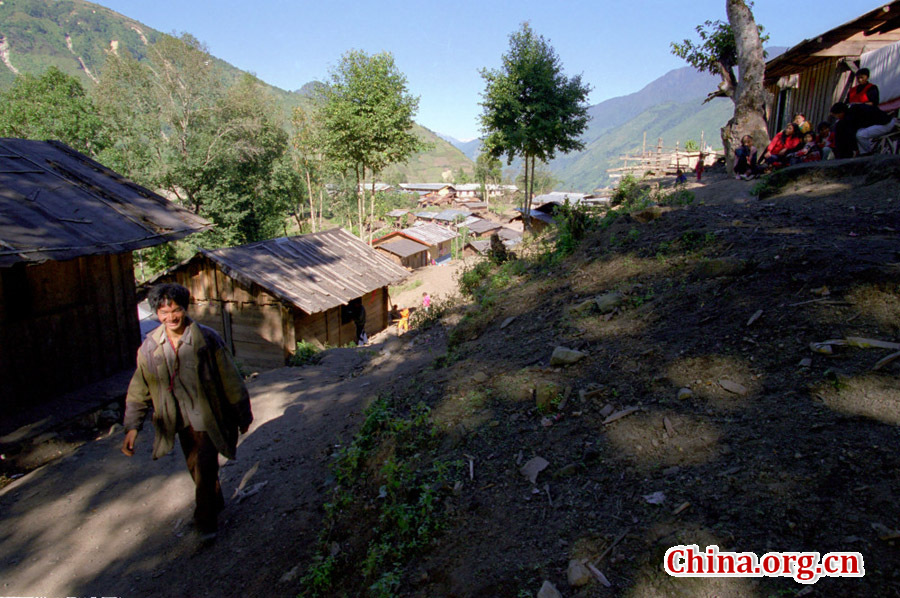
Tibet Huaneng Power’s General Manager, Liu Xingguo confided that the Yarang hydropower station will be the backbone of Metok power grid. By the end of the year, “4 units will be put into full production. …After the completion of the other power plants, it will be possible to meet the needs of all households lacking electrical power.”
But will the quality of the plants be better than the earlier ones?
How to occupy all these tourists?
Xinhua recently announced a first Metok Culture and Tourism Festival held from October 23 to 25: “It attracted tourists from all over the country to enjoy the mystical highland scenery of southeastern Tibet,” said the News Agency, which added: “The area is covered with many outstanding natural beauties, as well as, ancient and unique Monpa and Lhoba [Lopa] culture.”
According to the same Tashi, the theme of the Festival was ‘Auspicious Pema’, ‘Pema’ is lotus in Tibetan and Metok is associated with the mysterious and mystical ‘Pemakoe’, the hidden valley in Tibet where the great Indian guru, Padmasambhava meditated during the 8th century.
The question remains this development should worry India.
It is too close to the McMahon line.
A few pictures of Metok.
Subscribe to:
Posts (Atom)


