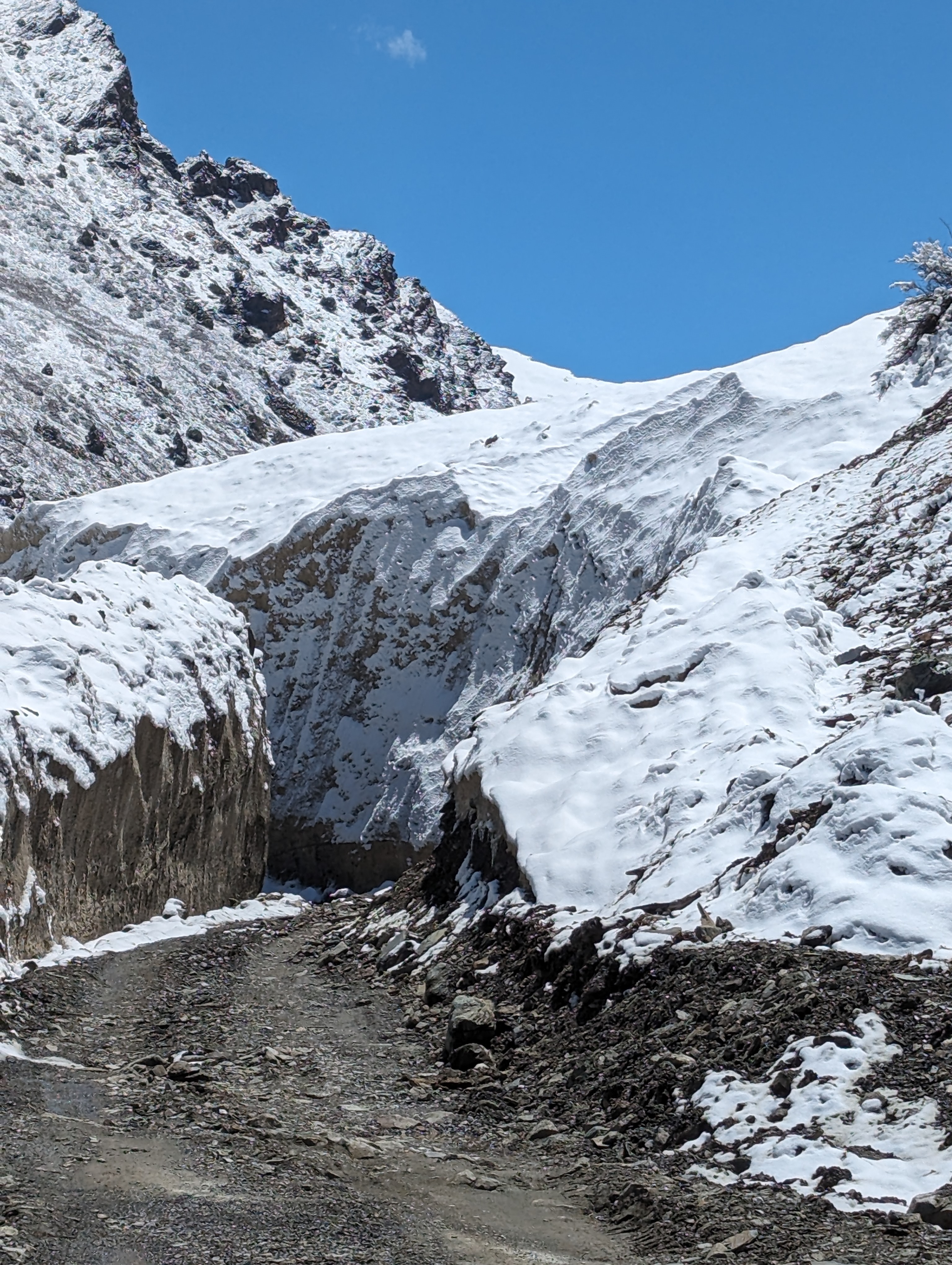
China is a strange country; it has the most sophisticated war gadgets, the largest number of ships and the latest technology for rockets and space warfare, but it has less and less generals. Who is going to lead the troops in case of a conflict? It is a valid question.
In meantime, all sorts of rumours are floating around, mostly fake news, though indicating the present climate in the People’s Liberation Army (PLA).
Wanjun Xie, the New York based chairman of China Democracy Party, an active student during the Tiananmen Square events in 1989, recently wrote: “It is reported that the announcement stating that Xi Jinping is no longer the Chairman of the Central Military Commission (CMC), has been issued to all military units at the brigade level and above throughout the entire army.”
A few days later, on September 17, Chairman Xi was seen in Beijing, when he met with representatives from various groups involved in organizing the commemorations marking the 80th anniversary of the victory against the ‘Japanese Aggression’.
But let’s go back a few weeks earlier.
On August 20, Xi Jinping, the Secretary of the Communist Party of China and CMC Chairman landed at Lhasa Gongkar airport to celebrate sixty years of the Tibet Autonomous Region (TAR). China watchers examined the composition of the large delegation accompanying Xi from Beijing to decipher the visit.
Xi was accompanied by Wang Huning, No 4 in the Party, Cai Qi, No 5 and director of the General Office of the Central Committee, Li Ganjie, head of the United Front Work Department …and Gen Zhang Shengmin, one of three remaining uniformed CMC members.
Gen Zhang Youxia, the CMC vice-chairman did not turn up probably because he and Xi have lately not seen eye to eye. One can assume that it is the difference of perceptions between the two leaders which has fuelled most of the recent wild rumours.
But there was more to be decoded. Lt Gen Wang Haijiang who since August 2021 has been commanding the Western Theatre Command opposite India, was missing in action. Earlier Wang had a long career in Tibet. Has he been purged? Also missing was Lt Gen Wang Kai, the commander of the Tibet Military District (TMD); only the TMD’s Political Commissar Lt Gen Yuan Honggang was seen with Xi.
These absences are intriguing.
Another surprise for the watchers, during the Gala reception in the evening, Gen Zhao Zongqi, the artisan of the Doklam confrontation (2017) and the Eastern Ladakh Chinese intrusions in 2020, was posturing, seated in full uniform in the row behind the top leader. Gen Zhao retired from the PLA in December 2020; he was then serving as Commander of the Western Theatre Command. In the past Gen Zhao created havoc in Sino-Indian relations. So, why was he invited? Probably to show India that the border issue is far from being settled, despite the recent high-level meetings.
A friend, closing following the developments in China, told me: “Don’t worry, we will get more information on the absentee generals on September 3 during the grand parade.
It was not to be the case.
The South China Morning Post (SCMP) published a piece entitled: “Why were China’s generals missing in action during the Victory Day parade?”
The Hong Kong publication explained: “When China held its first Victory Day military parade in 2015, more than 50 generals joined troops to march down Changan Avenue in central Beijing. The generals of all stripes led dozens of formations past the Tiananmen rostrum, saluting President Xi Jinping as the official announcer read out each commander’s name.”
Four years later, the same practice was followed: “The generals were also out in force for the National Day parade in 2019, giving observers a rare opportunity to see the PLA’s new generation of rising stars,” the SCMP added: “[such] events were also a valuable chance to learn who was in charge of each unit.”
Though 89 generals (including four full generals, two lieutenant generals, and 83 major generals) leading 59 formations were announced for the September parade, none appeared on September 3.
Only senior colonels (brigadier equivalent) and colonels walked or rode a vehicle on the Tiananmen Square without their names being announced.
The SCMP quotes a Chinese political scientist: “It could be that too many major generals are suspected of having ties to senior generals under investigation, and Beijing may be hesitant to let major generals lead the parade.”
Two weeks after the impressive parade (though without generals), the Chinese Defense Minister Dong Jun spoke of China’s efforts to safeguard world peace at the 12th Beijing Xiangshan Forum. From September 17 to 19, under the theme "Upholding International Order and Promoting Peaceful Development," the forum brought together some 1,800 official representatives.
Dong pleaded for peace; he asserted: “The Chinese military stands ready to work with all parties to defend sovereign equality, uphold the post-war international order, bolster multilateralism, protect common interests, and jointly advance reforms to improve the global governance system.”
At the end Dong issued a veiled threat: “The Chinese People's Liberation Army stands ready to defeat any secessionist plot of Taiwan separatist forces, and will foil any military interference from external forces.”
But this does not explain where the generals are, and more importantly, if China can fight battles, in Taiwan or elsewhere, with revolving generals, who have a constant sword hanging over their heads.
Earlier this year, Joel Wuthnow, a senior research fellow in the Institute for National Strategic Studies at the US National Defense University wrote an essay Can Xi Jinping Control the PLA? for the publication China Leadership Monitor.
While presuming that Xi Jinping is in control of the PLA, he noted: “Recent purges of senior Chinese military officers have renewed the question of how firmly in charge of the People’s Liberation Army is Xi Jinping.” Wuthnow’ conclusions were: “[Xi] has largely preserved a tradition of PLA autonomy relative to the party leadership, both to consolidate his own power …and to focus on its warfighting missions. …the scope of the dismissals has remained narrow.”
They may be relatively narrow, but they are significant; indeed, can an Army fight with a constant sword above the heads of its senior officers? Will the energy and time of the generals be spent to preserve their future (and their heads) or can they seriously do war preparation planning. The answer seems obvious that they can’t.
Sunday, September 21, 2025
PLA: An Army without Generals?
Thursday, July 10, 2025
The Planet needs a Dalai Lama
My article The Planet needs a Dalai Lama appeared in The Week
Here is the link...
In the midst of the present planetary chaos, one man preaches love and compassion to other fellow human beings. This man is Tenzin Gyatso, the Dalai Lama of Tibet, who turns 90 on July 6.
For the last 66 years, he lives as a refugee in India where he is considered the leader of all the Tibetans (including those in the Land of Snow), as well as of nearly one million Indian Buddhists in the Himalayan belt, from Ladakh to Arunachal Pradesh.
Following an uprising in Lhasa on March 10, 1959, the Dalai Lama left Lhasa in the dead of night in dramatic circumstances. A week later, he reached Lhuntse Dzong, a couple of days march from the McMahon Line, the border between India and Tibet, from where he wrote to the Indian Prime Minister, seeking asylum in India.
Four days later, he reached the first Indian post at Chuthangmu, north of Tawang, then part of Kameng Frontier Division of the North East Frontier Agency (NEFA). A letter from Nehru was waiting for him: “We shall be happy to afford the necessary facilities for you, your family and entourage to reside in India. The people of India who hold you in great veneration will no doubt accord their traditional respect to your person.”
Since that day, the Indian Government and people have considered the Dalai Lama an honoured guest in the Land of the Buddha.
Was it a coincidence, but soon after his arrival in India, the Indo-Tibet border became tense? At the end of August 1959, a first serious incident took place at Longju in Subansiri Frontier Division? Several Indian jawans lost their lives. This marks the beginning of protracted dispute between India and China about the northern borders of India; it still continues today, as we have witnessed in Ladakh in May 2020.
For the Eastern sector, there was an agreed map of the border (known as the McMahon Line); it was signed in 1914 between British India and the government of free Tibet in Lhasa. After walking onto the Tibetan plateau in 1950, Beijing not only refused to recognize the 1914 agreement, but it also started to claim the entire NEFA till the foothills in the South, as its territory.
In October 1962, a war erupted when the People’s Liberation Army marched into the Tawang sector; the very place where the Dalai Lama had entered three years earlier. Was it again a coincidence? The conflict rapidly spread to other areas like Walong in the Lohit Valley and Ladakh. The scar it left on India’s psyche still endures.
For years, the young Dalai Lama lived peacefully in Dharamsala in Himachal Pradesh taking care of the education of the young Tibetans and preserving their culture; it is only in 1973 that the Tibetan leader traveled to Europe for the first time; during the following decades, he would be instrumental in giving a concrete shape to the prophecy of the Great Indian Master, Guru Padmasambha: "When the iron bird flies and horses run on wheels, the dharma will come to the land of the red faces."
As the Dalai Lama tirelessly traveled over the five continents to spread the Buddha’s message of Love and Compassion, his focus widened and he became a global leader.
A turning point was an address to the US Congressional Human Right's Caucus in Washington in 1987 when he presented his Five Point Peace Plan; the first point was: “I propose that the whole of Tibet, including the eastern provinces of Kham and Amdo, be transformed into a zone of Ahimsa.”
It was an interesting proposal for India as a demilitarized Tibet could have been a solution to the border dispute. But the Tibetans were soon told by Beijing that it was unacceptable to China.
In the following years, the Tibetan leader continued to travel abroad and to India’s Northern frontiers where he brought a new life to Tibetan Buddhism.
Interestingly, the Dalai Lama always refers to his faith as “the Nalanda Tradition”, simply because several Indian gurus of the ancient Nalanda University visited Tibet to teach the Buddha Dharma.
This old relation is especially important at a time when all the contacts between the Indian Himalaya and Tibet have been cut and the Tibetan monasteries in Tibet are subjected to what the Communist party calls the ‘sinization of Tibetan Buddhism’, which in fact aims to obliterate the Indian origin of the Buddha and his Dharma to replace it by the diktats of Karl Marx.
Today, the Dalai Lama’s followers are worried about his succession; what will happen if he departs for The Heavenly Fields? Will a Fifteen Dalai Lama replace him? Who will select him? These are still unanswered questions.
The Dalai Lamas traditionally ‘reincarnate’ in a young boy, who is then groomed to take-over as the next Dalai Lama.
The fact that the Dalai Lama has recently announced that his successor will be from outside China, makes Beijing extremely nervous; the Communist regime fully realizes the importance of controlling the next Dalai Lama.
Already in February 2023, The Global Times, the mouthpiece of the Communist Party, asserted that religious rituals for the selection of a new lama “have [for centuries] been supervised by the Chinese Central Government”; this is simply not true.
The Global Times also hides the fact that the boy recognized by the Dalai Lama as the Panchen Lama (the second highest hierarch in the Dalai Lama’s Yellow Hat School) was arrested in 1995 and 30 years later, he remains in the custody of the Chinese government somewhere in China.
India is deeply concerned by the Dalai Lama’s succession as he has nearly one million followers in the Indian Himalaya …and Buddhism is born in India, not in China. It is also a fact that the Tibetan leader’s presence has always been a stabilizing factor for the northern borders.
Today, in the midst of wars and conflicts, the planet needs a Dalai Lama; we can only pray for a smooth succession.
The High Stakes In Dalai Lama's Succession
My article The High Stakes In Dalai Lama's Succession appeared in Rediff.com
Here is the link...
On July 2 or July 6, the Dalai Lama will reveal his mind on his successor.
This makes Beijing extremely nervous as the Communist regime fully realises the importance of controlling the next Dalai Lama, points out Claude Arpi.
Nobody will disagree that the world is in turmoil; time seems to have accelerated on every continent and violence has reached every corner of the planet.
In India, we witnessed a four-day war between India and Pakistan, triggered by constant acts of terrorism from Islamabad; in the Middle East, a bloody war has been going on for months between Israel and Hamas; now a new conflict has erupted between Iran and Israel while there is no solution in view for the Ukraine-Russia war; yet while another bloody conflict may now take place between China and Taiwan for control of the rebel island.
In the midst of all this, a man preaches love and compassion (Ahimsa and Karuna) to other human fellows.
For 66 years, he lives as a refugee in India, his name is Tenzin Gyatso, he is the 14th Dalai Lama of Tibet, but also the leader of one million Buddhists from the Indian Himalayas (from Ladakh to Arunachal Pradesh) as well as several million Buddhists from every continent.
This man will turn 90 on July 6.
His followers are worried about his succession; what will happen if he departs for The Heavenly Fields? Will a 15th Dalai Lama replace him? Who will select him? These are still unanswered questions.
According to The Deccan Chronicle: 'The Dalai Lama will issue a message on July 2, days ahead of his 90th birthday and a hugely anticipated decision as to whether he will have an eventual successor.'
Earlier this year, the Tibetan leader released a book, Voice for the Voiceless, in which he asserted: 'Since the purpose of a reincarnation is to carry on the work of the predecessor, the new Dalai Lama will be born in the free world (outside China) so that the traditional mission to be the voice for universal compassion, the spiritual leader of Tibetan Buddhism, and the symbol of Tibet embodying the aspirations of the Tibetan people, will continue.'
It was certainly a shock for China who expects to control the succession process ... and the next Dalai Lama.
The Background
On October 7, 1950, Chinese troops crossed the Upper Yangtze and began their 'liberation' of Eastern Tibet, then known as Kham province.
Ten days later, after sporadic battles, Chamdo, the capital of Kham, fell and Ngabo Ngawang Jigme, the Tibetan Governor, surrendered to the Chinese without fighting.
It would take more than two weeks for the information to filter out.
Till October 25, the Tibetan government in Lhasa knew nothing, the Indian government had heard nothing, and the Chinese were keeping quiet; other governments, depending on India for news, were not 'informed' either.
On October 26, a brief communique of the New China News Agency (Xinhua) broke the news: 'People's army units have been ordered to advance into Tibet to free three million Tibetans ...the conquest of Tibet was a 'glorious task' which would put the final seal on the unification of Communist China.'
Hardly three weeks later in Lhasa, the Gods spoke through the Nechung State Oracle: 'Make Him King'.
Thus, Tenzin Gyatso was enthroned as the 14th Dalai Lama of Tibet at the young age of 15; the 'God King' became the temporal and religious leader of Tibet.
Nine years later, under mounting Communist pressure, the Dalai Lama had no choice but to take refuge in India, where he was received as an honoured guest by the Government of India.
In the early 1970s, the Tibetan leader started travelling all over the world; for more than five decades he would be instrumental in giving a concrete shape to the prophecy often attributed to Guru Padmasambha: 'When the iron bird flies and horses run on wheels, the dharma will come to the land of the red faces.'
The Dalai Lama tirelessly traveled to spread the Buddha's message of Love and Compassion.
Origin of the reincarnation system
Dusum Khyenpa, the First Karmapa Lama, was a disciple of the Tibetan master Gampopa, himself a disciple of the famous yogi and poet Milarapa.
The First Karmapa is said to have attained enlightenment at the age of 50; he then became known as the Karmapa.
The Second Karmapa, Karma Pakshi (1204-1283), was recognised as the reincarnation of Dusum Kyenpa, who had predicted the circumstances and time of his rebirth.
This is the origin of a system which has been prevalent in Tibet since then.
The Dalai Lama is 90 years old; due to his age and health, he has practically stopped going abroad; he remains most of the time in his residence in the Himalayan hill station of Dharamsala, north of Delhi.
In recent years, his succession has been widely debated in the media, the diplomatic and other circles.
Dalai Lamas 'reincarnate' in a young boy, who is then groomed to take over as the next Dalai Lama.
'Reincarnation' is, of course, the fascinating topic at a time when everything is 'scientifically' decided (and soon by Artificial Intelligence).
However, it entails a 20-year gap in spiritual governance, a period often used in the past by China to intervene in the Roof of the World's religious affairs; it does not seem to be a system adapted to our quick-changing world.
Traditionally, the Dalai Lama had two roles, one temporal (as head of the Tibetan State, though today in exile) and the other spiritual (guiding millions of Tibetans, but also Himalayan and foreign followers of Tibetan Buddhism).
In May 2011, the Tibetan leader decided to relinquish his secular power and offer it to the people of Tibet, who could thereafter elect their own 'political' leader.
Today, a Sikyiong or president runs the Tibetan administration from Dharamsala.
A few months later, on September 24, 2011, the Dalai Lama released a long statement about his succession, he mentioned two options: A traditional reincarnation (leaving written instructions how to find the reincarnation) or an 'emanation', which would mean the transfer of his consciousness and knowledge into a selected young boy (or girl).
In the same message, the Tibetan leader wrote that it was entirely his decision, though he would consult senior lamas: 'Reincarnation is a phenomenon which should take place either through the voluntary choice of the concerned person ... Therefore, the person who reincarnates has sole legitimate authority over where and how he or she takes rebirth.'
The 2011 statement further explained: 'When I am about ninety I will consult the high Lamas of the Tibetan Buddhist traditions, the Tibetan public, and other concerned people who follow Tibetan Buddhism, and re-evaluate whether the institution of the Dalai Lama should continue or not.'
It is what his followers (and probably the Indian Government too) are expecting to happen on July 2 or 6.
This makes Beijing extremely nervous as the Communist regime fully realises the importance of controlling the next Dalai Lama.
Already in February 2023, The Global Times, the mouthpiece of the Communist party, asserted: 'Recognition of new Dalai Lama must be conducted in China'.
It emphasised that the religious ritual for the selection of a new lama 'has been supervised by the Chinese Central Government and conducted within Chinese territory since the late 13th century', omitting that in the past 'religious rituals' (if any) for the recognition of the Dalai Lamas were conducted by Tibetans, not by the Communist party.
But half truths and blatant lies in Beijing's narrative continue: The Global Times dishonestly omits that the boy recognised as the Panchen Lama by the Dalai Lama was arrested and more than 30 years later is still in the custody of the Chinese government somewhere in China.
The Panchen Lama was the second highest lama in the Yellow School of Tibetan Buddhism.
Xi Jinping meets the Chinese Panchen Lama
On June 6, China's President Xi Jinping summoned Gyaltsen Norbu, the Panchen Lama imposed by Beijing, to Zhongnanhai, the official compound where live the Communist party's senior leaders.
Xi requested the young lama 'to make greater contributions to promoting ethnic unity and religious harmony.' The Chinese leader called upon the young lama to 'play an even better role in forging a strong sense of community for the Chinese nation, systemically promoting the principle that religions in China must be Chinese in orientation'.
In plain words, it means the 'Sinization' of Tibetan Buddhism and eradication of the Indian origin and influence in the spread of Buddhism on the plateau.
Many believe that the times of Dusum Kyenpa have gone and a gap of 20 years in spiritual governance is too risky; Buddhism should adapt to the modern world and a new system of succession should be devised, but ultimately, it remains the choice of the Dalai Lama alone and certainly not of any Marxist government to decide on this highly esoteric issue.
It remains that the planet needs a Dalai Lama.
Saturday, June 14, 2025
China is preparing the Dalai Lama’s succession
![]() | |
| Gyaltsen Norbu, the Chinese Panchen Lama visits the Indian Border north of Upper Subansiri (Arunachal) |
China is at it again: “Recognition of new Dalai Lama must be conducted in China”, asserted an article in The Global Times on February 22.
The mouthpiece of the Communist Party explained that the China Central Television has already given a detailed historical account “of the search for the reincarnations of the Dalai Lama and Panchen Lama, who hold equal positions in Tibetan Buddhism. It emphasized that this religious ritual has been supervised by the Chinese Central Government and conducted within Chinese territory since the late 13th century.”
Not only have the Dalai Lama and the Panchen Lama never held ‘equal position’ on the roof of the World, but Tibet was not part of the Chinese territory before 1951 when Mao invaded it; further, in the past in Tibet ‘religious rituals’ for the recognition of the Dalai Lamas were conducted by Tibetans, not by Chinese (or the Emperor).
But half truths and blatant lies continue in Beijing’s narrative: “the reincarnation convention of Living Buddhas in Xizang was established during the Yuan Dynasty (1271-1368), developed in the Ming Dynasty (1368-1644) and improved during the Qing Dynasty (1644-1911) under the administration of the central government.”
‘Xizang’ is the new name given to Tibet. Like for the Tibet-Indian border, Beijing believes that by changing names, it can change historical facts.
The Global Times continues: “Since Xizang's peaceful liberation in 1951, the central government of the People's Republic of China showed its respect by preserving this convention and religious ritual. In 1995, the 11th Panchen Lama was conferred with his title by the central government through this strict religious ritual.”
The Global Times dishonestly omits that the boy recognized as the Panchen Lama by the Dalai Lama was arrested and more than 25 years later, he is still in custody of the Chinese government somewhere in China. Does Beijing believe that the world has forgotten?
The article then cites the ‘Measures on the Management of the Reincarnation of Living Buddhas of Tibetan Buddhism’ announced in 2007 by Beijing: “It stipulated that the reincarnation of Living Buddhas should not be interfered with or manipulated by any external forces.”
According to Beijing, the Dalai Lama has no say in his own succession.
Continuous Propaganda
On January 5, quoting so-called experts on Tibet issues, the same Global Times already announced: “The Chinese Central Government will support and guide the work of finding the successor of the 14th Dalai Lama and the successor, like his predecessors, will be finally approved by the Central government.” It added that this was “refuted reports from India media quoting Penpa Tsering, the current head of the ‘Tibetan government-in-exile’, who claimed that China will interfere with the Dalai Lama's succession.” This declaration shows that Beijing prepares itself to interfere in the succession.
Interestingly, the main ‘expert in reincarnation’ quoted by The Global Times is a hard-core Communist, Zhu Weiqun, former head of the Ethnic and Religious Affairs Committee of the Chinese People's Political Consultative Conference (CPPCC) who, a few years ago, derailed the negotiations between Beijing and Dharamsala: "For years, the Dalai Lama himself has been making lies to fool people who are not clear about history and the facts,", Zhu told the tabloid.
However, who is fooling who is clear. How an atheist ‘expert’ does suddenly becomes knowledgeable about the return of a boy’s soul on earth.
Concrete Steps taken?
More worrying than the persistent propaganda about the Communist Party new skills at finding ‘souls, are the concrete steps taken to announce the Dalai Lama’s return on earth.
Shi Taifeng, member of the Political Bureau of the CPC Central Committee and Minister of the United Front Work Department, met with Gyaltsen Norbu, the Chinese selected Panchen Lama on February 17 in Beijing.
The occasion (or excuse) was to ‘congratulate’ Norbu and Tibetan Buddhists for the Tibetan Water Rabbit New Year.
Shi Taifeng started by praising Gyaltsen Norbu for his progress in various domains, then he asserted that he “hoped that he [Norbu] would keep in mind the ardent wishes of General Secretary Xi Jinping and maintain a high degree of consistency with the Party Central Committee with Comrade Xi Jinping as the core in ideology, politics and action; play a leading and exemplary role, study and implement the spirit of the 20th CPC National Congress in depth.”
Does it mean that the Chinese-selected Panchen Lama is not trusted and remains a Tibetan at heart? Apparently, he does not fully understand and follow the ‘The Two Establishes’?
In Communist jargon, the Two Establishes are: "To establish the status of Comrade Xi Jinping as the core of the Party's Central Committee and of the whole Party and to establish the guiding role of Xi Jinping Thought on Socialism with Chinese Characteristics for the New Era."
Shi’s message clearly was, “you better follow Xi and the Party, otherwise…”
Beijing must still have in mind the 10th Panchen Lama, who was also selected and groomed by the Party in the 1950s, but openly declared in 1964: “Long Life to His Holiness the Dalai Lama”. He was subsequently jailed for 14 years.
Shi also told Norbu to “refine his knowledge and moral character, and make new achievements in upholding the Chinese orientation of our religion and promoting the adaptation of Tibetan Buddhism to socialist society.”
The Objective of the Communist Party
On the eve of Tibetan New Year, a Chinese government website, China News Service (ECNS) published an interview with Sheng Kai, vice president of Tsinghua University's Institute of Ethics and Religion, about the real objective of the Communist Government: the sinization of Tibetan Buddhism.
The journalist asked Sheng: “Since Buddhism was introduced from India to China more than 2,000 years ago, it has not only merged with Chinese culture and philosophy, but also deeply integrated into the daily lives of Chinese people without their noticing. Has the Sinicization of Buddhism been completed? Can the historical process be interpreted as the secularization and Sinicization of Buddhism?”
Sheng explained that Buddhism, though it came from India, it had “to be compatible with the traditional inheritance of Confucian and Taoist cultures, blended into the faith and belief of the Chinese ritual culture …so discussion of the historical connotation of the Sinicization of Buddhism means exploring the process and laws of Buddhism’s transformation from an alien civilization to Chinese religion…”
One of his conclusions is that Buddhism in China has four fundamental characteristics; the last being: “an integration of globalization and localization. As a result of the Sinicization of Buddhism, Chinese Buddhism is not only a local transformation of religious civilization from overseas [read India] but also a rediffusion to East Asia and Southeast Asia.”
Clearly Xi Jinping and the Party would like to forget that Buddhism came from India and transform it into a Chinese secular Marxist religion which would in turn spread in Asia.
The control over the succession of the Dalai Lama is the key for this plan.
Can Beijing succeed?
A Way Out
One solution to avoid controversies after the present Dalai Lama’s departure has been mentioned by the Tibetan leader himself in 2011.
The Dalai Lama spoke of the origin of the custom of recognizing ‘Emanation Bodies’ or ‘tulkus’; he further elaborated: “The main purpose of the appearance of a reincarnation is to continue the predecessor’s unfinished work to serve Dharma and beings.”
The Tibetan leader spoke of an alternative, which would be less disruptive: “Alternatively it is possible for the Lama to appoint a successor who is either his disciple or someone young who is to be recognized as his emanation.”
A problem linked to incarnations is that finding the new reincarnation can be manipulated at will; for example, serious doubts have been be raised about the authenticity of lamas such as Gyaltsen Norbu, the Chinese-selected Panchen Lama.
Viewed from a political angle, many issues would be solved if the Dalai Lama decides to go for an ‘emanation’.
He himself would select the next Dalai Lama and the Chinese would have nothing to say in the process; it would certainly bring far greater stability to the political scene of Tibetans in exile and the Himalayan belt.
But the final decision is the Dalai Lama’s choice.
In the meantime, India should clearly state that the 15th Dalai Lama will be a ‘guest of honour’ if he decides to come back to India, whether as a reincarnation or an emanation.
Saturday, April 5, 2025
Mr Xi, what have you gained in Ladakh?
My open letter to Chairman Xi Jinping (Mr Xi, what have you gained in Ladakh?) has been published by Rediff.com on the occasion of his 68th birthday (and one year of the Galwan incident)
'Why did your generals try to grab a few square kilometres of Indian territory in Ladakh?'
'And what happened to the hard work that you and Prime Minister Modi put into the Wuhan and Mamallapuram meets?'
Claude Arpi writes a letter to Xi Jinping, China's self-styled supreme leader, who turns 68 today, June 15.
Here is the link...
Comrade Xi Jinping
General Secretary, Communist Party of China’s Central Committee
President, People’s Republic of China,
Chairman, Central Military Commission (CMC)
Beijing, China
Dear Chairman Xi,
Greetings!
You may think it is presumptuous on my part to send a letter to you, the President of one of the two most powerful nations of the world, but being born in the country which invented Liberty, Equality, Fraternity and living in the one that believes in ‘Satyamev Jayate’ (‘The Truth will prevail’), it emboldened me to send you this letter.
I hope you will not misinterpret my audacity.
I was not sure how to address you, but here in India we see you first as the CMC Chairman, particularly since your Western Theater Command generals started an unnecessary confrontation with the Indian Army in Ladakh last year.
What has China gained from it? I don’t know.
What can the PLA gain in the future? Probably nothing.
In India, it has been taken very badly as it coincided with the chaos of the pandemic due to the COVID-19 which is said to have originated in Wuhan.
Till January 2020, ‘Wuhan’ was synonymous of ‘hope’: India and China could live together as partners in the changing world. It is why Prime Minister Modi invited you in Mamalapuram, to proceed on the sacred path of peace. It is no more the case today, after your generals forced India’s armed forces to spend a winter (and now a spring and a summer) in the previously paradisiacal and serene Himalayan mountains.
I am sure you realize that you lost a friend in the process.
A Community of Shared Future for Mankind
Mr Chairman, though I regularly read your speeches and follow your visits across your country, I must admit that I don’t always understand the actions of your Party.
Take your speech on the occasion of the New Year 2021.
Xinhua reproduced your article ‘Work Together to Build a Community of Shared Future for Mankind’ which had first appeared in the Qiushi Journal (the flagship magazine of the CPC’s Central Committee).
In it, you mention that “mankind is in an era of major development as well as profound transformation and change, and is also in an era of numerous challenges and increasing risks.”
Nobody can disagree with this.
When asked how to respond to this, you proposed “to build a community with a shared future for humanity and achieve shared and win-win development.” This is good.
You even added that “actions hold the key to building such a community, while adding that “the international community should promote partnership, security, growth, inter-civilization exchanges and the building of a sound ecosystem.”
On this, everyone will agree with you in India; several thousand years ago, a rishi spoke of Vasudhaiva Kuṭumbakam (‘the world is one family’).
The Upanishad says:
One is a relative, the other stranger,
say the small minded.
For those who live magnanimously
the entire world constitutes but a family.
What I don’t understand is that if we share the same values, why did your generals try to grab a few square kilometers of Indian territory in Ladakh? What was the point that they were trying to make? Had they grasped the essence of your speeches?
And what happened to the hard work that you and the Indian Prime Minister put into the Wuhan and Mamallipuram meets?
Are you aware that the Ladakh episode has created a huge setback for the bilateral relations and that the Indian public will not forget soon?
About the Environment: the Irresistible Law
I wanted also to mention the all-important issue of environment
On April 30, 2021, you presided over a meeting of the Politburo of the Central Committee.
You had the occasion to speak of the construction of an ecological civilization; it is said to be a prominent objective for the Communist Party; you insisted on “comprehensively strengthening the construction of ecological civilization, and integrating the management of mountains, rivers, forests, fields, lakes, grasses and sand, and carried out a series of fundamental and pioneering activities.”
You further observed: “Ecological environmental protection and economic development are dialectically unified and mutually reinforcing. The construction of ecological civilization and the promotion of green and low-carbon circular development can not only meet the people’s growing demand for a beautiful ecological environment, but also promote the realization of higher quality, more efficiency, and more Fair, more sustainable, and safer development, and a civilized development path featuring production development, affluent life, and good ecology.”
The Chinese media emphasized your role in this: “General Secretary Xi Jinping’s important exposition on the construction of ecological civilization, with a lofty purpose, rich connotation, and profound thinking, is for us to deeply understand the significance of the construction of ecological civilization, fully and accurately implement the new development concept, and correctly handle the relationship between economic development and ecological environmental protection.”
On another occasion you ‘profoundly’ stated: “Humans and nature are the community of life, and humans must respect, conform to, and protect nature. Heaven and earth live side by side, and everything is one …When mankind makes rational use of nature and protects nature in a friendly manner, nature's rewards are often generous; when mankind develops disorderly and rudely plunders nature, nature's punishment must be ruthless. Human damage to nature will ultimately hurt mankind. This is an irresistible law."
Hundreds of millions on this planet agree with this.
It is why I can’t understand the announcement in The Global Times in December 2020 that your government was planning to build a cascade of mega hydropower plants (HPP) on the Yarlung Tsangpo: “The head of Power Construction Corp of China (POWERCHINA) suggested the planned hydropower station - which is expected to have three times as much generating capacity as the world-leading Three Gorges power station - aims to maintain water resources and domestic security.”
The information was confirmed by the administration of Metok County (of Nyingchi City); the project would be built north of the Indian border; a series of nine hydropower plants in cascade, which will threaten the life of India’s entire North-East region.
This would create unbelievable havoc not only in Pemakoe, the sacred Tibetan realm in the Great Bend of the Yarlung Tsangpo, but also downstream in Arunachal Pradesh (that you call ‘Southern Tibet’), Assam and Bangladesh. You are certainly aware that it is the most seismic area of the planet.
What will you achieve by going ahead with such a project?
You will certainly earn bad will from your neighbours while creating more anger, distrust, without speaking of the risk of a confrontation with India.
The Tibetan Issue
Mr Chairman, I am sure that you remember what your father the respected Xi Zhongxun wrote in The People’s Daily on February 20, 1989 after the untimely death of the revered Tenth Panchen Lama.
Your father condoled the death of the Tibetan leader: “Buddhist Master Panchen Lobsang Trinley Lhündrub Chökyi Gyaltsen died suddenly due to a heart ailment. The Chinese Communist Party has lost a loyal friend, and I have lost a colleague and intimate friend of 40 years standing.”
In the Panchen Lama’s obituary, your father noted “Over the past 40 years, the Panchen Lama and I established a deep friendship. Prior to his trip to Tibet to dedicate a statue at Tashilunpo Monastery, he took time to bid farewell to me and presented me with a khata (ceremonial silk scarf). It was his long-established habit to bid farewell to me when he left on trips, and to have a heart-to-heart talk with me when he returned. I knew him well. He was very enthusiastic, easily excited, and when he was working he could barely control his emotions. I advised him that because there was a severe lack of oxygen in this season in Tibet, he must be careful of his health, not get short-tempered, and that he should balance work and rest. He told me that he would die happy once his project was completed. I told him that Buddha didn’t want him to go yet, nor did Marx want him to go.”
That was the last time your father met the Tenth Panchen Lama.
In his long obituary, after mentioning the difficulties that both (him and the Panchen Lama) went through during the Cultural Revolution, your father wrote: “After the Third Plenary Session of the Eleventh Communist Party Congress in 1978, the Panchen Lama and I reunited. When old friends meet, all kinds of feelings well up. When the Panchen Lama saw me, he said uneasily: Because of my ‘70,000-Character Petition’ I got you in trouble, I’m very sorry for that. I answered: No one got anyone in trouble. We all got physically tempered, endured challenges and increased our experience. The Communist Party understands you.” At that time, we all hoped for a new China under reformist leaders like your father. Unfortunately, it has not yet happened, especially for Tibetans and the Uyghurs.
Your father had concluded: “I grieve the sudden death of the Panchen Lama, I hope that he is reincarnated. We must complete …make new contributions to a united, prosperous and civilized socialist new Tibet, and to the common prosperity of all ethnic groups.”
Today, the opposite is happening. It is difficult to understand why.
You must be realizing that the Tibetan question has been sullying the image of People's Republic for 70 years now. Why can’t you find a durable solution agreeable to all, it would be a win-win outcome.
The Dalai Lama is a sincere leader. Do you think that you can find a better interlocutor to bring about a radical change in the relations between Hans and Tibetans? I don’t think so.
I could, of course, mention several other issues, but it is better to leave at that today.
Mr Chairman, I feel that China has lost (or is losing) a golden opportunity to play a respectable place in the world, and this despite your vision of a shared future for humankind.
Yours sincerely
Claude Arpi
Saturday, December 28, 2024
China’s Strategic thinking: yesterday and today
Introduction
'Strategic Leadership' often does not mean ‘Morals and Ethical leadership'. One of the best examples is Mao Zedong.
In Problems of War and Strategy, the Great Helmsman noted: “Some people have ridiculed us as the advocates of omnipotence of war. Yes, we are: we are the advocates of the omnipotence of the revolutionary war, which is not bad at all, but good and is Marxist.”
The moves of the People’s Liberation Army (PLA) in the early days of the revolution are a testimony that Mao was one the great strategists of the 20th century, though an extremely amoral leader.
On October 1, 1949, the new People's Republic of China was proclaimed; Mao told a million Chinese assembled on the Tiananmen Square. “The Chinese people have stood up, long live the Chinese Communist Party.”
In the following months, the new regime never missed an opportunity to tell the world through the Chinese media that China would soon ‘liberate’ large areas at the periphery of the Middle Kingdom.
On the other side of the Asian chessboard, Jawaharlal Nehru, the Indian Prime Minister was an idealist, not to say a dreamer or a romantic, and for him, the means more than the goal to be achieved, were of supreme importance. At Mao’s opposite end, he did not see the importance of the Army and believed that India could be the peacemaker of the planet; the Indian Prime Minister had little inkling about ‘strategy’ while Mao was a master, as the story of the long March shows.
We shall take two examples, the annexation of Xinjiang and the occupation of Tibet, to see how Mao acted as a great strategist, once he had chose his objectives.
A comment from the Communist Party’s Chairman speaks a lot about Mao’s mindset: “People may ask if there is contradiction to abandon a territory gained by heroic battle. Does it mean that the heroic fighters shed their blood in vain and to no purpose? This is to put the wrong question. Does one eat to no purpose simply because he relieves himself later? Does one sleep in vain because one wakes up and goes about? I do not think the questions should be asked thus; rather one should keep on eating and sleeping or fighting. These are illusions born out of subjectivism and formalism and do not exist in real life. ”
Mao, the great strategist, never forgot what his final goal was; the fact that Nehru and his collaborators later talk about ‘surprise’ and ‘betrayal’ showed their lack of strategic culture.
In the second part of this article, we shall look at today’s strategic policies of the Communist regime.
Military Annexation of Xinjiang
On February 4, 1949, during a meeting with Soviet Foreign Trade Minister, Anastas Mikoyan, Mao Zedong raised the issue of Xinjiang and pointed to the Northwestern district of Iili district, where China had noted an independence movement, as well as the presence of a communist party. Mikoyan told him that he did not know about the existence of a communist party, but was aware of nationalist forces in the district: “This movement was triggered by the incorrect policy of the Chinese government, which does not want to take into account the national specifics of these nationalities, does not present rights of self-rule, does not permit the development of the national culture.”
He added: “If the nationalities of Xinjiang were given autonomy, the soil for the independence movement would likely remain [sic]. We do not stand for the movement of independence of the Xinjiang nationalities and do not have any claims on Xinjiang territory, considering that Xinjiang is and must be a part of China.”
After Mao had the green light he needed, he explained that China was planning “giving Xinjiang autonomy, in the same manner as for Inner Mongolia, which is already an autonomous region.”
Interestingly, he was interested “in whether there is a lot of oil in Xinjiang or a little.” He also suggested the construction “a railroad connecting the Chinese railroads with the Soviet railroads through Xinjiang. This would have great significance for joint defense in case of a new war.”
The above discussion is interesting; first, Mao gets the Soviet green light to annex Xinjiang (later in the year). While showing his interest in oil and trade with Central Asia, then under Soviet Union.
Three months after this discussion, Mao instructed the PLA to ‘liberate’ the entire country, which included Xinjiang and Tibet. “A History of the Counter Attack War in Self-Defence along the Sino-India Border” which relates the annexation of Xinjiang, says: “The PLA rapidly advanced towards the East, South-middle, Southwest and Northwest China with the power of toppling the mountains and overturning the sea.” While, during the following months, the remnants of the Nationalist forces were slowly and systematically annihilated in the mainland, in Xinjiang, Mao used two tactics: sending a large number of troops in two different directions, while inducing the surrender of the Nationalist forces. He had already the assurance from the Soviets that they would not only, not interfere, but would also support the annexation.
A Swift Strategic Move
By swiftly taking over the Western Dominion, as Xinjiang is called, the Communists would be controlling the Western borders of the Middle Kingdom; access the trade with Central Asia; block any possibility of Soviet advance in the region (in case they change their mind later) and come closer to the Indian frontiers, particularly in the Aksai Chin area.
During the Second Plenum of the Seventh Party Congress, Chairman Mao Zedong gave the task for the liberation of Xinjiang to the Commander of 1 Corps of the 1 Field Army.
On September 8, the 1 Field Army was ordered to advance towards Xinjiang, while the 6 Army was to remain stationed in the Northern Xinjiang till further orders and the 2 Army was instructed to advance in Southern Xinjiang.
By the end of September 1949, a large contingent of Communist troops started moving towards the Western Dominion where a 70,000 strong Nationalist force was still stationed.
following the Hexi Corridor , the PLA advanced toward Urumqi which was ruled by a coalition comprising the Nationalists (KMT) and representatives of the former Second East Turkistan Republic (ETR), supported by the Soviet Union. The ETR sympathizers were particularly strong in the three districts in northwestern Xinjiang, where they had retained some autonomy, while the KMT controlled most of Southern Xinjiang.
The Second Step, the Nationalists become Communists
After having obtained the Soviet support, the second phase saw the Nationalists turning coats. On September 25, Tao Zhiyue, the Nationalist Commander-in-Chief of the Xinjiang garrison and Burhan Shahidi, the Political Commissar, announced the formal surrender of the Nationalist forces in Xinjiang to the Chinese Communists. Several Kuomintang generals joined the PLA and began serving the Communists; those who refused to surrender fled to Taiwan or Turkey.
A second victory for Mao …without fighting!
Later the five ETR leaders who were to negotiate with the Communists died in an air crash in Soviet airspace over the Kazakh Soviet Socialist Republic; it was rumoured that there were murdered. Anyway, the way was opened for Mao’s troops.
The Two Pronged Advance
Starting from Yumen , east of Jiuquan, the Communist troops went through indescribable harsh terrain, deep gorges, cold desert, “they started a massive advance of forces towards Xinjiang along North and South of Tian mountain,” says the Chinese account.
The 6 Army (comprising 16 Division, 17 Division and troops of the 18 Division) under the leadership of Army Commander Luo Yuanfa and Political Commissar Jianyue marched “towards various places in North Xinjiang continuously adopting various tactics for air transportation, mobilization of forces, advances, etc.”
The Chinese account says that the 2 and 6 Armies had been motivated by the slogan given by their Political Commissars: "Not be afraid of any sacrifice, don't fear any difficulties, bravely advance and hoist the five star red flag on the plateau of Pamir”.
On October 12, 1 Army HQ left Jiuquan by road.
On the same day, the 2 Army also advanced towards South Xinjiang. Wang Enmao, a veteran of the Long March who later governed China's Muslim-dominated Xinjiang Province for three decades was the Political Commissar.
Two days later, supported by a tank Regiment, the main forces of 4 and 5 Division of the 2 Army reached Hami . Ten days later , the 4 Division ‘liberated’ Qarqan , where the troops stayed a couple of weeks to recover from the quick advance march.
A New Headquarter in Urumqi
With particularly poor communications, the advance of Communist forces into Xinjiang was extremely difficult and risky; the distances were long, from Jiuquan to Urumqi it was 1,253 km and from it was 2,547 Km from Kashgar: “In order to overcome the communication and transportation difficulties, Soviet Union came for assistance with 40 transport planes so as to quickly transport soldiers from Jiuquan towards Urumqi,” notes the Chinese account.
On November 5, a forward battalion reached Urumqi by air. Two days later the PLA commanders met with the Nationalist Army and Tao Chuyue troops at three places; on the same day, a People's Government was set up, formalizing the Xinjiang province’s accession to Communist China.
The next day, the HQ of the 1 Corps was airlifted to Urumqi.
From November 20 to 26, the PLA took over most of Southern Xinjiang and Kashgar where the HQ of the 2 Army was established on December 1, had fallen by then; the annexation of Xinjiang was complete.
The PLA had to cross deserts, walk over high snow-capped mountains, suffer starvation; indeed, the Communists realized an unbelievable military feast. Marshal Peng Dehuai and Xi Zhongxun praised and encouraged the troops in a telegram: "You have created an unprecedented record of the advance of forces".
The PLA walked some 3,000 kms in six months, to complete their mission “the main force, in more than two month's time, successively liberated each important town and city in the North and South of Xinjiang, pinned down uprising launched by reactionaries of Nationalist Party at many.”
Strategically, Communist China was at the Gate of Tibet …and of India; a couple of years later, the construction across the Indian territory in the Aksai Chin area started.
Retrospectively, nearly 70 years later, one understands the importance of the annexation of Xinjiang with its the natural resources such as oil, but also the trade routes such as One Belt One Road initiative or the China Pakistan Economic Corridor.
The ‘Liberation’ of Tibet
In his study on Communist China and Tibet, Ginsburg gives a strategic definition of the plateau: "he who holds Tibet dominates the Himalayan piedmont; he who dominates the Himalayan piedmont, threatens the Indian subcontinent; and he who threatens the Indian subcontinent may well have all the South-east Asia within his reach, and all of Asia.”
Mao the strategist knew this well (so did the British before him).
For China, it was necessary to establish a de facto suzerainty over Tibet; iIt was also the first step towards the South, and possibly the sub-continent, particularly areas such as Ladakh, Bhutan or Sikkim.
The First Warning
On December 31, 1949, the Government of India hurriedly pushed through the recognition of the Communist regime in Beijing. The next morning, a broadcast of the New China News Agency proclaimed: "the task for the PLA for 1950 are to liberate Taiwan, Hainan and Tibet... Tibet is an integral part of China. Tibet has fallen under the influence of the imperialist."
Who were the ‘imperialists’? Was it the few Indians posted in Tibet?
Brushing aside India’s interests in Tibet, Mao prepared detailed plans for a military operation to ‘liberate’ Tibet. During the following months, China never missed a chance to assert that Tibet was part of China's territory and it was "China's sacred duty to liberate Tibet." Very few understood the message in Delhi.
In the meantime, the Indian Government was torn between two sentiments: on the one side Tibet was a small independent nation with rich and deep cultural and religious bonds with India and on the other side Nehru and some of his colleagues had an immense admiration for the new People's Republic, which like India, had to struggle against colonial powers to gain her freedom.
In early August 1950, Marshal Liu Bocheng again reiterated: “[The] People Liberation Army will soon march towards Tibet with object of driving out the British and American aggressive forces so as to make Tibetans return to the Great Family of the Peoples Republic of China. As soon as the Liberation Army enters into Tibet they will carry out the Programme of National Regional Autonomy, religious freedom …. The military and political systems prevailing in Tibet now will remain as they are and will NOT be changed; various ranks of officials and men will work as usual; the present Tibetan Army will become a part of the National Defence Force of the Peoples Republic of China.”
The plans were clear.
For months KM Panikkar, the Indian Ambassador in China regularly put the blame on the Tibetans for refusing to ‘negotiate’ with China. However for Mao, it was clearly a two-phase strategy; first a military take-over of the Chamdo area and then a ‘peaceful liberation’ after the Tibetans had been militarily defeated and forced to sign an agreement with the ‘Central Government’, i.e. the Communist regime in Beijing.
On August 23, 1950, the Chairman cabled the CPC Southwest and Northwest Bureaus: "If our army can capture Chamdo in October, this will urge the Tibetan delegation to come to Beijing for negotiation for peaceful settlement."
So much for the peace-loving Panikkar who for months tried hard avoiding putting the blame on Mao for Tibet’s invasion.
Even though the Indian government was informed in August via Hong Kong of the war preparations, he had refused to believe it.
Mid-October, Chamdo the capital of Kham Province fell and on October 17 Ngabo Ngawang Jigme, the Governor of Kham capitulated without fighting and ordered the Tibetan army to surrender to the Chinese troops.
The four-direction attack on Tibet was a well-prepared military operation. The Chinese propaganda managed to put to sleep Delhi while the war preparations were going on full-swing.
The attached sketch shows how masterfully were executed the military operations (phase 1), which lasted hardly two weeks.
The history of Mao's China is a tale of well-planned and well-executed moves. All the events from 1949 onwards have been unfolded in a perfectly calculated sequence: the invasion of Tibet in 1950; after a very vague protest by the Indian Government and the adjournment of the Tibetan Appeal to the UN (at India's instance), the 1951 Sino-Tibetan ‘Agreement’ (forced on the Tibetans under duress); then the 1954 ‘Panchsheel’ Policy (neutralizing India under the Hindi-Chini Bhai-Bhai bluff); the first incursions on Indian soil at the end of the fifties; the crushing of the Tibetan uprising in 1959, and finally the ‘teaching of a lesson’ to India in October 1962 for having given asylum to the Dalai Lama and his followers in March 1959.
The Situation in 1953
On February 13, 1953, AK Sen, the Indian Consulate General in Lhasa sent a report to the Ministry of External Affairs in New Delhi assessing the advances of the PLA troops in the plateau. It gives a clear idea of the determination of the Chinese strategic planners to advance towards the Indian borders. The ‘Liberation’ of Tibet was just a pretext.
The report first discuss the total strength of Chinese troops stationed on the plateau. It is estimated to be between 20,000 and 25,000; these figures exclude the road workers: “The Chinese admit it was their plan to have a force of 60,000 troops but the supply position forced them to abandon it for the time being although they said the present strength was NOT enough to guard the borders,” writes AK Sen.
For centuries, the Indo-Tibet border did not need any troops to guard its borders and all a sudden, a force of 25,000, with all the attendant problems (such as food shortage) is not ‘enough’ for the Communists.
Does it mean that the Southern neighbor, i.e. India has become aggressive or is Delhi planning to ‘invade’ Tibet?
The report does not go further in the analysis, it just notes: “with the completion of the Chamdo-Lhasa Road within the next two years, more troops would be brought in.”
The two main axes, namely the Tibet-Qinghai and the Tibet-Sichuan highways, would be completed in December 1954, less than two years after the report was written.
The Consul General notes: “concentration at the outposts cannot be considered to be heavy. They are well scattered in small detachments and are kept frequently on the move.” The figures however show that the deployment is quite massive, as the map shows.
Mobility was part of the usual PLA tactics: “This mobility would enable them to be concentrated at any place in an emergency with ease.”
Is it different today, when most divisions bank more on the excellent infrastructure than the sheer number of troops on the plateau?
More than sixty years later, the main change is the incredible improvement of the infrastructure in Tibet, especially since the arrival of the railway link in Lhasa in July 2006 and subsequent development towards the Indian border.
Modern Strategic Thinking
Let us jump nearly 70 years in history and come to the recent Two Sessions of the National People's Congress (NPC) and the Chinese People's Political Consultative Conference (CPPCC) which took place in Beijing in March. The Sessions are always an occasion to take stock of the new directions in which Beijing plans to go. While presenting his government’s Work Report, Premier Li Keqiang gave a comprehensive idea of China’s objectives in the defense sector; he asserted that “China will strengthen its maritime and air defense as well as border control amid efforts to safeguard its sovereignty and security,” adding that China would continue “to deepen military reforms, while upholding the absolute leadership of the Communist Party of China over the armed forces.”
Li also remarked that Beijing will ensure the organization of important operations related to countering terrorism, safeguarding stability, international peacekeeping, and providing escort in high seas, while China would “enhance its capacity of innovation in defense-related science and technology and step up development of advanced logistics and equipment …military-civilian integration will be intensified.”
These were the great lines of the strategic choices of today’s China.
PLA’s budget increase
A day before the NPC’s opening, a 7% military budget increase was announced. In an interview with China Military Online, Maj Gen Chen Zhou, Deputy Commander of the Military Strategy Department of the PLA Academy of Military Science explained the rationale of the increase during a press conference.
When asked how the incremental military budget would be used, Gen Chen said that it would support the national defense and the military reforms; he also spoke of updating China's military equipment, improving the training, the working and living conditions for grassroot-level troops, and cultivating high-caliber military talents.
He mentioned the in-depth military-civilian integration, dear to Chairman Xi Jinping. Gen Chen Zhou further explained that the military budget was “based on objective and rational judgment. China won't change the scope of increase simply because of sudden changes in external factors unless there is a large-scale war.” He added: “For a very long time to come, China doesn't face the threat of a large-scale war,” though he admitted that China could face local “warfare and armed conflicts caused by external factors.”
He described the military budget as consisting of two parts: “the need of national defense and the suitability with national economic development level. …China's military budget is coordinated with the growth of GDP and fiscal deficit and revenue.”
Giving an indication of the strategic choices confronting the People’s Republic, Gen Chen explained that the China’s armed forces still remain “an Army-based, defensive and labor-intensive military, and China's geopolitical environment requires it to maintain a strong army. …However, with the deepening of reform and the changes in China's security environment and the form of warfare, China needs to intensify the construction of other services too, including the Navy, Air Force, Rocket Force and Strategic Support Force.”
These are the new strategic changes.
Accordingly, the Central Military Commission (CMC) has decided to downsize the Army and phase out some troops while increasing the strength of the PLA Navy (PLAN): “China has set the strategic goal of building a maritime power, which is why the PLAN has developed so rapidly recently.” When questioned about China’s second aircraft carrier, he answered that it is “a benchmark in China's naval development. The Liaoning [the first Chinese carrier] has performed superbly both in testing and training. The second aircraft carrier is also in smooth progress and equipment is being installed on it."
He concluded by saying that China would continue to adhere to the peaceful development path and uphold the defensive national defense policy: “China's naval development and military development will be limited and appropriate," Chen Zhou emphasized, reiterating the main lines of the 2015 White Paper on Defence.
Let us look at the main strategic changes recently undertaken by the PLA.
Increase of the Marine Corps
On March 13, The South China Morning Post (SCMP) reported an increase of the size of the PLA Marine Corps (PLAMC), working under the PLAN, from 20,000 to 100,000.
According to unnamed PLA insiders, part of the expanded Marine Corps would be stationed abroad, including Djibouti in the Horn of Africa and Gwadar in southwest Pakistan.
The Mission of the PLAN has been expanding from conducting operations in China’s coastal areas — including defending Chinese ‘assets’ in the East and South China Seas — to play a larger role and prepare for a possible amphibious assault on Taiwan.
The SCMP explained “The PLA marines will be increased to 100,000, consisting of six brigades in the coming future to fulfill new missions of our country”. The size of the navy would grow 15 per cent from its estimated size of 235,000 personnel.
Two combat brigades have already been transferred to the PLAMC, increasing the size from about 12,000 to around 20,000. Each PLAMC brigade has two marine battalions and an armored regiment equipped with ZBD05 Tracked Amphibious Infantry Fighting Vehicles and ZLT05 Tracked Amphibious Assault Guns. This shows the rapid expansion of the Chinese interests beyond its coastal areas.
China to Reduce Army Reserves
The Global Times announced that Beijing planned to reduce its Army (PLAA) reserve while increasing reserves for other services. General Sheng Bin, the head of the National Defense Mobilization Department stated “while the army reserve will be reduced, the reserves of other military services including the navy, air force and the rocket force will be increased in a bid to keep up with China's military buildup.”
The structure of the reserve forces would have to adapt “to information warfare from traditional combat-oriented and mechanized ones,” he said.
A new structure is being established, the CMC would take care of the overall administration of the PLA, the People's Armed Police (PAPF) and the militia and reserve forces, while the five Theater Commands would focus on combat preparedness.
China had already announced a cut of 300,000 troops by the end of 2017 to build a more efficient military. In The Global Times, Major General Chen Zhou of the PLA Academy of Military Science is quoted saying that many officers would retire and be assigned to new positions; the CMC would “step up efforts on the national level to help retired servicemen resettle to civilian life by adopting a series of laws and regulations.”
It may be easier say than done.
Improved Military Training
An important aspect approved by the CMC is the military training. China Military Online reported that “the Training Management Department and the Discipline Inspection Commission of the CMC have jointly issued a notification of punishments for 28 cases of violations of military training regulations.”
The PLA and Armed Police Force have been urged “to conscientiously implement the important instructions of President Xi Jinping and the strategic decisions made by the CMC, and execute the combat effectiveness standards in the whole process of military training.”
It is obvious that the PLA has suffered of laxity and corruption in the recent past; this is not the case anymore under the Chairmanship of Xi.
The notification says: “In order to push forward the real combat-oriented military training, related departments of the CMC will conduct supervision over the implementation of the interim provisions on strengthening real combat-oriented military training in the PLA and Armed Police Force.”
And this applicable at all levels.
‘Training’ is the new leitmotiv of the Chinese armed forces.
Xi underlines innovation in military upgrading
On March 12, 2017, President Xi Jinping ‘joining’ a panel discussion with the PLA deputies at the NPC, called “for deepening military-civilian integration, while highlighting sci-tech innovation as the key to military upgrading.”
Xi said that efforts should be made to provide greater science and technology support for the PLA. He added that since the 18th CPC National Congress in 2012, “historic breakthrough in national defense and military reform has been made, significant progress in combat readiness has been achieved, and crushing momentum in fighting corruption has been realized.”
Xi spoke about one of his favorite topics, ‘military-civilian integration’ for national defense technology and military equipment. He emphasized strengthening military and civilian cooperation by training high-quality military personnel.
The CMC Chairman also said that “civil technologies should better serve military purposes, and defense technologies should be adapted and applied well for civil use.”
He noted that the Party’s decision to establish a central commission for integrated military and civilian development whose objective is to reinforce centralized and unified leadership.
Conclusion
Though it is not possible to compare the ‘strategic’ skills of Mao Zedong with those of his successors, particularly the present CMC Chairman, Xi Jinping, it is obvious that Beijing, today like yesterday, masters a clarity of goals to achieve for the revival of the Chinese nation; and it never hesitates to use the necessary means to materialize this vision. In strategic terms, the swift actions in Xinjiang and Tibet are still paying rich dividends, more then 60 years later.
Monday, June 24, 2024
Can US Pressure Xi on Tibet?
Programme on News9
As India continues to grapple with Chinese aggression along the Line of Actual Control in Ladakh, a high-profile delegation of US lawmakers, led by House Foreign Affairs Committee Chairman Michael McCaul and former House Speaker Nancy Pelosi, has met with the Dalai Lama in Dharamshala. This visit comes as the US House of Representatives has passed the Tibet Resolve Bill, which calls on Beijing to resume dialogue with the Dalai Lama and other Tibetan leaders about the governance of Tibet.
In this video, we explore the potential implications of this development and whether India can leverage the "Tibet card" to offset the pressure it faces from China on the border. Joining us to discuss this are Claude Arpi, a renowned author and Tibetologist, and Dr. Rajan Kumar from the Jawaharlal Nehru University, along with our in-studio expert, Deepak Bhadana.
Tune in to this insightful discussion as we analyze the complex geopolitical dynamics at play and the potential opportunities for India to assert its position on the global stage.
Wednesday, June 5, 2024
With China willing to discuss 'Dalai Lama’s future', Tibetan fate hangs in balance
My article With China willing to discuss 'Dalai Lama’s future', Tibetan fate hangs in balance appeared in Firstpost
When Modi was Chief Minister of Gujarat
Beijing has not called Dalai Lama a ‘separatist’ leader; instead, it has shown interest in discussing his ‘personal future’
With China willing to discuss 'Dalai Lama’s future', Tibetan fate hangs in balance
On May 24, Prime Minister Narendra Modi addressed a public meeting in Mandi to support Bollywood actress and BJP candidate Kangana Ranaut. In the course of his speech, he mentioned Tibet, something he rarely does. According to a press release from the PMO, Modi asserted: “The Congress government was so timid that it was afraid to even mention the name of Dalai Lama Ji. I frequently engage in discussions with Dalai Lama Ji. He is a stalwart of our rich heritage. India is the land of Buddha, and the Modi government has been actively promoting this heritage.”
The ‘frequent discussions’ are not in the public domain; we only know that from time to time, a phone call is made from Delhi to Dharamsala on the Dalai Lama’s birthday.
This statement, however, raises the issue of Tibet, which seems to have been dormant for years.
The political head of Tibet’s government-in-exile, Penpa Tsering, recently visited the United States and Canada. Everywhere, the Sikyong conveyed the urgent situation in Tibet “highlighting China’s efforts to eradicate Tibet’s distinct culture and identity and assimilate the Tibetan people”.
During an encounter with the Tibetan Diaspora, Penpa Tsering noted that the priorities and policies of his government were to enhance the stability and efficiency of departments within the Central Tibetan Administration and implement the Dalai Lama’s Middle Way policy.
He admitted that he was in contact with Beijing; according to Firstpost, the Sikyong stated: “We have had back-channel engagement since last year. But we have no immediate expectations from it. It has to be a long-term one.” Penpa Tsering, however, insisted that the talks were “very informal”.
PTI quoted him, saying, “I have my interlocutor who deals with people in Beijing. Then there are other elements also trying to reach out to us.”
Beijing was quick to retort: “[We] will talk only with the representatives of the Dalai Lama and not the officials of the Tibetan government-in-exile.”
The positive side was that Beijing did not call the Dalai Lama a separatist and instead said it was ready to discuss his “personal future”.
This has been Beijing’s position for the past four decades: the discussions can only be about the Dalai Lama’s future.
The Future
This, however, raises the issue of the future of Tibet and the Tibetan people.
In the early 1980s, the Dalai Lama envisaged a Middle Path approach, probably based on the “One Country, Two Systems” slogan coined by Deng Xiaoping at the end of the 1970s.
The Tibetan leader elaborated his vision for the future in two documents, a Five-Point Peace Plan in 1987 in Washington, DC, and his Strasbourg Proposal in 1988.
The first of the five points was “transformation of the whole of Tibet into a zone of peace”, a concept certainly appealing for India; another point was “respect for the Tibetan people’s fundamental human rights and democratic freedoms”.
The ‘Zone of Peace’ would soon be dropped, and the riots in Lhasa in 1989 and the subsequent imposition of martial law demonstrated the limits of the second.
In his Strasbourg Proposal, the Dalai Lama spoke of “the whole of Tibet known as Cholka-Sum (U-Tsang, Kham and Amdo) should become a self-governing democratic political entity founded on law by agreement of the people for the common good and the protection of themselves and their environment, in association with the People’s Republic of China”.
This was before the events of Tiananmen Square; before June 1989, there were probably chances that China could join the concert of democratic nations and be a normal state.
Ten rounds of negotiations took place between the Dalai Lama’s representatives (the CTA’s representatives have always been banned in Beijing) between 2002 and 2010. This led nowhere.
China, a Great Power
Things have changed since then; China has become the second most important economic player in the world, while the situation within the Middle Kingdom has grimly deteriorated since 2012, at least in terms of individual liberty.
Today, after the recent events in Hong Kong and the military threats against the ‘renegade island’ (Taiwan), ‘One Country, Two Systems’ cannot be envisioned anymore. This makes the situation in Tibet (and in Xinjiang, the other Chinese colony) more precarious than ever.
Taiwan
In February, a Chinese writer living in exile, Yuan Hongbing, revealed that China planned to use the Kuomintang’s (KMT’s) influence in Taiwan’s legislature to boost its United Front strategy. Yuan said that the information came from a “princeling” (son of a Chinese revolutionary leader) whom Xi Jinping does not dare to challenge. According to Chinascope, a US website carrying information on the Mainland, “the CCP is not just using military intimidation to destabilise Taiwan; it is also using propaganda, the deployment of agents, and the expansion of the KMT’s legislative power to override the Taiwanese administration.”
Last week, Chinese military spokesperson senior Colonel Wu Qian told a press conference that China’s reunification is an irreversible trend in history and that the People’s Liberation Army (PLA) is ready to take resolute actions to counter any “Taiwan independence”.
Soon after Lai Ching-te took charge as Taiwan’s president on May 20, the Chinese military warned Taiwan that “independence” would mean “war” and Beijing would thwart any foreign interference in support of “separatist activities” in the democratic-ruled island.
The recent military drills that followed were more to ‘scare the chicken’ than a rehearsal, as an ‘influence’ takeover will certainly be less costly and risky for Beijing. Yuan added that “the CCP’s Taiwan policy has shifted from coercion and enticement to psychological warfare, aiming to demoralise Taiwanese.”
Deterioration in Hong Kong
Around the same time, the BBC reported that a court in Hong Kong “found 14 pro-democracy activists guilty of subversion in the largest use yet of a China-imposed National Security Law. They included former lawmakers Leung Kwok-hung and Helena Wong, journalist-turned-campaigner Gwyneth Ho, and ordinary Hong Kongers who joined the mass protests of 2019, such as nurse Winnie Yu”.
Hong Kong Chief Executive John Lee took Beijing’s side and declared that his government will do its “utmost to prevent, suppress, and impose punishment” for any activities “endangering national security”.
Situation in Tibet
In Tibet, the situation is also rapidly deteriorating. A report by Human Rights Watch (HRW) noted, “Since 2016, the Chinese government has dramatically accelerated the relocation of rural villagers and herders in Tibet. The government says that these relocations—often to areas hundreds of kilometres away—are voluntary.” The Chinese rationale was to “improve people’s livelihoods and protect the ecological environment”.
Using over 1,000 official Chinese media articles between 2016 and 2023, as well as government publications and academic field studies, HRW said that China’s own media reports showed that participation in “whole-village relocation” programmes in Tibet is in fact compulsory. “In one case, 200 households out of 262 in the village did not initially want to relocate to a new location, which was nearly 1,000 kilometres away. In another village scheduled for relocation, all the residents except for a Chinese Communist Party activist initially disagreed with the plan to move the village,” said the report.
HRW could not find a single case where a village scheduled for relocation was able to avoid being moved.
What is left of the ‘genuine autonomy’ the Dalai Lama was dreaming of in the 1980s? Probably not much today.
Another Report
The Washington-based International Campaign for Tibet reported in May that the Buddhist Association of China (BAC), a non-political organisation, “is becoming a key instrument in the Chinese Communist Party’s strategy to assimilate and transform Tibetan Buddhism, particularly in relation to the search for and recognition of reincarnate lamas”.
When it speaks of the ‘sinification of Buddhism’, Beijing is obviously thinking of the succession of the Dalai Lama.
Since President Xi Jinping’s announcement of his intent to sinify all the religions in China, the BAC has been “mandated as the tool to implement campaigns that will contribute to its fruition, particularly in connection with Tibetan Buddhism”.
Founded in 1953, the BAC’s charter was amended in 2020 to include “Sinification of Buddhism in China”, one of its objectives in order to “support the leadership of the Communist Party of China and the socialist system, study and implement Xi Jinping’s Thought on Socialism with Chinese Characteristics for a New Era, and adhere to the direction of the Sinification of Buddhism in China”.
During the recent Two Sessions held in Beijing in March 2024, Wang Huning, the Party’s chief ideologue, mentioned that the BAC “carried out 10 research and inspections in Tibet, Xinjiang, and Tibet-related counties in Sichuan Province on promoting the sinification of Tibetan Buddhism”.
In the present circumstances, hopes for a better tomorrow are presently limited.
One can only hope that when the Indian prime minister calls the Dalai Lama on July 6 to wish him on his 89th birthday, the Tibetan leader will be able to convince PM Modi that the fates of Tibet and India are intimately linked, in particular as far as the boundary between them is concerned.
Thursday, May 23, 2024
The Last Indian Villages On Tibet Border
My article The Last Indian Villages On Tibet Border appeared in Rediff.com
Here is the link...
'It is a breathtaking journey towards the Tibet border, especially since the Border Road Organisation has accomplished a fabulous feat in black-topping the road till the border.'
'One is left with a salute for the dauntless Indian soldiers who spend the winter in these majestic, though inhospitable areas (we were told that the temperature comes down to minus 40 in winter),' recounts Claude Arpi.
After searching for years in the old dusty files of the National Archives of India to unveil some of the secrets on a specific subject, one becomes rather familiar with the object of one's research ... but on paper only.
Often the physical reality is vastly different.
This is what happened to me when I recently visited a remote area in Uttarkashi district of Uttarakhand.
The places are Nilang (also written as Nelang), a village located in the Jadh Ganga valley, Jadhang (or Jadhung) and Pulam Sumda, the latter two lying on the upper reaches, towards the India-Tibet frontier. The Line of Actual Control (LAC) with the Chinese army occupying Tibet is located on top of the ridge.
The particularity of the place is that the area was claimed by Tibet before India's independence (and subsequently by China) as part of Tsaparang in Tsamda county of Ngari Prefecture of Western Tibet.
Today, when China claims any area, its Liberation Army first physically takes over the place and later Beijing announces that it is ready for discussions; the disagreement between the Lhasa government and the administration of the erstwhile princely Tehri state (and by extension British India) was different, it continued for decades, at the end of which no mutually acceptable solution was found, but the 'dispute' did not result in any physical clashes or even an increase of the police personnel posted on the border.
A large amount of correspondence took place between Tibet (Lhasa and the Dzongpen or commissioner in Tsaparang) and the princely states of Tehri‐Garhwal, Bashahr (today Kinnaur) as well as the provincial governments of the United Provinces, Punjab and, of course, the Foreign and Political Department of British India in Delhi.
The Brief History of the Dispute
![]() |
| The Gumgum nalla. Not really a border |
Let us first look at the long history of the area.
The difference of perception seems to have arisen when the Dzongpen of Tsaparang, the nearby Tibetan district, visited the Gumgum nala in 1914. He publically announced his decision of setting up a boundary pillar on the spot near a bridge.
When the local villagers objected, the Dzongpen left without any further action.
A few kilometres beyond Gangotri, I kept asking my guide, "Where is this Gumgum nalla?" Finally, he pointed out a most insignificant place ...without a real nalla.
It is where the Tibetans had unilaterally decided to 'fix' their border with India. Of course, the watershed principle or other features determining a boundary were unknown to them.
Four years later, in 1918, the Tehri State decided to erect 3 pillars on the top of the watershed, at Tsang Chok‐la, following the watershed principle.
In 1920, the Tehri State surveyed for the first time the area and prepared cultivation maps of the Nelang area. The Jadh Ganga valley was then included in the maps of the princely state.
In 1921, the Tsaparang Dzongpen visited Nelang again. This time, he sent a letter to the Raja of Tehri requesting him to nominate an official to sort out the boundary issue; at that time, it was not yet considered a 'dispute'; it was only a 'difference of perceptions' between friendly neighbours.
The Raja answered that the issue had to be raised through the Government of India as it involved a problem between two foreign governments.
In 1924, it was finally proposed by British India to appoint a boundary commission, but due to the poor communications and the fact that these areas could only be visited in summer, the commission could meet only in the summer of 1926.
Travelling in the Valley, you first note the inaccessibility of the area. On the opposite side of the road, perched on a cliff, is the Gartang Gali (bridge), built some 150 years ago, by Pathans who are said to have come from Peshawar to build this bridge at a height of 11000 feet.
It was finally slightly easier for the villagers to move in the valley and eventually visit the trade marts in Tibet. This wooden step bridge path was closed after the 1962 War; today it has been opened for tourists.
The 3.5 km bridge is indeed a marvel of wooden architecture, worth the visit.
| Gartang Gali, a wooden bridge, said to be built by Pathans from Peshawar |
The Acton Commission
To return to history, in June 1926, T J C Acton, an officer of the Indian Civil Service, was nominated as the British representative to discuss the issue with Tibetan officials near the Gumgum nala.
The Tibetans claimed that the Tehri people had removed their boundary marks after they had returned to Tibet.
The British commissioner commented: 'Their attitude, I think, was that His Highness [His Holiness] the Dalai Lama had said that the boundary was the Gumgum nala, and that any criticism of that decree would be a dangerous form of blasphemy.'
It was the first of several commissions which would try to solve the problem with the Buddhist neighbour during the following years.
| The Chor Gad, another route to Tibet. |
The Tibetan claim of a frontier in line with the Gumgum nala remained 'clearly absurd', according to Acton.
![]() |
| A moraine, a pile of unconsolidated debris, usually soil and rock left behind by a moving glacier |
The Saga Continues
Two years later, on November 14, 1930, Colonel J L R Weir, the political officer in Sikkim, informed the foreign secretary in Delhi that he had received a letter from Lhasa about the Tibet‐Tehri boundary question.
Weir commented: 'This Tehri boundary is one to which much importance is attached by the Tibetan Government so much so that they paid me a special visit to discuss the matter that day.' Nothing came out of a new enquiry.
Colonel Weir was replaced by Frederick Williamson as the political officer in 1932. During a tour in Western Tibet from August to October 1932, Williamson was requested by the Government of India to look into the 'Tehri‐Tibet' dispute again.
In his report, the political officer mentions the Acton Report which 'reported in favour of the watershed boundary claimed by Tehri, but the Government of India considered that the evidence showed that Tibet was entitled to a frontier further to the west.'
Williamson commented 'with the exception of the northwest corner, this tract appeared to my untrained mind to be practically valueless. But the south‐west corner contains valuable deodar forest.'
The discussions continued till Independence.
| Nelang Village |
In the early 1950s, the government moved fast following the Himmatsinghji Committee report prepared by the Government of India. One of the actions suggested by the Committee was that areas such Tawang and Nelang should be immediately occupied by Indian forces.
Already in May 1950, the ministry of external affairs had sent a note to the ministry of defence asking the latter to comment on the feasibility to occupy the Nelang/Jadhang area; the Political Officer in Sikkim had noted: 'The guiding principle in the new circumstances must however be the Government of India's ability to vindicate what they would regard as the appropriate frontier.'
While visiting the area today, one realises the difficulty to sustain a permanent occupation of these villages.
On April 4, 1950, the ministry of defence answered: 'The area under dispute is an extremely difficult country physically and climatically with hardly any communications. It therefore follows that operations in the area will have to be confined to short periods and undertaken by specially trained infantry.'
Six years later, China walked into the area.
On May 2, 1956, the ministry of external affairs complained about a Chinese intrusion. The ministry said: 'Nilang at the area right up to Tsang Chok‐la pass is clearly within Indian territory and has always been in our possession.'
Apart from the fact that the border follows the watershed, the area is clearly Hindu with two small mandirs being maintained by the Indian Army on behalf of the Jadh population.
Today, what remains of the villages of Nelang and Jadhang has been opened to visitors and the Government of India has decided to repopulate the villages under the Vibrant Village programme. This is a fine initiative, though it is not certain that the scheme will immediately succeed. In the meantime, the villages are worth visiting.
It is indeed an entirely different experience to travel on a road between two majestic ridges and slowly go up in altitude, from the base camp in Harsil village.
It is a breathtaking journey towards the Tibet border, especially since the Border Road Organisation has accomplished a fabulous feat in black-topping the road till the border.
One is left with a salute for the dauntless Indian soldiers who spend the winter in these majestic, though inhospitable areas (we were told that the temperature comes down to minus 40 in winter).
When India had a peaceful neighbour such measures were not necessary, but today Delhi has no other choice.
![]() |
| Jadh Ganga |