Showing posts with label 1962 War. Show all posts

Tuesday, January 9, 2024

We were told that the Chinese will come in waves

2ns Lt A J S Behl, second from right, at Tsangdhar in early October 1962

The first part of my interview with Brig Amar Jit Singh Behl is posted in Rediff.com

'I will say with pride that at no stage did any of my jawans suggest to me that we should withdraw or tried to run away from the fight... not even one of my men deserted.'
'We had fired all our rounds and the Chinese were coming in. We had only our LMGs and guns. We did whatever we could, but ultimately, we had to surrender.'


Brigadier Amar Jit Singh Behl (retd) speaks to Claude Arpi in an exclusive interview, continuing our new series on the India-China War, 50 years later.
Fifty years after the debacle of the Namkha chu river, very few survivors remain to tell their side of the story of the 1962 India-China war.
Claude Arpi met one of them, Amar Jit Singh Behl, then a young and 'carefree' second lieutenant from the 17 Parachute Field Regiment.
After retiring as a brigadier, Behl lives with his wife in Chandigarh, where he is an avid golfer.
He spoke to Rediff.com about the most harrowing three weeks of his life on a plateau in NEFA (now Arunachal Pradesh), dominating a small, but now famous rivulet, the Namkha chu.
Behl and his men fought well, but were ultimately taken as prisoners of war to Tibet, where for seven months they ate boiled radish.
This is the story of a brave para gunner in a war which inflicted lasting scars on the country.


I joined the elite 17 Parachute Field Regiment on July 2, 1962 at the end of an officer's course at Agra cantonment. I was put through my probation tests, which included very high standards of physical efficiency tests, tactical and technical tests.
I was then allowed to wear the paratrooper's prestigious maroon turban. I also completed my parachute basic course which consisted of six day jumps and one night jump. By September 6, 1962, I was a full-fledged paratrooper with a wing on my right sleeve.
I reported to Captain (later Major General) H S Talwar for orders. He commanded the troop called 'E' troop, from 52 Parachute Field Battery. I was feeling very proud to be given a chance to go to NEFA with my troops.
On September 24, 1962, we were ordered to join the 7 Infantry Brigade with guns for fire support in the Operation Zone.
Captain Talwar was the troop commander and I was the GPO (Gun Position Officer), looking after the firing of the guns and the overall administration of the guns.
The troops with the equipment and 4 guns were loaded in five C 119 Fairchild Packet aircraft and one AN 12 aircraft. Captain Talwar travelled in the latter.
The rest of us moved to NEFA via Lucknow, Barrackpore and Jalpaiguri.
On October 3, we reached Tezpur where Captain Talwar received us.
We were given a briefing by Major Narender Singh, the General Staff Officer (GSO 2, OPS) of the 4 Infantry Division. We were told that the Chinese will come in waves, but there was nothing to worry about, because they were not well equipped.

You mean it was known that the Chinese will come in waves?

It was the normal doctrinal tactics of the Chinese in Korea and elsewhere, it is how they proceeded. After the briefing, I was given a sketch of the area.

Not a proper map?

No a blueprint only, a sketch of the Thagla ridge, Dhola Post, Namkha chu (river), etc. We were told that we will go to Tawang by road and later we will be airlifted.

The plans were changed and when we reached Bompu, we were told to come back to be airlifted.

It seems there were two beautiful girls, said to be locals, but later suspected to be Chinese spies, at this place.

Yes, I saw them. Everybody wanted to meet them and have a cup of tea in their teashop.

The next morning we were sent to Dirang near the Bhutan border in an Otter aircraft and the next day, we left for Ziminthang by MI 4 helicopters.

Ziminthang was the tactical headquarters of the 4 Infantry Division. I met Major General Niranjan Prasad, my old brigade commander of the 50 (1) Para Brigade, who was the GOC (General Commanding Officer) of the 4 Infantry Division.

Because he knew me, he called me though I was only a second lieutenant. He asked me to put up my best show. He expected very high standards from his para gunners.

The next morning, with my troops (43 men) we moved on towards our assigned positions, without acclimatisation and porters.

The first night we stayed at Karpola pass (16,000 feet). The next day, we reached Tsangdhar where I was to establish my gun position.

Tsangdhar is a flat plateau dominating the Namkha chu. The Dropping Zone (DZ) was a bit ahead; the idea was to bring the equipment as close as possible from the Namkha chu.

Unfortunately, some of the equipment went into Chinese hands and deep ravines.

It means the Chinese were only occupying the Thagla ridge, not places south of the Namkha chu.


Yes, though the 9 Punjab (regiment) was patrolling parts of the Thagla ridge. I established my gun position in two days; it was done by October 8.

Unfortunately, we had recovered only two guns out of four and 80 rounds out of 250 rounds.

It was because the terrain was very tough, there were many trees. But my men did well, they recovered the guns, assembled them, we were ready to launch an attack or defend the 7 Brigade, whatever the scenario would be.

Lieutenant General B M Kaul, the 4 Corps Commander, had planned to take back the Thagla ridge on October 10 (Operation Leghorn).


I don't know about October 10 or 8, but Pandit Nehru on his way to Sri Lanka made a statement: 'The Indian troops have been ordered to evict the Chinese; the time is left to the discretion of the Army.'

It is in this connection that General Kaul said that we will evict the Chinese on October 10. His plans eventually collapsed.

When did General Kaul visit Namkha chu?

Around October 8, when I was putting up my guns in Tsangdhar, 2 to 3 hours walking distance from the river. Later General Kaul went back to Delhi because he was not keeping well.

I believe he told the government that the operations should be called off and that Indian troops should only maintain a defensive posture.

But as a junior officer, I did not know about these things.

Did you meet General Kaul?

I met him on October 3 at Tezpur airport. He saw me, called me and ordered me to ensure that I should be in Tsangdhar before October 10. I said: "I will do it, Sir."

Had he any notion of the terrain and the respective positions?

I was too junior to question him (laughing), I had only nine months of service and he was a very senior officer.

But we completed everything on October 8, collecting the guns, assembling them, digging the gun pits, the ammunition pits, securing the area with machine guns, etc.

We were ready in time. We were 2, 3 hours walk above the Namkha chu.

On October 10 there was a clash in Tsangle (on the north of the river). Orders was that Tsangle should be held at all cost, we did know what it meant (as it was an isolated place).

After October 10, (presumably after General Kaul met with various people in Delhi), it was decided that we should go on a defensive posture.

He must have briefed Pandit Nehru and (then defence minister V K ] Krishna Menon who had selected him for the task (for evicting the Chinese). It was an impossible task.

What happened on October 20?

In fact, it started before October 20.

On October 19, with naked eyes, we could see troop movements in certain gaps between Chinese defences.

The Chinese were not trying to hide themselves; in fact they wanted to show: 'Look we are here in large numbers.'

At night, they lit up fires; their objectives were to prove their strength and show that they had come in the rear of our defence too.

All our telecommunication lines were cut. They had infiltrated through and gone to our rear.

You have to realise that the bridges on the Namkha chu were nothing else but a few logs of trees assembled together. They were not bridges in the real sense.

On the night of October, the message was clear, 'We are here.'

That day, my nursing assistant died of pulmonary oedema. Before that, in spite of treatment, my two JCOs and one havildar major were evacuated by helicopter due to high altitude sickness. I was left with 38 halvildars and my jawans.

The communications had been cut the night before, and we could not even use the wireless set due to very thick trees along the Namkha chu.

I had nobody senior to direct me. I could not get through to my commander, Captain Talwar, who was with Brigadier John Dalvi at the Brigade HQ. There was no communication with anybody.

On October 19, I went to Major Panicker who was with the OC (Office Commanding) of the brigade supply depot and asked him: "I don't know what is happening. I have no communication."

That night, I had my dinner, checked the sentries and went to sleep. The next morning (October 20) at around 4:30 am, even before I could check my trenches, the shelling started.

At around 9 am, while the shelling was going on, I saw a helicopter coming, but it did not take off. I sent a small patrol of two people to see what had happened. It was about 400 yards down to my gun position.

My patrol came back and said: "There is a Sikh officer with a maroon turban (Major Ram Singh of the Signals) and a non-Sikh pilot (Squadron Leader Vinod Sehgal)". They were dead.

After one-and-half or two hours, another helicopter came, the pilot went half way through and left.

I later learnt that it was Squadron Leader Arnold Williams; he must have gone back after seeing what was going on. He never landed; he went straight from Bridge II to Ziminthang.

Though we had no communication with anybody, I ordered my guns to start firing direct. There was a prominent area, the Black Rock, where we saw a number of Chinese, we kept firing there.

We fired 20, 30 rounds and kept quiet for a moment. There was one of our mortar batteries not far from us, the havildar major came to see me and ask what was happening. He was hit by an LMG (Light Machine Gun) burst and died.

By that time, troops had started withdrawing from Namkha chu and Tsangle area. These people were telling me, "Don't move, keep firing" (to protect their retreat). There were officers, JCOs, jawans running away. The brigade had altogether 3,000 people.

I was a young second lieutenant; I held my post, kept firing in direct roll, also using my LMGs and guns to control the situation.

I felt ashamed of those who were running away. I felt proud of my troops, everybody wanted to fight it out.

I will say with pride that at no stage did any of my jawans suggest to me that we should withdraw or tried to run away from the fight, though three jawans had died by this time, they all obeyed me till the end.

They saw a large number of all ranks running past our gun position, but not even one of my men deserted.

At about 3:30 or 4 pm, we had fired all our rounds and the Chinese were coming in. We had only our LMGs and guns. A large number of them came by waves.

We did whatever we could, but ultimately, we had to surrender.

In this period of 10, 11 hours, I had lost three jawans, two were seriously wounded, 6 or 7 were more lightly wounded.

I saved two seriously wounded soldiers: Gunner Awtar Singh and Operator Chamkaur Singh had got serious splinter hits. I tried to take them to the ADS (Advance Dressing Station), but it was not possible due to shelling.

I told them, "I have a bottle of brandy, I will give you 2 to 3 large doses and pour one on your wounds. Then, keep your tongue between your teeth."

I cleaned my hands with brandy and pulled out the big shrapnel and tied up a dressing on the wounds. We kept this bandage for one month. Later, the Chinese medical officer treated them in the PoW's camp; today, they are perfectly alright.

I got a splinter in my leg, but I never bothered about it.

By 4:30 pm, the whole thing was over, before this I reluctantly gave order to dismantle the guns and throw important parts in the nullah, so that they couldn't be used again.

We were not free soldiers anymore. I was shocked to realise that I was a prisoner of war, but felt consoled that all my jawans had stood by my orders and fought to the last.

The entire picture in the area did not show any signs of organised action, but showed a state of ad hocism.

Click to read Part II...

Friday, October 20, 2023

The Unsung Heroes of the 1962 War

My article The Unsung Heroes of the 1962 War appeared in Rediff.com.

Here is the link...

The Chinese admitted that they had suffered the maximum casualties fighting in the first battle on October 20, 1962, and these casualties had been inflicted mostly by 2 Rajput.
Claude Arpi salutes Major B K Pant and his fighting force of 112 men, 82 of whom lost their lives in the Battle of Namkha Chu, and whose courage must never ever be forgotten by a grateful country for who they laid down their lives.


For the Indian nation, the 1962 conflict with China is one of the most traumatic post-Independence Indian events; for those who fought, for their families and for the Indian Army in general, the experience was extremely harrowing.
Contemporary China likes to speak of what they call their 1962 'counter-attack' in the North-East Frontier Agency and Ladakh, but uses it for different purpose: to project its present strength and threaten India, forgetting that India of 2022 is not the India of the 1950s or 1960s.
When today the Chinese military leadership speaks of a 'repeat of 1962' (If India would not behave), it seems to overlook the many battles where hundreds of Chinese PLA troops were killed by heroic Indian soldiers.
The Forgotten Heroes
Unfortunately, some of the heroes of 1962 have been neglected by history.
Though the official history of the war published by the ministry of defence records the prowess of several units, many individuals are not mentioned.
Take the 2 Rajput, for example, the official history says: 'Of the units deployed on the Namkha Chu [river], the Rajputs suffered the most. They were preparing for the morning 'stand to' routine practice in adopting defensive positions in battle order when they were caught between the frontal fire of the Chinese guns and the main attack from the rear.
'Their companies were widely dispersed and each fought its own battle, taking on wave after wave of the enemy as long as men remained standing. In many cases, entire platoons were wiped out.'
It is a fact the nearly all the company commanders were killed except the wounded Commanding Officer Lieutenant Colonel M S Rikh and the battalion's second-in-command, Major Gurdial Singh (who was eventually awarded a Mahavir Chakra); both were taken to Tibet; the former's role is hardly acknowledged today.


The Tale of Major BK Pant
One of the officers of the 2 Rajput who has not sufficiently been mentioned in the history of the battle of Namkha Chu is Major B K Pant.
In his memoirs (The Himalayan Blunder) Brigadier John Parshuram Dalvi, the commander of the ill-fated 7th Infantry Brigade ,called the young major's leadership and indomitable courage, a true epic: 'When the Chinese shelling commenced, Pant went round the locality bracing the men for the inevitable assault.
'He told the men that this was the day in which they would write a new chapter in the history of the battalion; and the time had come to show the Chinese the qualities which had made the name Rajput synonymous with courage and tenacity.'
Why this bravery was not recorded in the Official History is a mystery.
Brigadier Dalvi explained that Major Pant was wounded in the leg but continued to insist on exposing himself during the shelling 'to reassure his men who had never experienced artillery fire.'
The company held strong against three waves of Chinese attacks and suffered heavy casualties.
Soon, Major Pant was wounded in the stomach and both legs.
Realising that the major was responsible for their heavy casualties, the Chinese brought heavy machine-gun fire to neutralise him before launching their fourth attack; by then Major Pant's body was riddled with bullets.
Brigadier Dalvi writes that despite his agony the brave major continued to inspire his men who seeing 'the indomitable will of this man, rose to super-human heights and broke the fourth attack. Pant losing blood rapidly, was nearing his end but would not cry enough.
'He shouted to the men that Rajputs never give up and never die. His last stirring clarion call was to remind his jawans to fulfill their destiny and historical role as members of the martial clan from whom descend all other fighting men in India.'
Major Pant's last words were: 'Men of the Rajput Regiment, you were born but to die for your country. God has selected this small river for which you must die. Stand up and fight as true Rajputs.'
Brigadier Dalvi noted: 'The Chinese later admitted to one of our senior prisoners-of-war that they had suffered the maximum casualties of the NEFA fighting in the first battle -- and these casualties had been inflicted mostly by 2 Rajput.'
Major Pant's force of 112 men had 82 killed and wounded.
After retirement, Brigadier M S Rikh, the former commanding officer of the 2 Rajput, asserted: 'Where officers lead men will always follow. It is easy to command, but it is a different matter to lead. A leader has to show the way. A commander directs as to what is to be done.
'Doing and directing are two different things. In an infantry battalion there can only be leaders and no directors.
'It has been my privilege to have commanded 2 RAJPUT at a time when the unit had to carry out the most difficult task in its whole history.'
Brigadier Rikh admitted that 'the battalion did more than even I expected it to do. For no man can do more than give his life for a cause, however impossible the task may be.'
He recalled his experience while being interrogated by the Chinese interpreters in the PoW camp: 'They asked me on several occasions what were the characteristics of the Rajput Battalion as different from that of other troops in the Indian Army. I enquired of them the reason why they were asking me these questions.
'They finally told me that it was in the first battle on 20 Oct 1962, that the Chinese army had suffered the maximum casualties of all the fighting in NEFA.
'These casualties had been inflicted on them by the Battalion. I felt proud to have commanded such a unit.'
The former CO concluded: 'We must ensure that at a future date when the time to defend our country again comes, we are not found lacking.'
He then told young officers: 'Yours is the responsibility, lead the way with courage and perseverance, the men will not be far behind.'

Another Testimony
Major General (then a lieutenant colonel) K K Tewari, the commander of the 4 Infantry Division's Signals Regiment who spent seven months in Tibet with Lieutenant Colonel M S Rikh, also witnessed Major Pant's prowess.
General Tewari wrote: 'Major Pant had really inspired his men and they had killed a number of Chinese. We were told by many of our men in the PoW camp later that even after Pant was killed and his position overrun, the Chinese kept bayoneting his dead body repeatedly.
'They were perhaps angry because of the large number of casualties which Pant and his men inflicted on them.
'Otherwise, who would expect a regular army soldier to go on bayoneting a dead body in battle! This was also confirmed by a Chinese officer when we were in the PoW camp.'
General Tewari regretted: 'Major Pant should certainly have been honoured and given a high gallantry award posthumously. But such was the state of wrong in the Indian Army hierarchy at the time, that not only did he go unrecognised but others who had run away the quickest with least regard for their command responsibilities, were given gallantry awards.'

But it is not the end of the story
Though in December 1962, the Indian civil administration returned to Bomdila from where the administration progressively restarted functioning, it is only in 1986 that the Assam Regiment of the Indian Army went permanently in the forward areas after 1962.
In some places, the army found a large quantity of bodies.
The Assam Regiment was tasked to record in detail the names, locations, position of the bodies, etc of each jawan that they found.
They did this and even prepared maps of the locations.
On the mountain heights, the bodies were well preserved, but on the Namkha Chu only skeletons were found.
Unfortunately, the Assam Regiment was not allowed to bring back the bodies and later they were tasked to destroy all the records of what they found; orders had come 'from above' not to keep anything, says an officer who witnessed the incident; Delhi was probably too nervous of a Chinese reaction (the official argument was that it would disturb the families of the dead Indian jawans).
Incidentally, in 1986, the General Officer Commanding the 5 Division (responsible for the area) was Major General J M 'Jimmy' Singh, also from 2 Rajput. Unfortunately, he could not convince Delhi.
It has to be noted that no Indian officer's body was found.
What happened to the remains of the Indian officers killed on the Namkha Chu and other areas is still a mystery.
One can only assume that they were taken to Tibet and buried there.
Sixty years after these tragic events, the Chinese should be asked to clarify this, even though they probably prefer to forget some of the aspects of the Namkha Chu battle.


Monday, September 4, 2023

Revisiting 1962

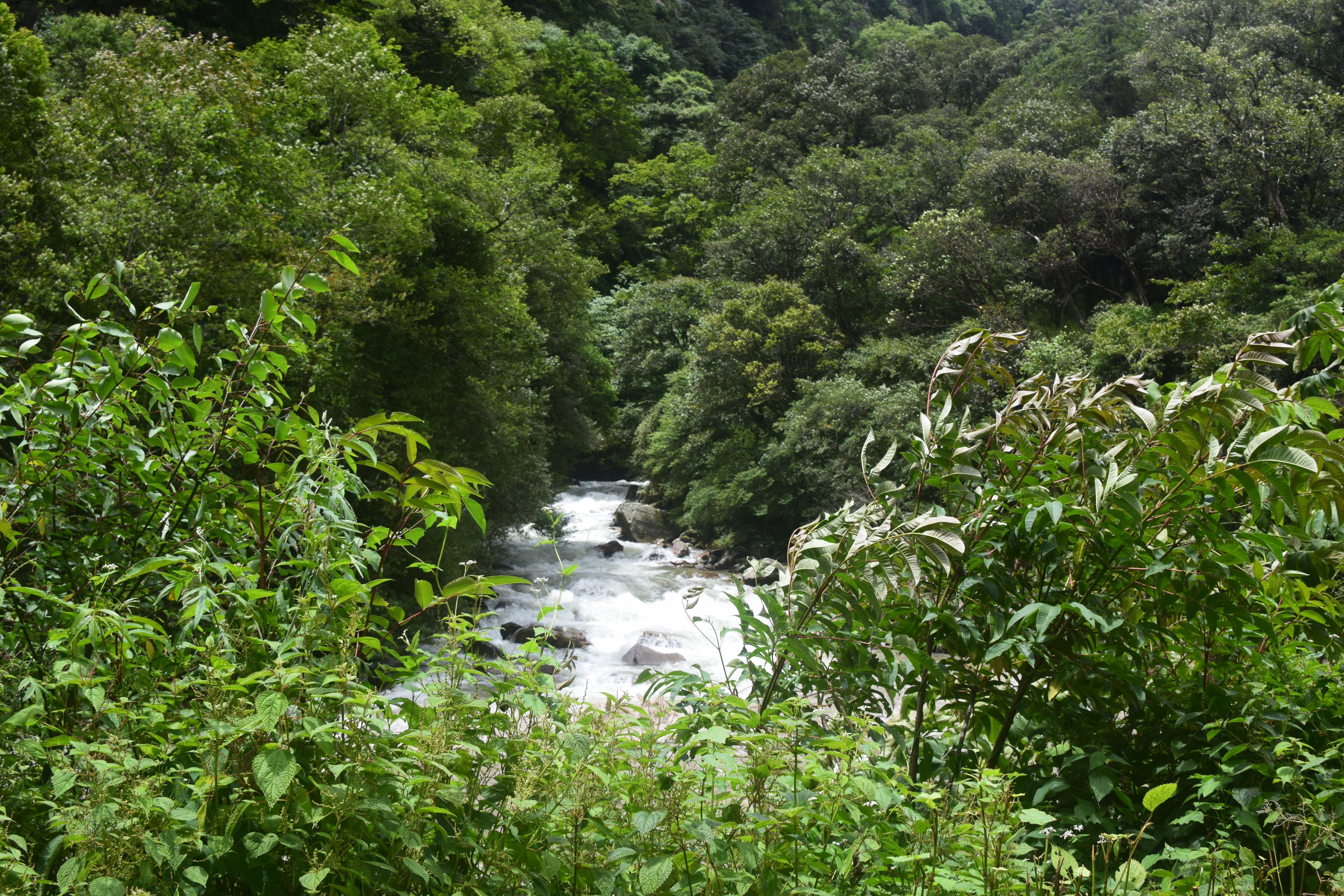
The Namkha chu which witnessed the first battle in October 1962
A recent visit in the forward areas of the Tawang sector opened my eyes wider. Though I have been studying different aspects of the 1962 border war with China for years, it is only by seeing the terrain of the tragic confrontation which turned into a debacle for the 7th Brigade of Brigadier John P. Dalvi, that one can realize the utter incompetence of some of the ‘political’ generals who conducted the battle of the Namkha chu on behalf of the senior leadership in Delhi.
Two conclusions came immediately to mind: first, the disaster wass entirely of the Indian political leadership’s making, particularly from Prime Minister Nehru and a small clique of sycophants around him (such as VK Krishna Menon, BN Mallik, Gen PN Thapar or Lt Gen BM Kaul).
Seeing the scene of the battle, makes you understand that a similar defeat can’t happen anymore. I shall further elaborate on this later.

Escaped Unpunished
What is flabbergasting is that the ‘culprits’ of 1962 never bore any consequences. In his Himalayan Blunder, Brig Dalvi wrote: “General Pran Nath Thapar resigned on ‘grounds of health’ - the hackneyed euphemism for what the British call ‘the bowler hat’. He was rewarded with the Ambassadorship to Afghanistan. Lt Gen BM Kaul, the Commander of the ill-conceived and ill-fated IV Corps, was compelled to seek premature retirement - a bitter pill for Mr. Nehru to swallow - as Kaul was widely believed to have been his protégé and military confidant.”

The Forward Policy
One often speaks of the Forward Policy decided by the government in 1961, as being the trigger for the war; according to Dalvi, during a meeting in the autumn of 1961: “at which Mr. Menon, General Thapar and General Kaul were present. Studying a map showing recent Chinese incursions, Mr. Nehru is reported to have said that whoever succeeded in establishing a post would establish a claim to that territory, as possession was nine-tenths of the law. He then asked if the Chinese could set up posts why couldn't we?”
Gen Kaul later claimed that “(Nehru) was told that owing to numerical and logistical difficulties, we could not keep up in this race with the Chinese. …China with her superior military resources could - operationally make the position of our small posts untenable.”
But wisdom did not prevail.
Seeing the narrowness of the gorge between the Hathungla and the Thagla ridges and the small nallah (the Namkha chu) running between the two giant massifs even a child would understand that the Himalayan stream was not the best defensive place (or even offensive). But Delhi stuck to its guns: “Chinese have to be evicted.”
In his Himalayan Blunder, Brig Dalvi recalled: “My appreciation of September 1962 is a pivotal document. It is capable of various interpretations by different people. Gen Kaul has used copious extracts to weave a claim of reprieval for his impatience and haste between 5th and 10th October (1962). He has manipulated passages to insinuate that he was on occasion a helpless spectator of events …and that he was compelled to implement the defective plans devised at the tactical level.”
The politicians (including the ‘politician’ generals) are masters are justifying their foolishness and blunders, Dalvi recalled: “(Kaul) has muted his role in moving 7th Brigade to the Namka Chu. …He omits the antecedents of the Appreciation and how it came into being, but quotes excerpts to achieve his ends. He has attributed some parts to Gen Umrao [33 Corps Commander] and others to the Brigade Commander.”
Kaul later justified his decision for accepting to be associated with what he called the Government's final desperate gamble: “I was thus expected to perform a miracle and begin operations immediately. I could hardly start bickering (sic) about the obvious handicaps at a time when India found herself in a precarious situation and therefore decided to cross my fingers, make the best of my lean resources (one brigade) and face the situation as best I could.”
The truth was that to force the 7th Brigade to set up posts near the nallah and hope to defend India’s position from there, was criminal.

Tree planted by the Dalai Lama as he arrived in India
on March 31, 1959
Chinese Tactics
Kaul and his patrons in Delhi did not know anything about the Chinese tactics.
The Chinese author Jianglin Li, who has masterfully recorded the movement of the People’s Liberation Army (PLA) after the 1959 Tibetan uprising, wrote: “By analyzing many memoirs, autobiographies and biographies, openly published, classified or semi-classified, I found out that the 12 large scale battles fought in central Tibet from March 1959 to early 1962 were in fact conducted as a thoroughly organised military training, beyond the actual requirements of a counter-insurgency operation …commanders were testing the battle strategies best suited to the terrain.”
She cited battles which were clearly fought to gain “experience of fighting with the large unit encircling tactic and carrying out policies in pastoral regions. …It has been proved by many experiences that carrying out encirclement is the most effective method to wipe out large numbers of rebel bandits.” Encirclement was extensively used by the PLA during the border war with India, but Kaul had never heard of this and insisted on climbing the Thagla ridge from the narrow nallah (using log bridges).

Flying Orders
Beginning of October 1962, orders were flying over the ridges, “have all the troops of 7 Brigade moved to Tsangdhar?” asked Kaul. Tsangdhar was a high altitude plateau used as a dropping zone.
When the officer answered, "Not yet, Sir", Kaul demanded: "Why not? It was my definite order that the troops must be in position by the evening of 7th October [1962].”
The newly-appointed Corps Commander then threatened: "How dare you disobey my orders, you are the Brigade Major. I have given an assurance to the Prime Minister that I will carry out the operation.”
In these conditions, it was difficult for Brig Dalvi to ‘disobey’ and realign his forces to better strategic positions, for example on the top of the Hathungla.

Why things are different today
The debacle of 1962 will not be repeated for several reasons.
Today, a brigade commander can take an immediate ‘strategic’ decision on the spot; as the chain of command is clear and respected, the brigade commander first refers to his Division commander who in turn will consult the Corps and Army commanders. Eventually final orders will have to come from the Army HQ in Delhi and the Ministry of Defence.
Today, there is no question of being ‘friends’ with the Prime Minster.
Further, India has tremendously invested in the infrastructure (though the Chinese side has an easier access to the LAC). Having visited the area for the first time in 1996, I have witnessed the unbelievable changes; in a couple of months time, the tunnel below Sela pass will be opened, shortening the journey between Assam and Tawang by one hour.
Another factor is that the Air Force (IAF) will be used; it was recently reported in the aftermath of the Galwan Valley clash in June 2020, that the Indian Air Force airlifted more than 68,000 army soldiers and a variety of military equipment to Eastern Ladakh along the LAC); PTI commented: “This swift deployment was facilitated by a combination of strategic airlift capabilities and increased surveillance measures.”
Would China adventure to cross the LAC, it would have to deal not only with the Indian Army but with the IAF too.
A visit to the historic spots of the 1962 tragic events convinces you that China cannot advance even a few meters without being inflicted heavy casualties. Is Xi Jinping ready for this? Certainly not.
After all what did the Emperor gain in Eastern Ladakh?
Did the Darbuk–Shyok–DBO Road get blocked or stopped? The answer is ‘no’.
Did China gain strategic advantages in Galwan or Pangong tso areas? No.
Did Beijing manage to intimidate India with their Information Warfare? No.
Did the Ladakh ‘adventure’ bring any economic gain to China? The answer is again ‘no’.
Did the operations of May 2020 enhance the prestige Chairman Xi or the PLA? Not in India at least.
The above explains that it is today difficult for Beijing to walk out of the imbroglio and return to prior to the beginning of the confrontation.
Perhaps the Chinese leadership did not expect that the Indian Army would conduct negotiations; Indian soldiers know the value of even a few meters on this range or that ridge.
In conclusion, a look at the terrain and at today’s defence preparedness as well as the change of mindset makes you confident that 1962 debacle cannot and will not be repeated. The incident in the Yangtse sector in December 2022 is another proof of this.


Friday, November 18, 2022

The Heroes Who Saved Ladakh For India

My article The Heroes Who Saved Ladakh For India appeared in Rediff.com.

Here is the link...

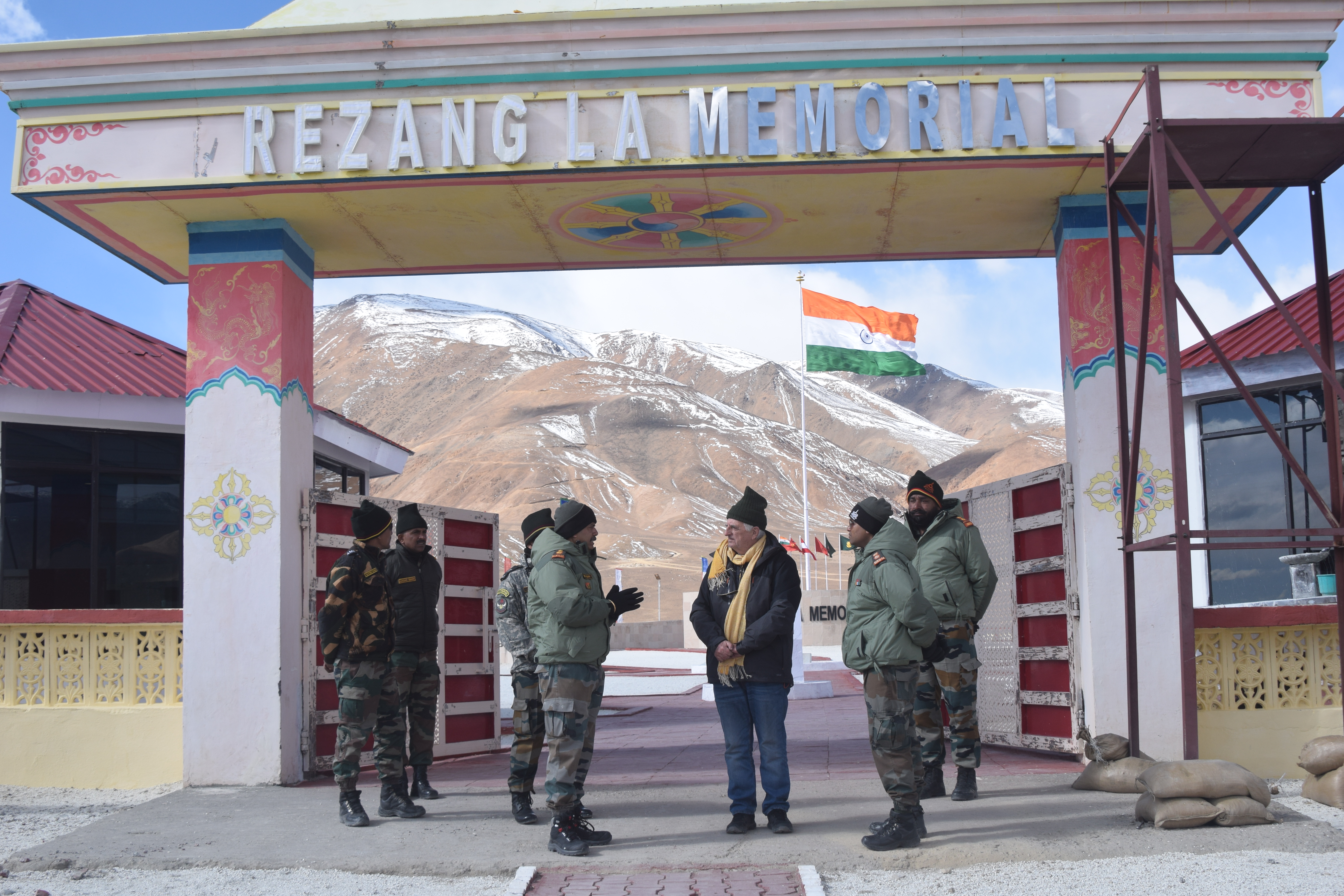
Visiting the Rezang La Memorial, one has a feeling of super-humans defending Indian territory against the Chinese onslaught, says Claude Arpi on the 60th anniversary of the heroic battle of the 1962 War.

Several years ago, I had the opportunity to interview one of the most renowned Indian mountaineers, who had chosen to live like local folks in the Himalaya. She recounted an anecdote which took place during the All-Women Himalayan Traverse expedition; one day the expedition arrived in a small mountain village; speaking about the majestic surroundings, the mountaineer told one of the villagers: ‘Kitne sundar!’ (How beautiful they are!), the local pahari’s immediate reply was, ‘Kitna dukh!’ (So much suffering!).
Somehow, the pithy phrase summarized the hard life in these high mountainous areas.
These words came back to mind when I recently visited the site of the the Battle of Rezang La, near Chushul village in Ladakh at more than 15,000 feet.
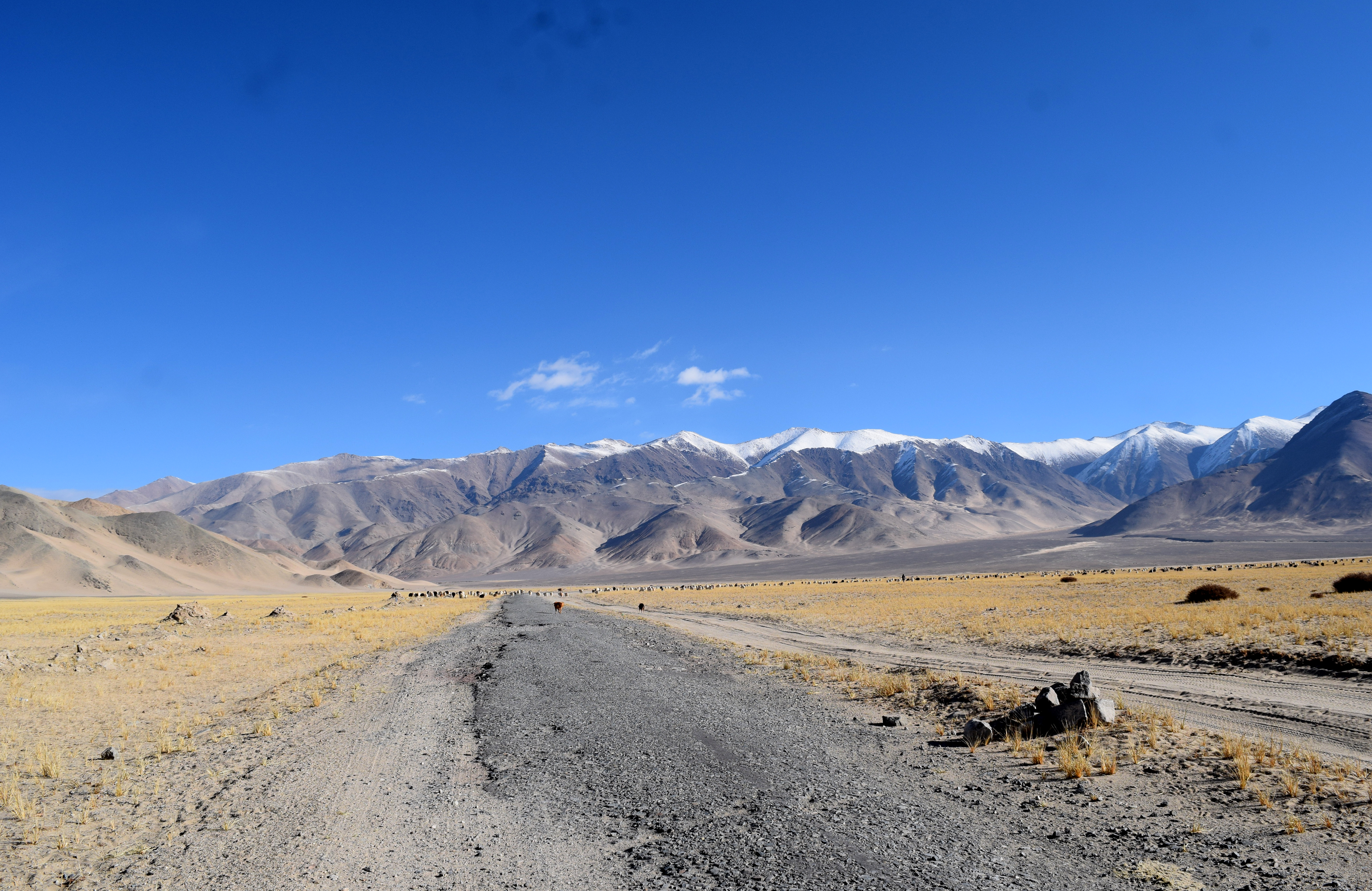
As one arrives by car from Nyoma, the track follows the imposing Kailash range, covered with snow. Immediately, one is confronted by this paradox faced by one of the most peaceful and magnificent spots on earth, which has however witnessed some of the bloodiest battles since independence.
After crossing the Tsaga La (pass) and a few kilometers before arriving at the site of the newly-renovated War Memorial in honour of the ‘Charlie’ Company of the 13th Battalion of the Kumaon Regiment, one can have the magnificent sight of a tri-colour flag floating in the blue sky.

 The ‘dukh’ side
On 18 November 1962, a battle was fought at Rezang La (pass) at the incredible height of 16,000 feet, one of the greatest battles in history; 114 soldiers of the 124-strong company led by Maj Shaitan Singh, PVC, lost their lives heroically defending the nearby Chushul airstrip, the last defence before Leh, Ladakh’s capital.
Maj Shaitan Singh was posthumously awarded the Param Vir Chakra (PVC), the highest military decoration; his battalion received eight VCs (Vir Chakras), four SMs (Sena Medals) and one Mention-in-Dispatches, making it one of the highest decorated companies of the Indian Army.
The citation which appeared in the gazette, said: “Major Shaitan Singh was commanding a company of an Ahir infantry battalion deployed at Rezang La in the Chusul sector at a height of about 16,000 feet. The locality was isolated from the main defended sector and consisted of five platoon-defended positions. On 18 November 1962, the Chinese forces subjected the company position to heavy artillery, mortar and small arms fire and attacked it in overwhelming strength in several successive waves. Against heavy odds, our troops beat back successive waves of enemy attack.”
It is further mentioned that “Major Shaitan Singh dominated the scene of operations and moved at great personal risk from one platoon post to another sustaining the morale of his hard-pressed platoon posts. While doing so he was seriously wounded but continued to encourage and lead his men, who, following his brave example fought gallantly and inflicted heavy casualties on the enemy. For every man lost to us, the enemy lost four or five. When Major Shaitan Singh fell disabled by wounds in his arms and abdomen, his men tried to evacuate him but they came under heavy machine-gun fire. Major Shaitan Singh then ordered his men to leave him to his fate in order to save their lives. Major Shaitan Singh's supreme courage, leadership and exemplary devotion to duty inspired his company to fight almost to the last man.”
Visiting the War Memorial, one has a feeling of super-humans defending the Indian territory against the Chinese onslaught; it is deeply touching; remember that most of the soldiers of the Charlie Company who fought the battle at this altitude had come from the plains of Haryana.
The Ladakh Range and particularly Rezang La and the nearly peaks/passes have an extraordinary strategic importance as they dominates the Spangur Tso (lake), the Spangur Gap (the narrow area between the Pangong Tso and the Spangur Tso) as well as the strategic road to Rutok, the main garrison in Western Tibet and the route to Leh.
By controlling these ridges, the Indian Army stopped the Chinese advance on Leh and probably saved Ladakh. Incidentally, the cease-fire was declared by China four days later. Was it a coincidence?
Though still classified, parts of the Henderson-Brooks-Bhagat Report (hereafter the Report) on the 1962 conflict have found their way to the Internet. It is worth quoting some extracts.
In November 1961, a ‘Forward Policy’ was ordered by the Government; the Report commented: “the ‘Forward Policy’ was primarily introduced to bunk the Chinese claims in Ladakh. Had the developments stemming out of it been correctly apprised by the General Staff at Army Headquarters and correlated to NEFA [North East Frontier Agency], it is possible that we would NOT have precipitated matters till we were better prepared in both theatres.” This sentence has been used by anti-India elements like Neville Maxwell to put the blame on Delhi.
The General Staff of the Army Headquarters knew that any move in NEFA would have consequences in Ladakh, here the level of preparations was minimal; according to the Report: “we acted on a militarily unsound basis of not relying on our own strength but rather on believed lack of reaction from the Chinese. We forgot the age old dictum of the ‘Art of War summed up so aptly by Field Marshal Lord Roberts.”
The latter had said “The art of war teaches us to rely not on the likelihood of the enemy NOT coming, but on our own readiness to receive on the fact that we have made our position unassailable.”
But till the last minute, the government (primarily the Defence Minister Krishna Menon) believed that “The Chinese will not dare”.
The Report continued: “Militarily, it is unthinkable that the General Staff did not advise the Government on our weakness and inability to implement the ‘Forwards Policy’. General [BM] Kaul [Chief of General Staff] on his report has brought out that, on a number of occasions in 1961-62, the Government were advised of our deficiencies in equipment, manpower, and logistic support, which would seriously prejudice our position in the event of a Chinese attack on us.”
At the same time: “orders were given by the General Staff in December 1961 for the implementation of the ‘Forwards Policy’ without the prerequisite of ‘Major Bases’ for restoring a military situation, as laid down by Government. Indeed General KAUL as CGS and the DMO [Director of Military Operations, Maj Gen DK Palit], time and again, ordered in furtherance of the ‘Forward Policy’ the establishment of individual posts, overruling protests made by Western Command.”
Winds of folly were blowing over the Army Headquarters in Delhi; we know what happened a few months later, in October/November 1962.
Maj Shaitan Singh and hundreds of his comrades sacrificed their lives to undo the foolishness of the politicians; the Report added: “There might have been pressure put on by the Defence Ministry, but it was the duty of the General Staff to have pointed out the unsoundness of the ‘Forwards Policy’ without the means to implement it.”
Further, Gen Henderson pointed out: “It is apparent that none of this planning took place and NO operation orders or instructions were issued by the General Staff. It was therefore NOT possible for Command or lower formations to issue any comprehensive order without a directive from the General staff.”
Is it the reason why the Report is still classified 60 years after the event?
One of the conclusions of the Report was: “It was a junior leaders and jawans battle and there is no doubt that they acquitted themselves well. They fought under grave handicaps and in face of defeat; yet there was no sign of undue panic and never a rout. The main reason for this was that troops fought under commanders they knew and trusted. There was no interference or short-circuiting in the chain of command and commanders on the spot were given freedom of action. The good name of our Army was NOT completely marred in LADAKH and the grave errors committed by the General Staff to an extent mitigated, thanks to the fighting ability of our troops.”
Indeed the 13 Kumaon and other units fought like lions. It is said that some 3,000 Chinese lost their lives in a couple of days in this sector.
Leh was probably saved by their act of heroism.
Ironically, the 58 years later, the Tibetan commandos captured the same peaks to have a strategic peep on the Rutok road.
In the process of the negotiations in Chushul and Moldo in the nearby Spangur Gap, the area was demilitarized in exchange of an agreement in the Fingers area on the Pangong Lake. Without commenting on the wisdom of this political move, one can only say Kitna dukh these stunning mountains have witnessed.
While on the spot, an idea came to me, when Chinese officers come to Chushul/Moldo for LAC talks, they should be invited to visit the Memorial to understand what the Indian soldiers are made of. 


Sunday, October 2, 2022

PoW in Tibet

PoWs in Tibet: Lt Col Ratan Singh, Lt Col Balwant Singh Aluwallia, Brig John Dalvi,
Lt Col Maha Singh Rikh, Lt Col KK Tewari in front of the Potala (April 1963)

Sixty years ago, China started an uncalled-for war against India.
On the occasion, I repost an old article which appeared
on this blog in 2012; it is about a painful episode in the life of a soldier: on October 20, 1962, he was taken PoW in Tibet by the Chinese People's Liberation Army.

I have added at the end some rare pictures of the area (courtesy: Michael Dalvi)

Here is my 2012 post:

Continuing with the 1962 War with China: 50 Years Later, here is the story of  Gen Tewari. 
He was commissioned in the British Indian Army in 1942. 
In 1962, he was Commander Signals of the 4 Infantry Division based in Tezpur, Assam. 
On October 20, 1962, as he was visiting his forward troops, the Chinese attacked India. He was taken prisoner and sent to Tibet where he stayed for nearly 7 months. 

In his book, Himalayan Blunder Brig. John Dalvi wrote: “Col. Tewari was a gentle, God-fearing man in addition to being a first rate signaler. He had worked against tremendous odds through the operations and had overcome difficulties which would have taxed an Army Signals Regiment. He is due much credit for providing communications with obsolete equipment and the distances involved. Instead of praise they came in for criticism for not being able to work miracles with out-dated sets and distances which were beyond the range of divisional signals”.
Brig. Dalvi added: “There was a sad sequel to Tewari’s visit [on the Namkha chu]. …When the Gorkhas were attacked, Tewari found himself in the midst of an infantry battle. He was taken prisoner after the Chinese had over run the position. Who has ever heard of a Commander Signals being sent to an infantry battalion on the night before a massive attack, if there was any anticipation of a battle? He would have been at Divisional HQ attending to the Division’s communications.” 
Maj. Gen. K.K. Tewari's story: 
As a result of the Chinese threat on our northern borders, sometime in 1959 the Headquarters of Eastern Command at Lucknow was given the operational responsibility for the defense of Sikkim and NEFA. I was at that time, the Commander Signals of the 4th (Red Eagle) Division Infantry Division located at Ambala. We were immediately ordered to move to Tezpur in Assam.
This Division, trained and equipped for fighting in the plains, had suddenly to be deployed to guard these high mountain regions. While a normal division occupies an area frontage of 30 to 40 km in the plains, we were assigned a front spreading on more than 1800 kilometers of mountainous terrain!
But worse! Before the Division could take its operational responsibilities to defend the border with Tibet, orders for the execution of an Operation Amar 2 were received from Lt Gen BM Kaul, then Quarter Master General in the Army HQ. We were suddenly supposed to build temporary basha (house with straw) accommodations for the Division.
Besides the fact that my regiment had to provide communications for the Division in an entirely new and undeveloped area, we had now to become engineers and builders! You have to understand that a Signal Regiment is a functional unit in war or peace which is supposed to cater 24 hours a day to the various types of communications for its formation.
So, immediately after arrival in Tezpur, the Regiment got involved in the mad rush of building: the Prime Minister was to inaugurate the newly built bashas.
My first four months in command were a real nightmare. We would certainly have preferred to rough it out in tents and spend the time developing a reasonable communications set-up, getting our equipment properly checked and maintained and getting the men used to working with the available equipment in the mountains.
It was a personal relief when, on 14 April 1960, the inauguration was over. Only then did we turn any serious attention and effort towards our operational responsibilities. Even our equipment was antiquated and unsuitable for mountainous terrain and the excessive ranges.
At that time, there were hardly any roads existing in any of the five frontier divisions (FD) of Arunachal Pradesh. The road into Kameng FD, the most vulnerable, finished at the Foothills just beyond Misamari [4 days walk from Tawang]
We were faced with shortages of every kind. It was during these early days in NEFA that one of the COs of an infantry battalion sent a note written on a chapatti. When asked for an explanation, he gave a classic reply: "Regret unorthodox stationary but atta (wheat flour) is the only commodity available for fighting, for feeding and for futile correspondence."
Sometime in 1962, orders came from Army HQ for Operation Onkar (the famous “Forward Policy”), which directed all Assam Rifles posts to move forward, right up to the border. Of course, we were to back them. The idea was to establish the right of possession on our territory and to deter the Chinese from moving forward and occupying it, as was claimed by them. This order was certainly not supported by resources.
At that time, our Division had done almost three years non-family station service and some of the units were already on their way out on turnover. Suddenly all moves out of the area were cancelled and orders reversed.
Brig John Dalvi, the Commander Infantry Brigade who was in Tawang was ordered to move his HQ on a man/mule pack basis to Namkha Chu River area. An ad hoc Brigade HQ was created for Tawang sector overnight with hardly any Signal resources.
At that time, I was the only field officer of Lt Col or higher rank who had the longest tenure at not only the divisional HQ but among all the divisional troops. I should have been posted out after a two-year tenure in a non-family station. But I had also a sort of premonition, and I recorded it in my diary, that a severe test was in the offing for me to assess my faith in the Divine. I certainly had no idea that I would be taken a prisoner of war.
On September 8, 1962, the Dhola post manned by the Assam Rifles on the McMahon line, was encircled by the Chinese. A few days later, we had a meeting of the senior commanders from the Army Commander downwards at Tezpur. A relief party had been ordered to relieve the besieged Dhola post. This linkup was expected by nightfall on the 14th of September: Everyone was tensely waiting for the news of the link-up. Naturally all eyes were on me; as the communications `chief’, to bring them the message. But there was no news until late in the evening.
After this incident, a new Corps HQ was created to take charge of operations in NEFA. Lt Gen B.M. Kaul was appointed as the Corps Commander. He arrived from Army HQ in a special aircraft at Tezpur in the late afternoon of 4 October. At about 10 pm, Lt Gen Kaul announced in his typical flamboyant style that he had taken over command of all troops in NEFA. It was all so dramatic!
Here was a new situation, normally a Corps HQ in those days would be served by a corps signal regiment and another communication zone signal regiment. These had yet to be raised.
To compound these difficulties, Lt Gen Kaul had his own way to send messages.
Normally, a signal message is supposed to be written in an abbreviated telegraphic language. But all messages from the new Corps Commander ran into a couple of typed sheets in prose language and were all marked Top Secret and Flash. They were not addressed to the next higher HQ but directly to Army HQ. You should understand that it required to stop all other traffic to clear FLASH messages.
In September 1962, the higher authorities had obviously assumed that it would be easy to beat the Chinese. Otherwise, one cannot imagine how such an order to engage the enemy could have been issued by Delhi to the ill-equipped, ill-clothed, ill-prepared, fatigued, disillusioned troops.
Do you realize that when Dalvi’s brigade arrived near the Namkha Chu river after forced marches, he was ordered to throw the Chinese out of the Thagla ridge.
I have to tell you a telling incident: arriving near the river, after an exhausting journey, the brigade signal officer discovered that the generating engine to charge the wireless batteries was not here. A porter had dropped the charging engine in a deep khud on the way. It could not be retrieved. I believe it was dropped deliberately, because some of these civilian porters were in the pay of the Chinese.
But I was in for a still bigger shock when it was discovered that almost all the secondary batteries had arrived without any acid. I presume that what had happened is that the porters must have found it lighter without liquid and they probably decided to lighten their loads by emptying out the acid from all the batteries.
How to establish communications when the batteries are dead and could not be recharged? Despite of our good relations with them, the Air Force helicopter boys refused to carry acid. There was no question, of course, of dropping sulphuric acid by air. What was I to do? Fate was also pushing me to my inevitable destiny.
We filled up a jar of acid and marked prominently it: `Rum for Troops' and on October 18, I flew from Tezpur to Zimithang where I met with the GOC, Maj. Gen. Niranjan Prasad. Later, I went to Tsangdhar near the Namkha chu in a two-seater Bell helicopter with just the pilot and with the `Rum' jar strapped onto my lap. I landed there in the late afternoon and I marched down to Brig Dalvi's brigade HQ.
As I arrived there, I could quite clearly see the massing of the Chinese troops on the forward slopes of Thagla ridge.
When I discovered that every unit on the front had numerous signals problems, I decided to extend my stay by a day. It is where fate caught up with me!

On the 19th, Brig Dalvi informed over the telephone the GOC at Zimithang. He pleaded with his boss to let him move out of the `death trap', up to a tactically sound defensive position. Brig. Dalvi was told not to flap but to obey orders and stay put. He was extremely upset and passed the telephone to me saying, "You won't believe me, Sir, but talk to your `bloody' Commander Signals and he will tell you what all he can see with his naked eyes in front."
I spoke to the GOC equally strongly saying that one could see the Chinese moving down the Thagla Ridge like ants and also see at least half a dozen mortars which were not even camouflaged. I added that the Chinese could not be there for a picnic. I was also told to concentrate on my work and not to worry.
I stayed on with the 1/9 Gorkhas during the night of 19th October. Early on the 20th morning, I was woken up from a deep sleep by the noise of an intense bombardment. There was utter confusion in the pre-dawn darkness, shouting and yelling and running around in the midst of these exploding shells. I came out of the bunker and somehow found my way to the Signals bunker with two of my signalmen.
I looked out of the bunker. It was mystifying to see no visible movement outside. There was no one in sight. I peeped out of the bunker again. I saw a line of khaki clad soldiers with a prominent red star on their uniforms advancing towards our bunker. I had never seen a Chinese soldier till then at such close range.
I used to carry a 9 mm Browning automatic pistol in those days with one loaded clip.
The thought immediately was that one's dead body should not be found with an unfired pistol; it must be used, however hopeless our situation. So, when a couple of Chinese soldiers approached our bunker, I let go the full clip at them. And suddenly hell was let loose with the Chinese yelling and firing and a number of them converging onto our bunker. My two assistants were killed and I was alive, but a PoW.


On the road to Tibet
On October 20, 1962, the Indian prisoners were marched along a narrow track across the Namkha chu (river); later we went up to the Thagla pass (about 15,000 feet). On our way, we passed huge stocks of unfired mortar shells by the sides of our mortar positions, while on the northern side of the ridge, Chinese parties were still bringing up 120 mm mortars on a man pack basis.
After 3 days walk, we reached a place called Marmang in Tibet. From there we were taken in covered vehicles at night. During the journey, the Chinese tried to demoralize us; they would make fun of our army: "You do not even have cutting tools for felling trees. You use shovels to cut down trees." It was true; they had seen our troops preparing their defensive positions near the Namkha chu. There were other remarks such as, "You people have strange tactics. You sit right at the bottom of the valley to defend your territory instead of sitting on a high ground."
We arrived at the PoW camp located at Chongye [in Central Tibet] on 26 October and were accommodated in Lama houses which were all deserted although we could see some activity in the monastery above these houses on the side of a hill. 
We were to spend over five months in this camp, located south west of Tsetang, off the main highway to Lhasa. The prisoners were segregated into four companies: No. 1 Company was all officers, JCOs and NCOs. Majors and Lt Colonels were also separated from the JCOs and men. No. 2 and 3 Companies were jawans of various units. No. 4 Company, consisted only of Gorkhas and was given special privileges, for obvious political reasons. Each company had its own cookhouse where the Indian soldiers selected by the Chinese were made to cook.
In our house, we were four Lt Colonels (Maha Singh Rikh of the 2 Rajputs, Balwant Singh Ahluwalia of the Gorkhas, Rattan Singh of 5 Assam Rifles and myself), while John Dalvi was kept in confinement in Tsetang, a few km away from Chongye.
When we made representations to the Chinese that under the Geneva Convention on PoWs, officers had the right to be with their men, we were told quite bluntly that all these were nothing but imperialist conventions.
I shivered through the first couple of nights but then had a brain wave. I had noticed a pile of husk outside. We asked the Chinese if we could use it. Luckily, they accepted, and we could use the stuff as a mattress as well as a quilt.
For almost a month after our arrival, we were not let out of the room. Each of these lama houses had its own latrine in one corner with an open but very effective system of soil disposal. Unfortunately, by the time we arrived, the `disposal squad' of pigs had itself been disposed off by the Chinese.
There was an English speaking Chinese officer, Lt. Tong who was with us almost throughout our stay in the POW camp. He would come daily and talk to us individually or together. The theme of his talk with the POWs was monotonously the same: the Chinese wanted to be friends and it was only the reactionary government of Nehru, who was a lackey of American imperialism that wanted to break this friendship. "Then why did you attack us on 20 October?" They would try to explain that India attacked first and the Chinese attacked only in self-defense.
On 5 December, we were given for the first time some books and magazines to read. This consisted of Mao's Red Book, some literature on the India-China boundary question and a few Red Army journals. But whatever they were, they were most welcome for me at least. There was something to do at last to occupy the mind. I took notes from the Red Book. It is a pity that our government did not read some of the Mao’s thoughts. I noted them down at that time: "Fight no battle unprepared, fight no battle you are not sure of winning" or "The enemy advances, we retreat; the enemy halts, we harass, the enemy tires, we attack; the enemy retreats, we pursue."
Towards the end of December 1962, the Red Cross sent us one parcel each with two packets in it. One packet had warm clothes, a German battle dress, a pair of long johns, warm vest, muffler, cap, jersey, warm shirt, boots and a towel. The second packet contained foodstuff including a bar of Sathe chocolate, tins of milk, jam, butter, fish, packets of sugar, atta (wheat flour), dal (pulses), dried peas, salt, tea, biscuits, condiments, cigarettes and vitamin pills. It certainly was a very well thought-out list of items.
Perhaps to demoralize us, the Chinese would often play Indian music on the public address system in the camp. One of the songs which was played repeatedly was Lata Mangeshkar's "Aa Ja Re-Main to kab se Khari Is par...." [Come, I have been waiting for so long] This would make us feel homesick.
With my habit of writing a diary, I kept notes as a POW also. In the first week or so, the only available paper to write on, were some sheets of toilet paper in my para jacket pocket. The question was how to keep these papers from being discovered by the Chinese. What I had done was to open the stitching on the ‘belt’ part of the trousers and then slide the folded papers inside. This was how my diary notes on toilet paper could be brought out to India.
One other episode of our stay in the camp is worth recording. One day, towards the end of our stay, at our request we were taken to see the palace and the monastery. It was a shock to see the palace with all the beautiful Buddha statues of all sizes and fabulous scrolls (tankhas) lying broken, defiled and torn and trampled on the ground.
On 25 December, we, the seven field officers were taken in one of the captured Indian Nissan trucks to spend the Christmas morning with Brig. John Dalvi at Tsetang. He was kept all alone and was comfortably accommodated. We had breakfast and lunch with him and were shown a movie. Dalvi had suffered a great deal mentally — being all by himself. He was now better.
The first letters we received from home came only in the third week of February 1963. Some of us, including myself, received parcels of sweets too.
On March 26, we were informed that we would soon be released and taken for a conducted tour of the mainland China. Suddenly we became VIPs, though still held as prisoners. We were given various comforts and given new clothes and shoes.
Before leaving the PoW camp, we asked the Chinese to take us to the graves of our soldiers who had died in our camp. There were seven of them including Subedar Joginder Singh, who had been awarded a PVC. We were told by the Chinese that he had refused to have his toes, which were affected by frost-bite, amputated. According to the Chinese, he had told them that his chances of promotion to Subedar Major would be adversely effected if his toes were amputated. We were told that he died of gangrene.
On 28 March, we left the camp, ironically in an Indian captured vehicle and were driven to Tsetang to pick up Brig John Dalvi and three other Lt. Colonels and five Majors. On 29th March, we were all driven in a bus to Lhasa. On 5 April, we were flown in two IL 14 aircrafts to Xining [Qinghai Province]. After a long tour of China, during which we were shown China’s ‘progress’ after the Communist revolution, we were informed on 27 April that we shall be handed over to India at Kunming on 4 May.
At the handing over ceremony, we witnessed a last surprise performance by the Chinese. Throughout our tour of China, an immaculately dressed Chinese had accompanied us. He was not dressed in cotton padded clothes like all the others. He commanded a lot of respect from the other Chinese. We used to refer to him as the ‘General’. He had a chap trailing around behind him always, helping him with things, offering a chair, a cup of tea, etc. We used to refer to that fellow as the orderly to the General. At the handing over ceremony, however, the person who sat down and signed on behalf of China was the ‘orderly’ and the one who stood behind to pass him the pen to sign was the ‘general’! Such are the Chinese ways!
On May 5, we took off at 9.10 a.m. from Kunming and were scheduled to land at Calcutta at 1.20 p.m. Before reaching Calcutta, the pilot announced that there was some problem with the under carriage not opening and that we might have to crash land, finally we landed ultimately at 2.30 p.m. at Dum Dum with all the fire tenders lined up. It would have been such an irony of fate if we had been killed in a crash landing in India!
In my opinion, the Chinese had prepared their attack for at least 2 or 3 years. I can give you few examples: one day a Chinese woman came and recited some of Bahadur Shah Zafar's poems, much to our delight. The Chinese had certainly prepared for this war most diligently because they had interpreters for every Indian language right in the front line. This Urdu-speaking woman must have lived in Lucknow for a long time. Same thing for one of our guards, though he had not said a single word for 5 months (we used to call him Poker Face), we discovered that he could speak perfect Punjabi when he left us in Kunming.
Their constant brainwashing was to make us accept that we had attacked them.

Bunker near Namkha chu

Bunker Bunker near Namkha chu
Bunker near Namkha chu
Namjiang chu with Thagla ridge in the background

Namkha chu (river). Thagla ridge was held by the Chinese.
Tsangdhar dropping zone
Radio set found on the battle field  near the Namkha chu

Saturday, October 1, 2022

A Soldier with Two Wives

To commemorate 60 years of the 1962 Sino-Indian War, till the end of the month, I will post everyday a new article related to the conflict.
I start today with an article on the 'sparrow' of the 7th Brigade, Brig Lakshman Singh who recently passed away...


Brigadier Lakshman Singh (commission on June 2, 1955) passed away yesterday morning at his home in Greater NOIDA. He was one of the stalwarts of the Corps of Signals, who  performed a stellar role during the 1962 war when he was the OC Signal Section of 7 Infantry Brigade which bore the brunt of the Chinese attack. He has written about his experiences during the war in his books:  A Soldier’s Journey Through Life With Two Wives and Letters From the Border and Other Less Told Stories.
I had written about him some ten years ago.

My article
Lakshman Singh, a slim young captain had two wives when, in May 1962, he was told to join the ill-fated 7 Infantry Brigade on the Namkha chu (river) of the then North East Frontier Agency (NEFA); clouds had been gathering on the Indo-China border.
Many officers and jawans must have been in his case. One wife was the ‘regular’ one; the other one was the Indian Army.
Many decades later, after retiring as a Brigadier, Lakshman Singh wrote his memoirs A Soldier’s journey through life with two wives.
The young Captain was in love with Rosy, his life partner, but could not refuse the tough assignment. He was to man the communications of Brig. John Dalvi’s Brigade in the inaccessible terrain of Western NEFA, then known as Kameng FD (Frontier Division), today Tawang district of Arunachal Pradesh.
Torn between his two loves, Lakshman decided that the least he could do was to write a daily letter to his other wife Rosy (he calls her ‘Jeet’) who was left alone in Dehra Dun.
Fifty years later, Lakshman Singh still remembers his journey to the unknown, from the hot plains to the mountainous land, far away from his ‘first’ wife: “After a couple of days stay at Misamari (Assam), the Brigade rear was moving higher and higher and farther away from Jeet.”
A place known as Foothills was the entry point to Kameng FD. To reach the Tenga Valley, today’s main Army garrison in the area, it took a six-hour torturous drive.

Prayer Flags on a mast
Driving through the tiny village of Chako, the jeep driver suddenly stopped. Lakshman thought that the engine needed a bit of rest after the first hours of steep climb. Two young good-looking girls appeared on the scene: “Sir, would you like a good tea”. To show his own importance, the driver told the girls: “Yes, give tea to our Captain Sahib, he is joining his regiment in Tawang as a signal in-charge”. Lakshman still remembers the “two pretty girls of indeterminate race.”
Today he admits: “It was later discovered that they were Chinese spies, complete with a wireless transmitter; the antenna was cunningly hidden and well camouflaged in the tall bamboo, replete with the ubiquitous prayer flags fluttering gently in the cold mountain breeze spreading the message of peace around.”
This incident resumes the state of intelligence and counter-intelligence of the Indian side on the eve of the Chinese attack. The teashop was located at a very strategic location ‘with the girls in attendance’, explains Lakshman: “it was the proverbial magnet which worked like a dream. The chitchats by the girls with the soldiers, hungry for and denied of female company for long, only too willing to open up during the halts, provided them with all the intelligence they required on the movement and deployment of troops.”
This explains how Mao Zedong had the intelligence required to prepare his attack on the Indian positions on October 20.
The Great Helmsman told his colleagues of the Standing Committee of the Politburo on October 6: “It seems like armed coexistence won’t work. It’s just as we expected. Nehru really wants to use force. This isn’t strange. He has always wanted to seize Aksai Chin and Thagla Ridge. He thinks he can get everything he desires.”
Mao had been ‘informed’ that Lt. Gen. Kaul to decided to take back the Thagla ridge from the Chinese during an ‘Operation Leghorn’ which was to start on October 10.
Today Lakshman realizes: “my arrival would been reported to those concerned even before I reached Tawang.”
Unfortunately it was not only him; every officer remembers the ‘chai’ with the sweet girls.
The jeep continued its uneventful journey through grandiose scenery passing the small towns of Bomdila and Dirang on the way to the majestic Sela Pass; here they had to break their journey. The Signaler started writing to Jeet: “The journey till now had been incredible, mostly a roller-coaster ride. The road climbing to dizzy heights, as it wound up the mountains, disappearing into moist fog and mist, the overworked engine whining as the jeep climbed uphill and then it rushed back down the valley with the driver's foot on the brake pedle, the brakes making a screeching sound, to emerge from the whiteout.”
After finally crossing the pass, they rushed down to Jang, the village at the bottom of Sela and a couple of hours later, they finally had the darshan of the majestic Tawang monastery: “Out of breath and struggling after having come straight from the plains of Assam, totally unacclimatized to the height, the cold and the rarefied atmosphere, I huffed and puffed up the steep trail making slow progress. Completely exhausted, I somehow made it to the Brigade Officers living area just as it was getting dark.”

Tawang Monastery
During the first months in Tawang the young officer could relax, “life was boring and of routine nature… We were like prisoners albeit prisoners of peace.” They were told from the ‘highest intelligence sources’ that the Chinese were not in a position to take any offensive action… till the railway line to Lhasa was ready.” Everybody believed it.
But things changed after September 8. It was a Saturday.
That day, Lakshman was on leave; when he returned to the HQ, he felt a tension in the air. He quickened his pace. He remembers “unease in the atmosphere. Something was wrong, very wrong.”
He soon discovered that some 600 Chinese soldiers had surrounded the Dhola Post on the Namkha chu.
They would later realize that the Chinese always attacked on Saturday, when Indian senior officers would have a well-deserved beer in the mess or were attending an important dancing party at an Army’s club of Delhi, Lucknow (Command HQ) or Tezpur (Corps HQ).
In the morning of September 8, 1962, Chinese launched their first offensive. The Official Report of the Ministry of Indian Defence says: “troops were noticed moving across the Namkha Chu in the Tawang sector. In a few hours about forty of them crossed the river, virtually surrounded Dhola and threatened the small post manned by troops from 9 Punjab.” There was panic in the Indian camp.
The retired Brigadier is today bitter. He speaks about the lack of proper of appreciation: “The Commanders are supposed to prepare an appreciation of the situation, what is the threat, who is the enemy, etc”. At that time the appreciation was that the Chinese were not ready, unless they bring a railway line from Beijing to Lhasa. When asked who is to blame, Lakshman Singh bluntly says; “B.N. Mullik, the IB Director was a dope. He is responsible for the debacle. He kept saying that the Chinese won’t attack but China attacked us; unfortunately intelligence did not come from God, but from Mullik”.
Lakshman recalls: “The scene would have definitely appeared a bit comical to an outsider, ideal for a sequence in the war movies being produced in Bombay. Suddenly Hindi Chini Bhai Bhai became Hindi Chini bye bye”.
Everything suddenly changed; from its “well entrenched position for the protection of Tawang”, the Brigade was tasked to relieve the Dhola post and drive the Chinese out of the Indian territory. Poor Lakshman, he would not see Rosy soon: “And there went my holiday plans flying out of the window. What a disappointment!”.
Brigade HQ in Tawang
It was a particularly painful for the signalers who had to work over long distances (from Army HQ in Delhi to Dhola post on the Namkha chu) through the most difficult terrain with antiquated equipment.
During the following month, the 7 Infantry Brigade never received a single written order, recalls Lakshman Singh. The only thing which was heard was “challo! lay a line; move forward”. The General Commanding Officer (GOC 4 Division Commander) kept telling his Brigade Commander (Dalvi): ‘Go forward’.
Maj. Gen. Niranjan Prasad, the GOC himself was getting frantic calls from the Corps Commander: ‘go to Tawang’; once in Tawang, he was told: ‘What are you doing here, go to Lumpu’, and so on, to the Namkha chu.
Then the new Corps Commander (Lt. Gen. B.M. Kaul) arrived one day at 4 pm, things then changed for the worse: “I am the GOC 4 Corps,” Kaul introduced himself. Nobody had heard of this 4 Corps; it was an adhoc creation to kick the Chinese out. Kaul was shouting: “move forward, I will sack whoever does not immediately move forward” There was total chaos. But the officers and soldiers had been trained to obey and not to question; and they all obeyed.
On October 19, the day before the attack, Lakshman was on the Namkha chu; he remembers Brig. Dalvi being told by the 4 Division’s GOC to send a platoon of Gorkhas to Tsangle (north of the river). Dalvi told his boss: “No, Sir, the Chinese will attack tomorrow, let me withdraw to a safer place. If you don’t agree, Sir, I am prepared to resign”. But it was too late.

The next morning, the Chinese attacked. At 4:30 am, after the shelling had started, Lakshman managed to speak for a few minutes to his CO, Lt. Col. K.K. Tewari, who himself was in the bunker further ahead on the banks of the Namkha chu. The Chinese had come down the ridge opposite the river a couple of days earlier (though the Indian troops were still told that China won’t attack). For a few minutes Tewari, gave a vivid running commentary about the Chinese surrounding him when suddenly all communications were cut. That was the end of Nehru’s grandiose plans to throw the Chinese out and the beginning of the most harrowing experience for the hapless 7 Brigade and India.
During the few next hours and days chaos prevailed. Some units fought heroically, more that 500 jawans and officers lost their lives on the Namkha chu alone; some managed to escape.
Lakshman trekked his way back to India via Bhutan. Rosy did not get any letters for a few days.
Fifty years later, he strongly feels that “at the time of duty, when the country is calling, personal issues should be set aside; one should totally concentrate on one’s profession. My profession (of soldier) always came first; this has been my Philosophy of Life”.
He was madly in love with his true wife, but duty came first when he had to serve his country.