According to a notice from the Metok Border Management Brigade, from March 1, the Chinese authorities will begin “to check border pass, ID cards and other documents of people entering and exiting Metok.”
Metok is the last small, but strategic town near the McMahon Line (north of Upper Siang District of Arunachal Pradesh).
The notice says that the entire Metok region now comes under ‘border management’ and the area will thereafter be restricted: “People entering and leaving must comply with the relevant regulations of the border management area and need to show relevant documents at border checkpoints to be allowed to pass.”
What is strange is that the People’s Liberation Army (PLA) is not exempted from these new restrictions: “officers and soldiers of the PLA and the People’s Armed Police (PAP) who are not stationed in the area must present a certificate issued by the competent department at or above the regimental level to enter and leave the border area.”
The notice adds that if an entire military unit wants to enter or exit the border area, the border inspection department should be notified in advance for inspection.
Why is China so nervous? Fearing Indian infiltrations? Difficult to believe.
Radio Free Asia gives the beginning of an answer: “Chinese authorities in Tibet are tightening security and carrying out arrests in the regional capital Lhasa and along Tibet’s border with Nepal in the run-up to a month of politically sensitive anniversaries beginning in March.”
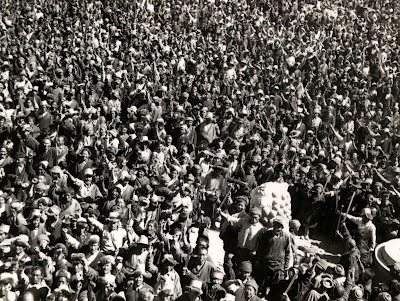
March is an ‘important’ month; the Two Sessions will take place in Beijing (the meetings of the National People’s Conference and The Chinese People's Political Consultative Conference), but it is also the anniversary of March 10, the Tibetan Uprising Day, when the entire population in Lhasa revolted against the Communist rule in 1959, forcing the Dalai Lama to escape to India.
RFA gives more information: “Among those taken into custody are Tibetans suspected of sharing information on the deaths of Chinese soldiers killed in a border clash with India last June in the Galwan Valley of Ladakh.”
A source told RFA’s Tibetan Service: “the Chinese government has increased these arrests and crackdowns in Lhasa and in border areas and those who are suspected of exchanging information regarding the deaths of the Chinese soldiers on the border are immediately arrested.”
Beijing also still remembers that on March 14, 2008, riots started in Lhasa; it led to attacks on Chinese nationals and the destruction of many Han shops. The unrest later spread all over Tibet and it took two months for Beijing to regain control of the situation.
In the case of Metok, there is more.
On October 13, 2020, an article in China Tibet News (in Chinese) reported that the Pai-Metok Highway from Pai in Nyingchi City to Metok would be opened on July 1, 2021.
From Nyingchi, the travel time to Metok County would be shortened from 11 to 4.5 hours; the Chinese website said: “On October 12, our reporter learned from the Huaneng Linzhi Hydropower Project Preparation Office that in order to effectively improve the current status of the transportation from Nyingchi to Metok and to effectively improve the livelihood of the villages and towns along the route, the Pai-Metok Highway, is planned to be completed on July 1, 2021.”
What is Huaneng, a dam company, doing in the area?
The answer came less than two months later, The Global Times announced China’s plan to build a large hydropower project on the Yarlung Tsangpo River, which becomes first the Siang and later the Brahmaputra in India.
The Metok County government confirmed that the project would be built in the Metok County, north of the McMahon Line; sources told The Global Time that “the project will be designed by the Chengdu Engineering Corp under the Power Construction Corp of China, or POWERCHINA. The Chengdu company is helping Metok to build the second highway entering the remote county.”
According to Xinhua, the hydropower stations will produce thrice the electricity of the Three Gorges Dam.
Despite these new developments, the 1959 Uprising of the Tibetan ‘masses’ still haunts Communist China.
The first-hand report of Maj SL Chibber, the Indian Consul General in Lhasa to the Ministry of External Affairs in Delhi, is telling; it was clearly a revolt of the 'masses' against the Chinese occupiers.
The Chinese propaganda would like us to believe that it was the doing of the Dalai Lama and the ‘upper strata’ of the Tibetan society who rejected the Chinese occupation, it is untrue.
Chibber, who witnessed these momentous days, wrote: “In the history of movement for free Tibet the month of March, 1959, will be most historic as during this month Tibetans high and low, in Lhasa, capital of Tibet, openly challenged the Chinese rule in Tibet. They set up an organisation called – ‘Pho Mimang Ranchen Chi Chog’, meaning, ‘Tibetan Peoples Independent Organisation’, renounced the Sino-Tibetan Agreement of 1951, staged demonstrations to give vent to their anti-Chinese feelings and demanded withdrawal of the Chinese from Tibet. But this challenge, before the MIGHT OF CHINESE People’s Liberation Army, who on 20th March, 1959, started an all out offensive against the ill-organised, ill-equipped, untrained-Tibetans with artillery, mortors, machine guns and all types of automatic weapons, was short lived.”
‘Smelling danger’, the Dalai Lama secretly left Lhasa on the night of March, 17; he would reach the Indian border in the Tawang sector on March 31.
Since then, mighty China shivers every month of March.
Chibber concluded: “In brief the booms of Chinese guns and fire from their weapons, which destroyed number of buildings including religious places, large scale killing of Tibetans followed by mass arrests, departure of Dalai Lama and high-ranking Tibetan officials from Lhasa completely shattered the morale of Tibetans in general and they were left with no other alternative but to bow before the Chinese.
The Indian Consul General concluded: "The future of Tibet is dark and only a miracle can save Tibet from the clutches of the Chinese Communist Colonialists."
On March 28, 1959, the State Council (Chinese Government) dissolved the Tibet Government and transferred all its functions and powers to the Preparatory Committee for the Tibetan Autonomous Region (TAR), using a few Tibetan puppets in the process. Today, wanting to save face, Beijing celebrates March 28 as the Serfs Emancipation Day.
It is a yearly holiday in Tibet, the day when the 'reforms' could finally be implemented, says the Chinese propaganda, explaining that the Tibetan ‘serfs’ had been liberated from feudalism and theocracy; it was simply not true.
Today, after more than 60 years, the Communist Party still lives in fear of the Tibetan masses; they are probably right, even though Marx never explained the meaning of ‘Karma’.
Showing posts with label March 10. Show all posts
Wednesday, March 10, 2021
Sunday, March 10, 2019
A Popular Revolt Suppressed in Blood
My article A Popular Revolt Suppressed in Blood appeared in Strategic News International
Here is the link...
The origin of the Tibetan luni-solar calendar, composed of either 12 or 13 lunar months, each beginning and ending with a new moon, is not clear. However, many scholars attribute the 60-year cycle to India; it would have been introduced into Tibet by Chandranath and Tsilu Pandit in 1025 CE. The calendar’s main characteristic is that, like the Chinese zodiac, twelve animals are associated with the five elements, making it a cycle of six decades.
Recently we entered the Earth/Boar Year; it is worth remembering the momentous events which took place during the previous Earth/Boar Year when the Roof of the World witnessed a popular revolt.
Early March 1959, the Dalai Lama had been invited to a theatrical performance in the Chinese Army camp in Lhasa; in his memoirs the Tibetan leader recalled that on March 8, 1959, some Chinese officers called on his Bodyguard Regiment’s Commander to brief him about the function: “the Chinese authorities wanted us to dispense with the usual formality and ceremony of my visits.” No Tibetan soldiers were to accompany the Dalai Lama: “only two or three unarmed bodyguards if absolutely necessary;” the Chinese wanted “the whole affair to be conducted in absolute secrecy.”
Though the Dalai Lama accepted to go “with a minimum of fuss and to take along only a handful of staff,” it was not acceptable to the population of Lhasa. On March 10, while walking in his Summer Palace (Norbulinka or Jewel Park) the Dalai Lama heard loud noises at a distance, people “were pouring out of Lhasa and heading in our direction. They had decided to come and protect me from the Chinese. All morning their numbers grew. …By noon an estimated thirty thousand people had gathered” …it was the entire population of the Tibetan capital.
Apart from the Dalai Lama’s version, we have the first-hand account written by Major SL Chhibber, the Indian Consul General in Lhasa.
Sixty years later, reading these accounts, one is struck by the fact that March 10 ‘Uprising’ (as the Tibetans call it), was primarily a people’s movement like the Bastille Day in 1789 in France. It was an entirely spontaneous revolt with its origin in the resentment of the ‘masses’ against the occupiers.
In his report to the Ministry of External Affairs, Chhibber wrote: “In the history of movement for free Tibet the month of March 1959, will be most historic, as during this month Tibetans high and low, in Lhasa openly challenged the Chinese rule in Tibet. They set up an organisation called Pho Mimang Ranchen Chi Chog, meaning, ‘Tibetan Peoples Independent Organisation’; [they] renounced the Sino-Tibetan Agreement of 1951; staged demonstrations to give vent to their anti-Chinese feelings and demanded withdrawal of the Chinese from Tibet.”
Unfortunately on March 20, the PLA started “an all-out offensive against the ill-organised, ill-equipped, untrained-Tibetans with artillery, mortars, machine guns and all types of automatic weapons, [it] was short lived.”
A few thousand Tibetans lost their lives during the next few days.
Chhibber continued his description of the events: “His Holiness the Dalai Lama, smelling danger, left Lhasa secretly on the night of the March 17, 1959, with important members of his personal staff, three Cabinet Ministers and members of his family for Lhoka area (south of Lhasa), where at that time Khampas had full sway and from where it was easier for him to escape to India if need arose.”
The rest is history. The Dalai Lama crossed the Indian border, north of Tawang on March 31 and was received by Indian officials who gave him a letter from Prime Minister Nehru, welcoming him …as a refugee.
The popular movement had started in 1955 in Kham province of Eastern Tibet and had spread to the North in Amdo and Golok regions: “In 1955 and 1957 it took shape of an open revolt against the Chinese regime in these areas. These people, though did not succeed, but they were a constant headache to the Chinese who had to resort to aerial bombing and deploy large number of forces to subjugate the local inhabitants. During operations numbers of monasteries were destroyed and the local people suffered heavy losses,” explained Chhibber.
In March 1959, the Tibetan ‘masses’ (a term so dear to Mao Zedong), “thought it was high time for a general uprising. The Chinese did not sit quiet. …They started preparing themselves for the show down; fortified their offices and residences with sand bags, dug trenches and prepared fire positions, all cadres were issued arms and ammunition …stored rations and dig wells on their promises and increased the strength of their troops considerably in and around Lhasa.”
Chhibber commented: “The feelings were running very high against the Chinese and the public was restless and any excuse would have served to mobilize them.”
In conclusion of his March Report, the Indian Consul wrote: “The future of Tibet is dark and only a miracle can save Tibet from the clutches of the Chinese Communist Colonialists.”
Sixty years later, no miracle has taken place, though the Dalai Lama’s escape triggered the first clashes with China on the Indian border a few months later.
There is another twist to the story; since 2009, China celebrates March 28, the bloody end of the revolt in Lhasa, as the Serfs Emancipation Day; on that day, the Communist 'reforms' could finally be implemented on the Roof of the World. The Tibetan government was declared 'illegal' by Communist China as the so-called serfs had been liberated from feudalism and theocracy ...by guns.
It is sadly ironic as the March 1959 revolt was only the Tibetan masses' reaction against the occupiers.
Unfortunately, sixty years later, the 1959 ‘uprising’ has been forgotten and politically, the Dalai Lama is more isolated than ever; no nation being ready to antagonize China, which has become the second most-powerful nation of the world …and is dreaming to become the most powerful.
It is worth quoting from another Indian officer, RS Kapoor posted as the Trade Agent in Gyantse in 1959; he told Delhi: “While the heart of Tibet was bleeding the free world only made speeches. With the end of the debate on Tibet in the United Nations, Tibetans lost all hopes of their survival, stare at the sky with blank eyes and ask, where is the Buddha? How can the world witness such brutal acts on a race that has always wanted to live in peace?”
Interestingly, in January 1957, while on a visit to India, Zhou Enlai, the Chinese Premier had pointed a finger at non-existing foreigners in Lhasa: “those bent on trouble are preparing for an incident in Lhasa. These people have some armed forces. Some three temples in Lhasa have also armed forces and they want to create an incident with the People's Liberation Army there. If it happened, then there would be bloodshed.”
And bloodshed there was, but it firmly consolidated the position of the Communist regime which still controls the restive nation with an iron hand.
Thursday, January 17, 2019
Alzeimerish China
My Article Alzeimerish China appeared in the Edit Page of The Pioneer
Here is the link..
Beijing will celebrate the emancipation of the serfs in Tibet on March 28. Ironically, the communist party has forgotten what happened at Tiananmen Square on June 4, 1989 ...and in Tibet three months earlier.
Cary Huang, a senior columnist with the South China Morning Post, wrote recently: “In 2019, China ushers in a year full of both festive jubilation and political trouble. Its communist leadership places enormous emphasis on the anniversaries of important historical events …China has a lot to celebrate in 2019 but it also has old wounds to heal.” He noted that with its packed 2019 calendar of commemorative events, Beijing may “forget” some of them, “many of which are politically charged or divisive. For a nation moving forward, it’s time to acknowledge the difficult past.”
But today, in Xi Jinping’s China, who is ready to analyse the past? Huang gave the example of March 28, the day when Beijing will commemorate the 60th anniversary of Serfs Emancipation Day. What is this “emancipation?” March 28, 1959, marks the end of the massacre of the Tibetan population in Lhasa and Beijing’s taking of rigorous control over the Tibetan capital; 18 days earlier, the Dalai Lama had fled the Roof of the World to take refuge in India. On March 28, the revered Dalai Lama was sacked as chairman of the Preparatory Committee for the Tibet Autonomous Region and was replaced by a (then) more pliant Panchen Lama.
Incidentally, will Beijing observe the 30th anniversary of the death of reformist party chief Hu Yaobang and the subsequent student-led pro-democracy protests, which resulted in thousands of casualties during the military crackdown in Tiananmen Square on June 4, 1989? An Alzeimerish communist party is bound to have forgotten what happened on the Square after the demise of Hu Yaobang as well as the thousands who died in Lhasa but the Emancipation Day is still celebrated.
Several non-Tibetan accounts of the events of March 1959, including the popular uprising, the flight of the Dalai Lama, the massacre of the Tibetan population and finally the so-called ‘emancipation’ — all this in less than three weeks — are available.
In his ‘Report for the months of March, April and May 1959’ sent to the Ministry of External Affairs, Maj SL Chibber, the Indian Consul General in Lhasa said: “In the history of movement for free Tibet, the month of March, 1959, will be most historic …during this month Tibetans high and low, in Lhasa, capital of Tibet, openly challenged the Chinese rule … the might of [the] Chinese People’s Liberation Army (PLA), who on March 20, 1959, started an all-out offensive against the ill-organised, ill-equipped and untrained Tibetans with artillery, mortars, machine guns and all types of automatic weapons, was short-lived.”
The Dalai Lama left Lhasa secretly three days earlier. Chibber continued: “On March 28, 1959, the State Council of the Peoples Republic of China dissolved the local Tibet Government and transferred all its functions and powers to the Preparatory Committee for the Tibetan Autonomous Region (TAR).”
Another recent publication, ‘The 1959 Tibetan Uprising Documents — The Chinese Army Documents’, released last year using documents from the PLA’s Military Intelligence, corroborated Chibber’s version of the 1959 bloody events.
Yet another account was given by Jianglin Li in her book, Tibet in Agony. She also used Chinese sources to describe the crackdown in Lhasa. Jianglin wrote: “In March 1959, a series of critical events played out in Lhasa. From March 25 to April 5, the CPC’s Central Committee held an enlarged politburo meeting, and the seventh plenary session of the Eighth Central Committee in Shanghai. Pacification of rebellion in Tibet and relations with India were two of the issues discussed. Wu Lengxi, who was then head of Xinhua news agency and chief editor of The People’s Daily, revealed a glimpse of Mao’s thinking on the China-India relationship in his memoir: “Let the Indian Government commit all the wrongs for now. When the time comes, we will settle accounts with them.”
The accounts were ‘settled’ three years later on the slopes of the Thagla ridge and in Ladakh. Jianglin added: “Mao was brooding on ‘settling accounts’ with India as early as March 1959. Yet on May 15, in a letter from the Chinese Foreign Ministry to the Indian Government, he wrote: ‘Pacification of rebellion and implementing democratic reform in Tibet would pose no threat to India whatsoever.’ ”
RS Kapur, another Indian official posted as Indian Trade Agent in Gyantse, wrote in his Annual Report for the Year 1959: “The year 1959 will go down as the most important year in the history of Tibet. It marked an end to the way of life of the Tibetan people. The Dalai Lama, who felt that he could no longer function effectively, left his country in March. …With Opposition out of the country, Chinese got a free hand and they went all out to subjugate the country. People have been deprived of their movable and immovable property.”
He further asserted: “While the heart of Tibet was bleeding, the free world only made speeches. With the end of the debate on Tibet in the United Nations, Tibetans lost all hopes of their survival, stared at the sky with blank eyes and asked: Where is God? Where is Buddha?”
During the 1950s, the Chinese had time and again used the same propaganda argument; once the Tibetans would be ready, the PLA would leave the Land of Snows. Some members of the Communist Youth League were told: “Tibetans should work hard to become capable of shouldering the responsibility of the administration of their country.” They were given the example of Inner Mongolia where the Chinese personnel withdrew when the local people were able to run the administration in an efficient way.
Che Dalha, the TAR Chairman, announced that everything was fine now. “High-tech and digital industries, together with agriculture, tourism and culture, green industries and modern services, have become major industries, contribute to high-quality growth in the region,” he declared. Tibet’s GDP in 2018 was estimated at more than $21 billion, up about 10 per cent from 2017.
However, during a session of the 11th TAR People’s Congress, Che spoke again and again about poverty alleviation. His Government, said Che, had lifted 50,000 people out of poverty in 2018 and would eradicate absolute poverty by 2019; he promised that he would create new jobs for 50,000 people in cities and towns. Once could ask: what was the point to ‘liberate’ Tibet and then ‘emancipate’ the Tibetans if there are still so many poor 60 years later?
Sunday, January 13, 2019
While the heart of Tibet was bleeding the free world only made speeches
Cary Huang, a senior columnist of The South China Morning Post recently wrote: “China has a lot to celebrate in 2019, but it also has old wounds to heal.”
He believes that with its packed 2019 calendar of commemorative events, Beijing may ‘forget’ some of them, “many of which are politically charged or divisive. For a nation moving forward, it’s time to acknowledge the difficult past.”
But in Xi Jinping's China, who is ready to analyze the past?
Huang continues: “In 2019, China ushers in a year full of both festive jubilation and political trouble. Its communist leadership places enormous emphasis on the anniversaries of important historical events, though such politically significant dates might mean good or bad omens.”
The Serfs Emancipation Day
Huang gives the example of March 28; on that day, Beijing will commemorate the 60th anniversary of Serfs Emancipation Day.
But what is this 'emancipation'?
March 28, 1959 marks the end of the massacre of the Tibetan population in Lhasa and Beijing taking over control of the Tibetan capital; eighteen days earlier, the Dalai Lama had fled the Roof of the World to take refuge in India.
The Dalai Lama was sacked as chairman of the Preparatory Committee for the Tibet Autonomous Region and replaced by a (then) more pliant Panchen Lama.
Huang also notes that on April 15, Beijing may observe the 30th anniversary of the death of reformist party chief Hu Yaobang: “Hu was an advocate for Western-style democratic reform who helped steer China away from orthodox Marxism and Maoism, and his demise sparked student-led pro-democracy protests in 1989, which resulted in the military crackdown in Tienanmen Square on June 4.”
An Alzeimerish Communist Party is bound to have forgotten what happened on the Square after the demise of Hu Yaobang and the thousands who died in Lhasa.
The Uprising in Lhasa
To come back to the ‘emancipation’ of the Tibetans, in a previous post, I have related the events of March 1959.
I quoted from the “Report for the months of March, April and May 1959” sent by the Indian Consul General in Lhasa (Maj SL Chibber) to the Ministry of External Affairs in Delhi.
This Top Secret document was dated June 1, 1959.
I also mentioned other accounts of the events which led to a massacre in Lhasa (thousands lost their lives), culminating in the Emancipation Day.
I cited for example from a Kindle book The 1959 Tibetan Uprising Documents - The Chinese Army Documents published in 2018 which provided documents from the Military Intelligence of the People's Liberation Army on the 1959 bloody events.
Another account of the events was given by Jianglin Li in her Tibet in Agony, "the first clear historical account of the Chinese crackdown in Lhasa in 1959. Sifting facts from the distortions of propaganda and partisan politics, she reconstructs a chronology...”, says the preface of her book.
Today, I am posting another document of the events which led to the ‘Emancipation’.
It is an extract of the Annual Report of the Indian Trade Agent (ITA) in Gyantse for the Year 1959; RS Kapur, the ITA witnessed first-hand the tragic events from Gyantse.
Extracts of Kapur’s Report
He believes that with its packed 2019 calendar of commemorative events, Beijing may ‘forget’ some of them, “many of which are politically charged or divisive. For a nation moving forward, it’s time to acknowledge the difficult past.”
But in Xi Jinping's China, who is ready to analyze the past?
Huang continues: “In 2019, China ushers in a year full of both festive jubilation and political trouble. Its communist leadership places enormous emphasis on the anniversaries of important historical events, though such politically significant dates might mean good or bad omens.”
The Serfs Emancipation Day
Huang gives the example of March 28; on that day, Beijing will commemorate the 60th anniversary of Serfs Emancipation Day.
But what is this 'emancipation'?
March 28, 1959 marks the end of the massacre of the Tibetan population in Lhasa and Beijing taking over control of the Tibetan capital; eighteen days earlier, the Dalai Lama had fled the Roof of the World to take refuge in India.
The Dalai Lama was sacked as chairman of the Preparatory Committee for the Tibet Autonomous Region and replaced by a (then) more pliant Panchen Lama.
Huang also notes that on April 15, Beijing may observe the 30th anniversary of the death of reformist party chief Hu Yaobang: “Hu was an advocate for Western-style democratic reform who helped steer China away from orthodox Marxism and Maoism, and his demise sparked student-led pro-democracy protests in 1989, which resulted in the military crackdown in Tienanmen Square on June 4.”
An Alzeimerish Communist Party is bound to have forgotten what happened on the Square after the demise of Hu Yaobang and the thousands who died in Lhasa.
| Tibetans 'celebrating' their 'emancipation' |
To come back to the ‘emancipation’ of the Tibetans, in a previous post, I have related the events of March 1959.
I quoted from the “Report for the months of March, April and May 1959” sent by the Indian Consul General in Lhasa (Maj SL Chibber) to the Ministry of External Affairs in Delhi.
This Top Secret document was dated June 1, 1959.
I also mentioned other accounts of the events which led to a massacre in Lhasa (thousands lost their lives), culminating in the Emancipation Day.
I cited for example from a Kindle book The 1959 Tibetan Uprising Documents - The Chinese Army Documents published in 2018 which provided documents from the Military Intelligence of the People's Liberation Army on the 1959 bloody events.
Another account of the events was given by Jianglin Li in her Tibet in Agony, "the first clear historical account of the Chinese crackdown in Lhasa in 1959. Sifting facts from the distortions of propaganda and partisan politics, she reconstructs a chronology...”, says the preface of her book.
Today, I am posting another document of the events which led to the ‘Emancipation’.
It is an extract of the Annual Report of the Indian Trade Agent (ITA) in Gyantse for the Year 1959; RS Kapur, the ITA witnessed first-hand the tragic events from Gyantse.
Extracts of Kapur’s Report
1. The year 1959 will go down as the most important year in the history of Tibet. It marked an end to the way of life of the Tibetan people. The Dalai Lama, who felt that he could no longer function effectively, left his country with his Cabinet in March and took asylum in India. His departure was followed by a large number of people who could not see any future in their motherland.
2. With opposition out of the country Chinese got a free hand and they went all out to subjugate the country. People have been deprived of their movable and immovable property. Stock of grains in possession of the ‘Landlords’, middle class people and the monasteries have been taken over. The end of the year left the Tibetans entirely at the mercy of the Chinese.
3. While heart of Tibet was bleeding the free world only made speeches. With the end of the debate on Tibet in the United Nations, Tibetans lost all hopes of their survival, stare at the sky with the blank eyes and ask:
- Where is God?
- Where is Buddha?
- Where are defenders of Human Rights?
- How can world witness such brutal acts on a race that has always wanted to live in peace?
Buddha, they say, has disappeared from the world and [they] are fast losing hopes of survival of their race. From all appearance Tibet is finished.This is the story of the Emancipation with Communist characteristics.
Wednesday, March 7, 2018
Han Chauvinism and Stability on the Indian Border
![]() |
| Senior Colonel Gawa |
It was much older, but few have said so in public.
One was Bapa Phuntsok Wangyal, the 'first' Tibetan Communist.
Read an earlier post on the subject.
Sr Col Gawa
During a CPPCC session’s panel discussion, Guowa Jiamaoji (Gawa Jamyang?), a PLA singer, born in the Tibetan-inhabited area of Qinghai province, affirmed that the discrimination shown by the authorities against people from her ethnic group (‘Tibetans’) was ‘detrimental to national unity’.
According The South China Morning Post, the army soprano, who served the PLA for more than 20 years, “appealed to China’s central government to stop treating ethnic Tibetans as if they were separatists”.
Gawa said: “I don’t think they [Beijing] should impose measures intended to deter separatists on the whole Tibetan race …It’s like there’s an order from above [for all] to follow.”
Gawa first witnessed the prejudice after the March 2008 incidents, when riots and clashes broke out in Lhasa and spread across the plateau.
She clearly remembered “the prejudice she experienced in the aftermath of the unrest. …One time I led a group of performers to Beijing, everyone checked in to their hotels, but I wasn’t allowed to, because I was Tibetan.”
It is extremely rare that, what is known as Han Chauvinism, is admitted at official meetings.
The fact that it is being reported, is even rarer
Gawa told the panel that despite her military rank (Senior Colonel) and status as a CPPCC member, “the hotel staff simply refused to let her in. I showed them my CPPCC membership ID and my military ID but still wasn’t allowed to check in. I had to stay at a friend’s place.”
She added that the incident was not an isolated one; she had witnessed numerous examples of prejudice against Tibetan cadres, especially in Han-dominated areas.
She cited examples of discrimination: “The mainland has a 4G network already, but in many parts of Tibet and Xinjiang, the network is still only 2G,” the PLA soprano said, “of course, it might be deliberate that the networks there are not so strong.”
According to her, one solution would “to increase the number of people from minority groups in positions of authority: “Native cadres will stay here forever. But cadres sent from the mainland only stay for two or three years before they are promoted to higher office.”
It is a fact that the Tibetan Autonomous Region (TAR) has never had a Tibetan Party Secretary.
It is interesting that Gawa was allowed to speak on this ultra-sensitive topic.
Inspecting the border areas
In the meantime, the authorities are nervous with the approach of March 10; in 1959, the entire population (‘the masses’) of Lhasa rose to protect the Dalai Lama’s life. Ultimately, he escaped to India.
Since then, the day is celebrated by the Tibetans as their national Uprising Day.
The Global Times, the mouth piece of the Communist Party of China (CPC) mentioned the visit of a ‘stability maintenance supervision group’ to Ngari prefecture of Western Tibet and …on the China-India border.
Three senior officials of the (TAR) visited police and armed police posts. The delegation was headed by Penpa Tashi, a member of the TAR Standing Committee in charge of propaganda; other members were Tenzin Namgyal and Wang Yalin.
![]() |
| Penpa Tashi |
Xiong Kunxin, a professor at Tibet University in Lhasa told the tabloid: “Ngari is an undeveloped prefecture in a high-altitude area with tough living conditions, and it's really close to the border with India. This lends foreign forces and Dalai Lama secessionist criminal gangs the opportunity to permeate into the region and conduct illegal and violent activities."
This is clearly a pretext as no Tibetan living in exile is allowed to approach border areas in Ladakh or Uttarakhand.
Why is Beijing so nervous?
Penpa Tashi asserted that “maintaining stability is really tough and the anti-secession and counter-terrorism struggles are intense and complex.”
The border police was encouraged to safeguard the ‘sustainable stability and security’ of the prefecture, located north of Uttarakhand and Himachal and east of Ladakh.
Tibet Daily further quoted Xiong saying that the “tough local topography makes it hard for the local government to boost economic development in the region, but promoting development is still the main goal for the local government to maintain stability. Ngari is a main battleground of the 1962 Sino-Indian border conflict.”
It is not completely true; the battles in NEFA were as tough as the ones in Ladakh.
The Tibet Daily also said that the officials visited a gas station and a security inspection station in the town of Shiquanhe (Ngari) where regular safety checks are conducted.”
The police was ordered to maintain stability and ‘prevent any security-related incident from happening.’
One of the officials, Tenzin Namgyal and his inspection team went at Geji County. Geji (Gegye Dzong in Tibetan) is located northwest of Mt Kailash.
Tenzin Namgyal inspected the area and ‘guided’ the work of the local officials; a Chinese website remarked: “The cold weather did not stop the pace of the inspection and the guidance work.”
Tenzin Namgyal is the deputy head of the District Supervision and Guidance Group.
During the inspection, Namgyal went “deep into the grassroots to maintain the first-line stability.” The group visited the Gegye County Public Security Checkpoint, the Command Center of the Public Security Bureau, the poverty alleviation relocation site in other places.
Namgyal emphasized that the victory of the first meeting of the 13th NPC is a major event in the political life of the Party and the country.
Did he mean the amendment of the Chinese Constitution giving Xi Jinping the possibility to rule China for more than two terms?
Namgyal also hoped that everyone will have “a hundredfold Enthusiasm, with a hundredfold effort to complete all kinds of work, …work style should be rigorous and meticulous; one should be determined to make every effort to stabilize the [Ngari] area during the ‘Two Meetings’ and the sensitive period of March [10] and ensure that the area keeps a sustained stability, long-term stability, and comprehensive stability.”
These words are dear to the New Emperor Xi.
But the fact that 'stability' is the leitmotiv of the Chinese leadership may be an indication that all is not that stable on the plateau.
A more optimistic noteAccording Zhang Xinmin, a senior researcher at the institute of high energy physics in the Chinese Academy of Sciences affirmed: “China has almost completed building the world's highest cosmic ray telescope in Ngari prefecture.”
The chief scientist told The Global Times: “At an altitude of 5,250 meters, the Cosmic Microwave Background polarization telescope project will start operations in 2020."
The Academy's program in the TAR is designed to probe the primordial gravitational waves created by the first tremors of the Big Bang.
Ngari is the place to watch in the coming years, perhaps not for the ancient Big Bang, but for a new one.
Tuesday, March 3, 2015
The 'hot' month of March on the Roof of the World
Every year, the month of March is hot in Tibet.
No, I am not speaking of ‘climate change’.
It is not just ‘hot’ because the Two Meetings: the Chinese People’s Political Consultative Conference (CPPCC) and National People’s Congress (NPC), are held in early March.
Xinhua News Agency already reported that members representing Tibet to the CPPCC have arrived in Beijing and China Tibet Online quoted one Kelsang Drolkar, a CPPCC member from Metok in Nyingchi Prefecture, saying: "I brought two bills. One is to promote the protection and inheritance of the languages of ethnic minorities. The other is to enhance publicity on the rule of law in the minority nationality areas."
For Beijing, this year seems special for several reasons.
According to Xinhua: “The year 2015 marks the 50th anniversary of the founding of the Tibet Autonomous Region. The Chinese central government's policies on governing Tibet will attract attention from home and abroad. The initiative on building the Silk Road Economic Belt and the 21st Century Maritime Silk Road put forward by Chinese President Xi Jinping in 2013 has drawn the attention of many countries around the world, especially China’s neighboring countries including India, which borders with southwest China’s Tibet Autonomous Region.”
Another official communique give different rationales: “The much-anticipated annual parliamentary sessions of China, dubbed as ‘two sessions’, is expected to lay a foundation for further reforms as the world's second-largest economy actively adapts to the ‘new normal’ of slower growth but higher quality economy.”
But there is another important date, which often makes Beijing nervous: it is March 10.
It is the anniversary of the Tibetan Uprising Day in Lhasa.
On that day in1959, the Tibetan masses revolted against the Chinese occupiers forcing the Dalai Lama to escape to India.
The police forces (not only in Lhasa) are particularly apprehensive of this date.
Remember 2008, when unrest started on that day and later spread all over the Tibetan plateau.
This year, to show how relax and ready is the Police (and particularly the dreaded Public Security Bureau or PSB, the tough guardians of Tibet’s ‘stability’), a video has been circulated on the Internet.
It sings the praises of the cops (and commandos).
Just have a look at the clip: the PSB are now good Samaritans on the Roof of the World, helping the aged and the weak.
At the end of the video, one sees the other side of the coin: if the Tibetans do not behave or in case of ‘unrest’ or ‘disturbance of the stability’, the SWAT commandos are ready to intervene with their latest gadgets.
Is it the ‘New Normal’ in Tibet?
Just watch!
A few screenshots:
Friday, November 22, 2013
The more chaotic Tibet gets, the better
![]() |
| Lhasa Uprising, March 1959 |
Three of them are related to Tibet.
The first one is a short 'marginal note/directive' from Chairman Mao. It is written onto a 'situation report' [qingkuang jianbao] about Tibet and it is dated February 18, 1959, just 4 weeks before the uprising of the Tibetan people in Lhasa (Match 10, 1959).
The note (and report) sent to Liu [Shaoqi], Zhou [Enlai], Chen Yi, [Deng] Xiaoping, mentions: "After reading return to Comrade [Marshal] Peng Dehuai."
Mao's commented:
The more chaotic [luan] Tibet gets, the better. We can train troops and toughen the masses. Furthermore, this furnishes sufficient reason for future pacification and reform.Twelve days after the Dalai Lama left at night the Norbulinka Palace to take refuge in India, Mao put up another marginal note.
Mao Zedong
18 February
It is a comment on a report about the Indian Foreign Ministry's spokesman stating on 29 March 1959 that Tibetans in India had not undertaken 'illegal activities'.
Mao wrote:
Dear Indian friends: Don’t be credulous with the Tibetans. Their direction of the Tibet uprising is secret. Maybe we know what you don’t know!(Editor's note) Mao’s tone seems to imply that he suspects the Indians of feigning ignorance.
The third document is a report from Yuri Andropov, who had been posted as Soviet Union's Ambassador in Hungary during the 1956 tragic events.
In 1957, Andropov returned to Moscow from Budapest in order to head the Department for Liaison with Communist and Workers' Parties in Socialist Countries.
Later he became the KGB boss, and from 1982 to 1984, he was General Secretary of the Communist Party of the Soviet Union.
It is interesting to note that 'Chinese friends’ are concerned about Communist China relations with India after the Tibet's events: "Since Indian circles were mixed up in the Tibetan events, it will effect Chinese-Indian relations in some measure."
The Soviet report mentions the reactionary parties such as the Indian Popular-Socialist Party which organized several 'anti-Chinese' meetings and demonstrations. It refers to George Fernandes' Party activities.
The report further points out that many Indian newspapers have begun an anti-Chinese campaign.
The Soviet Union will later condemned China rather mildly.
In a report dated December 18, 1959 for CC CPSU [Central Committee of the Communist Party of Soviet Union] Plenum, Suslov wrote: "During this spring relations between the People's Republic of China and India have seriously deteriorated. This deterioration is linked to the counterrevolutionary rebellion in Tibet in March 1959. Reactionary circles of India to some extent were probably involved in this rebellion. However, the rebellion in Tibet would not have taken place, had one implemented timely democratic reforms and appropriate measures to improve economy and culture with a view on historical specifics of Tibet, and had one been duly vigilant with regard to reactionary elements. Unfortunately, Chinese comrades also did not draw appropriate conclusions from the warnings of the CC CPSU about the activities of reactionaries aimed at the forceful separation of Tibet from the People's Republic of China."
My website has a large collection of historical documents related to the 1959 events.
The discussion between Mao and Khrushchev is also worth reading.
To the Central Committee of the CPSU
'On the situation in Tibet' was prepared on the basis of information provided by the Chinese friends on the latest events [in Lhasa] and [using] other materials available to the [International] Department of the CC CPSU.
On the Situation in Tibet
Head of CC CPSU Department of ties with communist and worker parties in socialist countries.
Yuri Andropov
31 March 1959
Tibet is one of the largest territories of the border provinces of China, occupying more than 1.2 million square kilometers. According to the 1953 census, the Tibetan population in the PRC numbers 2.775 million. In Tibet itself, however, less than half is concentrated (1.27 million). The remainder live in the areas of the PRC next to Tibet and are autonomous (autonomous districts and provinces in Qinghai, Sichuan, and others).
In the past Tibet was long the object of English and then American influence. The Indian bourgeoisie also had significant interests in Tibet. Tibet’s leadership cultivated ties with these countries and came up with the idea of creating an “independent Tibet.” When the Guomindang regime fell in 1949, the Tibetan ruling circles tried to realize the idea of Tibetan independence. They asked all governments for help “in the struggle for independence,” drove out the Guomindang men, refused the peaceful suggestions of the PRC and prepared for military action against China.
In 1951 PRC troops entered Tibet and these leaders had to end their resistance. Officially, Tibet was liberated peacefully on the basis of an agreement concluded in Beijing in May 1951 between the PRC central government and the Tibetan local government. The Tibetan delegation to the negotiations was headed by Ngabo Ngawang Jigme, who had previously handed over Eastern Tibet to the PRC troops. The Panchen Lama also took part in the negotiations. He had established contact earlier with the Chinese friends and was interested in returning from exile to Tibet to recoup his position as second only to the Dalai Lama.
The agreement contained the following planned measures: as a part of China, Tibet’s
troops would be reorganized and integrated into the PRC’s armed forces, while in Tibet a military-administrative committee would include representatives of the local Tibetan government. The agreement also stipulated continuation of the political system in Tibet and also the functions and powers of the Dalai Lama and Panchen Lama as well as preserving the religion, language, writing and customs of the Tibetan people. Foreign affairs were concentrated in the hands of the PRC central government. An agreement on realizing national autonomy
under the leadership of the PRC government was achieved. The agreement noted that the Central
People’s Government of China would not force matters regarding reform in Tibet and that the
carrying out of one or another reform would be agreed upon [in advance] with the Tibetan authorities. Measures for helping Tibet to develop its economy and culture were also planned.
Although in recent years the PRC government has carried out several measures to raise its economy and culture, Tibet remains, even today, one of the most backward provinces of China. Some of the most important enterprises are the completion of major highways: Xikang- Tibet (length 2255 km), Qinghai- Tibet (2100 km) and Xinjiang-Tibet (under construction). Local industrial enterprises, several state farms, and experimental agricultural stations have been established. Much has been accomplished in providing the population of Tibet with goods and food. Previously, there were no lay schools in Tibet. Now there are over 60 schools, including one middle school in Lhasa. Much has also been done in public health, including the training of some Tibetans.
Despite some successes achieved by the Chinese comrades, the political situation in Tibet remained complicated. There were periodic disturbances. Major unrest occurred in 1954-56. In 1955, the CC CCP sent Deputy Premier and Politburo member Chen Yi to Tibet. To calm things down a part of the Chinese organization and troops were withdrawn from Tibet. The region of Chamdo, populated by Tibetans, was joined to Tibet. The military-administrative committee was reorganized into a preparatory committee for the creation of the Tibetan Autonomous Region, with the Dalai Lama at its head.
The Dalai Lama and his reactionary retinue continually prevented democratic transformation. Because of this, in Tibet neither land nor other democratic reforms have been carried out. Land remains in the hands of the monasteries, lay and spiritual feudals [feodaly]. In the socio-political realm, the feudal-serf order under the rule of religion, monasteries, and lamas remains almost untouched. There are over 100,000 lamas in Tibet cons tituting the basic reactionary force actively supporting the Dalai Lama. Even now there are no elective organs of popular power in Tibet. In this respect the PRC Constitution has not yet been extended to Tibet.
In his 1957 speech “On the question of the correct solution of contradictions within the people,” Com. Mao Zedong pointed out that conditions for democratic changes in Tibet were not yet ripe, and therefore they would not be carried out in the Second Five-Year Plan (1958-62). In Mao’s words, the Tibetans themselves would decide on carrying them out in the Third Five-Year Plan.
The Communist Party of China has made the realization of Tibetan autonomy depend on the general political situation in that province, the carrying out of democratic transformations and the preparation of new cadres capable of carrying out the party’s policy. The joining to Tibet of other areas of the PRC with Tibetan populations also depends on this.
Anglo-American intelligence is always active in Tibet, including around the Dalai Lama. The nearest relatives of the Dalai Lama (three brothers) are abroad and systematically propagandize against the PRC and for the “liberation” of Tibet. [Calls for support from African and Asian countries are detailed.]
The Chinese comrades try to lead a careful policy in Tibet in order to avoid unnecessary complications. Despite these efforts, however, the situation in Tibet recently became more strained. At the end of 1958, disorders and open revolts began in some Tibetan areas. With the help of foreign intelligence agencies, reactionary nationalists began to broaden their subversive work. In January-February 1959 a major revolt erupted in the region of Kham (eastern Tibet). The rebels cut the eastern highway into Tibet and established communication abroad, including with Jiang Jieshi’s troops in Burma.
According to Chinese comrades, the situation in Tibet in March took on a military character. On 19 March about 30,000 rebels blockaded the Chinese garrisons of Lhasa and other places and began to fire on them. The internal center of the uprising was Lhasa and the foreign one was the Indian city of Kalimpong. The revolt took place under the battle slogan: “For the independence of Tibet and her separation from China.”
According to information held by the Chinese comrades, the Tibetans’ actions are inspired by the Americans and English. The Americans are sending help to the rebels through Pakistan and Burma. India, despite Nehru’s assurances of non-interference in Tibetan affairs, also according to the Chinese comrades’ information, has not stood aside. Help to Tibet, including cannons and machine guns, is coming from India via Nepal. The Indian consulate in Lhasa took a direct part in organizing the revolt. The uprising’s foreign center has been founded in the Indian city of Kalimpong.
In this situation the Chinese friends took decisive measures to put down the uprising.
According to them, the revolt was crushed in Lhasa on 22 March. The Dalai Lama escaped from Lhasa and his whereabouts are still not known. In other parts of Tibet the uprising continues, but the Chinese friends are sure that they will soon re-establish order throughout Tibet. This is made easier, because the Panchen Lama, the above- mentioned Ngabo Ngawang Jigme, is on the PRC’s side. The friends intend to rally the workers of Tibet around him and other Tibetan progressive figures to carry out reforms, agricultural, first of all. The friends for political reasons intend to draw the Dalai Lama to their side again.
From the Chinese friends’ communications, we can see that the uprising in Tibet has a national-religious tint. In the main, the central, eastern, and southern areas of Tibet are involved in the uprising. The main forces of the Tibetan counter-revolution are religious circles, who have drawn local Tibetan military units and one of the Tibetan mountain tribes, the Khampa, to their side. Spies from imperialist countries were the inspirers and, in large part, the organizers of the uprising. We can also assume that the majority of the population, especially laboring peasants stayed away from the action, supporting neither side. Here we clearly need to find the reasons in aspects of CCP policy in Tibet. First of all, it is necessary to note that eight years after liberation [by the PLA], Tibetan peasants remain in serf- like dependence, while in other minority regions, socialist transformations have already been carried through, with the party’s policy receiving broader social support there. In Tibet the mai effort was through peaceful solution of all problems by agreement with the feudal-theocratic circles and their “re-education”. In the main, the working masses saw few real results from living in a socialist state.
The Chinese friends are aware that the wide publicity of the Tibetan events in the capitalist world may bring certain international complications for China. In their opinion, England and the US will try to use the Tibetan events for inimical propaganda against China to strengthen the “cold war,” possibly [including] putting the Tibet question in front of the UN. It is possible that the escaped rebels with the aid of the US and other imperialist states will create a Tibetan emigre government. This will become even more complicated, if the Dalai Lama is hiding abroad.
As can be seen from the Chinese friends’ messages, they are especially concerned about PRC relations with India and the events in Tibet. Since Indian circles were mixed up in the Tibetan events, it will effect Chinese-Indian relations in some measure. Recently, the reactionary parties and groups in India are demanding a parliamentary discussion of the Tibetan events. The Indian Popular-Socialist Party is organizing anti-Chinese meetings and demonstrations. Many Indian newspapers have begun an anti-Chinese campaign. Religious circles in India also are trying to use the Tibetan events to aggravate relations between India and the PRC.
Since Nehru in his 23 March speech separated himself from the events in Tibet, the Chinese friends plan for the moment to withhold from publication the information in their possession on the interference of India in Tibetan affairs. In the present situation, said Chen Yi, the main task is to neutralize India and then attract her to our side ... [An overview of “bourgeois” press coverage of the Tibetan uprising follows, in which Tibet is described as an “Asian Hungary.” Special attention is paid to official remarks by Nehru, the U.S. State Department, and Jiang Jieshi (Chiang Kai-shek).]
The Chinese friends are more concerned about the international aspects of the disturbances in Tibet. Here, evidently, sooner or later they will have to make appropriate statements and take practical steps.
Sunday, March 11, 2012
But there was no Speech
![]() |
| Website China Tibet Online |
As Payul.com explained: "His Holiness’ March 10 Statements have been received by Tibetans as the head of the state’s address to the nation".
In his Statement last year, the Tibetan leader announced his retirement and the devolution of political authority to an elected leadership.
This year, for the first time since 1960, the Dalai Lama did not issue his statement.
But the Chinese propaganda always faster than its shadow, has put a banner on their site China Tibet Online, The Dalai Lama 3.10 Speech Provoke wide Opposition.
But there was no speech.
Subscribe to:
Posts (Atom)


