Showing posts with label PAP. Show all posts

Sunday, July 7, 2019

How many Tibetans in the Liberation Army? A difficult guess!

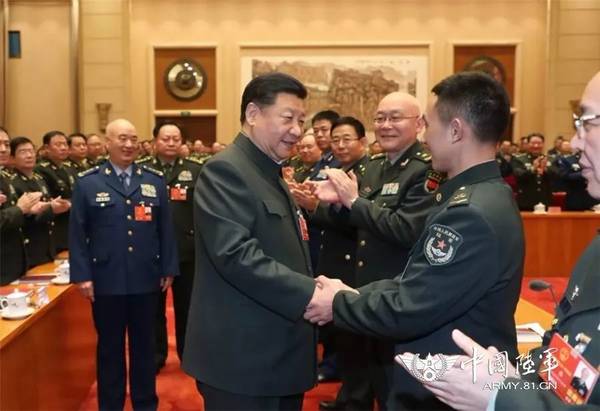
Chairman Xi meeting a young Tibetan Officer at a NPC meet
In an interview to The Week, the Dalai Lama recently said that “the Tibetan issue is no longer a struggle for political independence”. He asserted that there is a need to focus on preservation of Tibet's cultural, religious and linguistic identity.
The Tibetan leader added that “Political independence is mainly meant for the happiness of the people, but does it alone guarantee happiness.”
This can’t be argued that Independence alone does not provide happiness.
The Dalai Lama also stated that “There is a growing feeling among the top leaders in China that their policies have not been able to solve the Tibet issue in the last 70 years. So they should follow a more realistic approach. Even though Tibet was an independent country, politically China occupies Tibet today.”
It is not certain that the top leadership in China believe that Beijing’s Tibet policies have not solved the Tibetan issue for good.
Looking at some current development, it seems the opposite.
The Dalai Lama concluded: “Under the given circumstances, I have been saying for some time now that there is a need to focus on preservation of Tibetan culture, religion and identity. It is no longer a struggle for political independence."
That is an aspect of the problem.

Tibetans in the Communist Party
Another issue should be worrying for India (if not the Tibetans): if the Tibetans become ‘Chinese nationals’ what will happen to the ‘Sino-Tibet’ border? Can we envisage Tibetans fighting Indians soldiers in the Himalaya one day?
A few days ago, The Tibet Daily in Lhasa published a Statistical Communiqué issued by the Tibet Autonomous Region’s (TAR) branch of the Communist Party of China.
On December 31, 2018, the total number of party members in the Autonomous Region was 382,000, a net increase of 18,000 from the previous year.
Further the Party has 21,000 grassroots organizations, an increase of 6.2% compared to 2017. Among them, there are 2,200 grassroots Communist Party’s Committees.

About Party members
•    Out of 382,000, there are 111,000 female party members, accounting for 28.8% of the total number of party members.
•    There are 312,000 minority party members, meaning Tibetans, which make 81.7% of the Communist card holders are local Tibetans. This represents more than 10% of the entire population of the TAR. It is consequent amount of the population who, for whatever reasons, are ‘Communists’ and working for China’s present ethos.
Some 113,000 party members aged 30 and below
71,000 party members aged 31 to 35
51,000 party members aged 36 to 40
39,000 party members aged 41 to 45
34,000 party members aged 46 to 50
24,000 members are between 51 to 55
18,000 party members aged 56 to 60,
and 32,000 party members aged 61 and over.
It shows that a lot of young Tibetans have joined the Communist Party.

•    Job Repartition
There are 13,000 workers (and technicians)
189,000 farmers and herdsmen
47,000 professional and technical personnel in enterprises, institutions and social organizations,
15,000 enterprises and institutions, social organization management personnel,
and 77,000 working in government organs.
Few others are students, professional staff and retired people.
A lot more statistics are given which is not useful to repeat here.

By the end of 2018, there were 77,000 applicants for party membership.
• There are 81 local Communist Party Committees at all levels of the party. Among them, there are 1 Party Committee for the TAR, 6 Municipal Committees (prefecture/city level) and 74 County (dzong) Committees.
• Cities, townships, neighborhood committees and villages have also Party Committees.
• 12 cities, 685 townships, 217 neighborhoods and 5261 recognized villages are covered by Party’s Committees.
• All the 44,000 government agencies in the region have established a Party organization.
• Some 2 million of institutions in the TAR are covered at 99.3% by Party organs; so are the public enterprises at 99.7%.
All this, of course, does not automatically bring happiness.
How the Dalai Lama’s scheme of ‘genuine autonomy’ fits into this scenario is not clear.

More worrying
But the most worrying aspect is the large presence of ethnic Tibetans in the People’s Liberation Army (PLA) and the People’s Armed Police (PAP).
There are no reliable figures, as the Party obviously does not want the people to know how successful the integration of the Tibetan population into the PLA/PAP has been.
This should however cause genuine concerns in India.


How to find out?
For the PLA/PAP, one way to guess is to look at the composition of the local institutions which is in China often based on representative percentages.
If one takes as an example the composition of the 11th TAR People's Congress and the size of the PLA & PAP delegation in it; The Congress has 53 defense delegates (mostly middle level officers with a few senior officers). There are 31 are Han Chinese, 20 Tibetans, one Manchu and one Hui.
Of course, the Tibetan representation in the PLA/PAP is very far from this percentage, but it could indicate, future projections for the Party.
Today, the ‘ethnic’ representation in the PLA/PAP could be at the most 10% of troops serving on the plateau. But the above figures of the Regional Congress’ representation could suggest that in the future the Chinese aim to have a have a pool of junior officers in the TAR reaching 25-30% of the total PLA/PAP personnel posted in Tibet.
It will of course take a long time, as trust of the ‘ethnic minority’ is still lacking today.
This is a serious matter, which needs to be looked into by the Tibetans and India as it has serious implications for the future of the borders.
Incidentally, it is worth looking at the PLA delegation at the National People’s Congress (NPC). There are 269 members in the PLA/PAP delegation, out of 2980 members (75% are new faces).
In the PLA/PAP delegation are represented:
•    The Commanders of the Five Services
•    The Directors of the 15 Departments and Commissions
•    The Commanders of the Five Theater Commands (including Gen Zhao Zongqi for the Western Theater Command)
•    The Commandants of Military academies like the PLA National Defence University
•    and ‘Unknown’ soldiers/officers
Before the NPC gathering in March, it was announced that the current structure of the PLA delegation “has been optimized and fully demonstrated the Universality, Advancement and Representation. All the deputies are outstanding members drawn from all fronts.”
There are three relatively junior Tibetan officers in the Delegation:
Name: Yuk Bak Chu (?)
Delegation: PLA & PAP (1st Lt)
Ethnicity: Tibetan from Kangding, Sichuan
Date of birth: March 1989
Current position: deputy to the NPC
Name:  Tsering Tashi (?)
Delegation: PLA & PAP (Lt)
Ethnicity: Tibetan from Shannan
Date of birth: June 1990
Current position: deputy to the NPC
Name: Yang Chu Geshe (?)
Delegation: PLA & PAP (Sergeant)
Ethnicity: Tibetan from Aba, Sichuan
Date of birth: July  1990
Current position: deputy to the NPC
It is a fact that the leadership in Beijing does not fully trust the Tibetans, but there is nevertheless a clear will to bring more junior and middle-level Tibetans on board. Once again, it will become a challenge for India in the future, especially in the context of a post-Dalai Lama scenario.
Happiness is still a far away dream for the Tibetans; the Indian population bordering Tibet/China too, may suffer about the 'ethnic' changes in China's defense forces.

Sunday, January 3, 2016

Take a deep breath: councelling in Tibet required

Councelling in Shigatse
At the beginning of the year, The Global Times wrote a commentary on the recent reforms in the People’s Liberation Army (PLA): “With a strong army, China can be more politically appealing, influential and persuasive, and will make it easier to network. As we gain more trust from other countries, many of them will no longer be dependent on the US for security.”
The article further asserted: “The army will be more capable of using the equipment and soldiers’ morale will be boosted.”
However, the morale of PLA officers and troops does not seem very high right these days.
The Global Times concluded: “The latest military reform sets a lofty target and involves a wide range of aspects, it will meet many challenges and difficulties in the process.”
One of the problems is about ‘releasing inner discomforts and welcoming new challenges.’
A few days ago, China Tibet Online published photos, taken in Central Tibet, of a group of new recruits playing “a group psychological counseling game under the guidance from psychological counselors”.
The mouthpiece of the Communist Party in Tibet reported that on December 28, a detachment of Tibet’s border defense troops in Shigatse organized a group training activity, themed around ‘releasing inner discomforts and welcoming new challenges’.
The exercise was meant for the new recruits, who experience inner and outer discomforts, while being posted on the Tibetan plateau.
The website explained that the course was designed “to help new recruits alleviate psychological pressure, improve self-regulation ability and ensure they pass the ‘second adaptation period’ smoothly.”
In May 2013, I mentioned on this blog that the Tibetan Centre for Human Rights and Democracy (TCHRD) in Dharamsala had got hold of a fascinating manual exposing the psychological trauma faced by the People's Armed Police (PAPF) in Tibet.
At that time, I spoke of the case of young Han soldiers posted on the border with India: “Though not confronted with violence like the PAP in Sichuan or Gansu, the young Han soldiers must have a traumatic psychological life, just because their political bosses in Beijing insist on grabbing a few sq. kilometers more of Indian land.”
I then commented on the Tibetans, who too are suffering: “It is easy to redo the world with 'ifs', but 'if' China was a normal country, 'if' China was a normal neighbour, its leaders would allow others to dream, like President Xi is now exhorting his countrymen to do. Today in Tibet, Tibetans can't dream.”
If China was a normal country, it would be great for the poor PAP's soldiers who do not understand what they are doing in Tibet. It would also be good for China's finances (let us not forget that Beijing's budget for 'internal security' is higher than the Chinese Defence budget). It would be good too for China's image and good for the Tibetans who only aspire to some 'normal' basic freedoms.

Take a deep breath
During the recent Shigatse ‘counseling’, the detachment’s counselors, Zhang Yan and Li Linfu, “fully played to their strengths by using plain language to explain to the new recruits how to alleviate their own psychological pressure. They also organized group psychological behavioral training in a relaxed, heuristic and cooperative manner. The new recruits participated actively and were enthusiastic, coordinated and willing to try,” said China Tibet Online.
The article concluded: “This activity not only helped recruits relieve psychological pressure and relax their minds, but also strengthened their team spirit and collective consciousness. It increased troop cohesion, solidarity and fighting capacity and laid a solid foundation for new recruits in their new jobs.”
This also means that so many years after the ‘Liberation’ of Tibet in the early 1950s, the Chinese soldiers are still not at home on the Roof of the World.
But with the ambitious extent of the new ‘reforms’, it is not only on the Plateau that officers and troops are experiencing discomfort.

The 'discomfort' of the reforms
Many generals and senior officers, who will soon lose their jobs, need ‘to release their discomfort’.
This probably explains why the youngest serving PLA Corps Commander was recently dismissed, after he went out for a binge drinking party with some officers who had served under him.
China News Service reported that Zhang Yan, Commander of the Shandong-based 26th Group Army (Corps), went for a drinking party with two former subordinates and one died soon after.
The report says that the two lower ranking officers belonged to the 39th Group Army based in Shenyang, where Zhang was earlier posted.
There is no information about when and where the binge drinking took place.
In April 2014 (well before the ‘reforms’), The China Youth Daily had affirmed that nine government officials in China had died from excessive drinking between January 2013 and April 2014.
With the tempo of the reforms accelerating, counseling for retiring generals (and troops) will probably be required on a larger scale.
And these officers should not be sent to Tibet, life is too uncomfortable on the Plateau. It could only aggravate their case.

Thursday, December 11, 2014

The CIA and China

The much-awaited report (summary) from Senate Intelligence Committee on the CIA's Detention and Interrogation Program is finally in the public domain.
Its conclusion are clear, the Intelligence Agency misled the US Congress and the President about the effectiveness of the methods adopted by the CIA.
The report takes to pieces the 20 most frequent CIA claims that torture helps to stop terrorist plots.
The National Security Archive, which promotes the transparency, writes: “describing in more than 500 pages a dysfunctional agency so unprepared to handle suspected terrorist detainees after 9/11, that the CIA bought into private contractors' proposals for torture, and then lied to Congress, President Bush, the Justice Department, the public, and to itself about the purported effectiveness of the program.”
The released documents includes a 6-page foreword by Senate’s committee chairperson Diane Feinstein, a 19-page list of 20 specific Findings and Conclusions, and a 499-page Executive Summary detailing the development of the torture program after 9/11.
It details, for example, the ‘job’ of the outside contractors, with no prior experience in interrogation, running the torture programs and earning $1800 per day, (overall it cost the Agency $ 81 Million).
The CIA documents also shows that several CIA officers at the secret detention sites repeatedly protested the torture program, but CIA successive directors such as George Tenet, Porter Goss, and Hayden, overruled the objections and continued.
That’s bad.
But the most ironical is that, as The Guardian puts it: “China and North Korea, two of the nations most often criticised by the US over human rights, have lined up to return fire after the Senate published its damning report on the CIA’s use of torture to interrogate captives suspected of terrorist involvement.”
Hong Lei, the spokesperson of the Chinese foreign ministry affirmed that the US should ‘correct its ways’; he dares to say: “China has consistently opposed torture. We believe that the US side should reflect on this, correct its ways and earnestly respect and follow the rules of related international conventions.”
The Chinese press spoke of “double standards for presenting itself as a defender of human rights while committing gross abuses.”
Xinhua’s website dedicated an entire page to the US Report: ‘How long can the US pretend to be a human rights champion?’
The pro-Beijing Hong Kong newspaper Ta Kung Pao writes that the report shows that some of the CIA methods were ‘almost medieval’.
In prevision of the release of the report, Xinhua had an editorial asserting that the US “should clean up its own backyard first and respect the rights of other countries to resolve their issues by themselves. …America is neither a suitable role model nor a qualified judge on human rights issues in other countries, as it pertains to be. …Yet, despite this, people rarely hear the US talking about its own problems, preferring to be vocal on the issues it sees in other countries, including China ... What the US appears to be doing is defending its own national interests and wielding human rights issues as a political tool.”
The Chinese news agency added: “All countries, of course, have civil liberties and human rights issues, including the United States. Many of us have followed recent events back home, which have sparked conversations that we hope will bring about positive change. That dialogue is made possible by our enduring respect for freedoms of expression and assembly.”
Apart of the raging battle, ‘you are worse than us’, who is going to suffer at the end of the day?
It is not the ‘contractors’ who pocketed hefty packets of dollars or the Chinese Peoples’ Armed Police or the torturers of the Ministry of Internal Security of China.
While one can expect the next US Administrations not to repeat the crimes of its predecessors, torture will continue in China and the so-called minorities will be at the receiving end.
Recently Radio Free Asia (RFA) reported that “A Tibetan political prisoner has died less than six years into his 15-year jail term after suspected beating and torture by Chinese authorities”.
It quotes a report of the Tibetan Centre for Human Rights and Democracy (TCHRD) based in Dharamsala, Himachal Pradesh.
Tenzin Choedak, also known as Tenchoe, 33, died in a hospital in Lhasa, just two days after he was released in an extremely weak condition: “Due to beating and torture during the past six years, his chances of survival became slim," said TCHRD researcher Tsering Gyal.
Tenchoe would have sustained fatal injuries “while in police custody following his arrest for leading landmark protests against Chinese rule in Lhasa in 2008. He did not recover from the injuries,” stated TCHRD.
A source in Tibet told TCHRD that Tenchoe was recently brought to one of the hospitals: “He was almost unrecognizable. His physical condition had deteriorated and he had brain injury in addition to vomiting blood.”
Tenchoe was a social activist working for a European NGO affiliated to the Red Cross. He had been jailed for 15 years by the Intermediate People’s Court of Lhasa in September 2008, for participating to street protests.
For Tsering Tsomo, the executive director of TCHRD, the modus oparenadi is always the same: “The death of Tibetan prisoners resulting from their treatment in detention shows efforts by prison authorities to cover up the deaths by releasing the prisoners, thus contributing to a culture of impunity where torture is allowed to flourish.”
Instead of pointing the finger at the CIA, the leadership in Beijing should check what is happening in its own backyard.
It is also ironical that the Tibetan Diaspora sees the United States as the paradigm of freedom and democracy.