Showing posts with label 17-Point Agreement. Show all posts

Sunday, May 23, 2021

Tibet's so-called Peaceful Liberation: 70 year ago

My article Tibet's so-called Peaceful Liberation appeared in The Daily Guardian.

Here is the link...

As China plans to celebrate the 70th anniversary of the 17-Point Agreement, it is important to remember that the violence and subjugation Tibet has witnessed since 1950 cannot be termed as a ‘peaceful liberation’ of the region.

The history of Mao's China is a tale of well-planned and well-executed moves. All the events from 1949 onwards have unfolded in a perfectly calculated sequence: first, the invasion of Tibet in 1950; after a vague protest by the Indian Government and the adjournment of the Tibetan Appeal to the UN (at Delhi's instance), in 1951, the 17-Point ‘Agreement’ was signed. Then, in 1954, the ‘Panchsheel’ accord (which neutralized India under the Hindi-Chini Bhai-Bhai bluff) was inked and soon after the first incursions started on Indian soil. It was followed by the crushing of the Tibetan uprising in 1959, and finally in October 1962, the ‘teaching of a lesson’ to India for daring to give asylum to the Dalai Lama and his followers in March 1959.
This should not be forgotten at a time China plans to celebrate the 70th anniversary of the “Agreement between the Central People's Government and the Local Government of Tibet on Measures for the Peaceful Liberation of Tibet”, also known as the 17-Point Agreement. The paramount question remains: has Tibet really been liberated?
Here too, Mao executed a meticulously planned two-pronged operation; the first part culminated in the Battle of Chamdo which saw the Tibetan forces being decimated; the Great Helmsman’s second step was ‘diplomatic’, the weak Tibetan State was forced to put its thumbprint on an agreement allowing Communist China to take over the Land of Snows.
In May 1951, the Tibetan delegates had no alternative but to accept that the “the Tibetan people shall return to the family of the Motherland of the People's Republic of China” and “drive out imperialist aggressive forces from Tibet.” (Article I)
Ngabo Ngawang Jigme, the former governor of Kham province at that time a prisoner of war, was nominated by the Communists as ‘head of the Tibetan delegation’; with his colleagues, Ngabo had to agree that “the local government of Tibet shall actively assist the People's Liberation Army (PLA) to enter Tibet and consolidate the national defenses.” (Article II)
One can ask: against who was this ‘defence consolidation’?
Very few realized then that it could only be against India; though the Indian officials posted on the Roof of the World would soon discover the true objectives of the Communists, nobody was ready to listen in Delhi.
This period coincided with the beginning of the Hindi-Chini-Bhai-Bhai, the honeymoon between Delhi and Beijing.
Several years ago, the Central Tibetan Administration claimed that the number of Tibetans who died of starvation, violence, or other indirect causes due to the invasion was approximately 1.2 million. Though this figure could not be confirmed, the Chinese occupation was far from ‘peaceful’.
Over the years, the age-old Indo-Tibet relations were gradually replaced by a cruder relation with the new occupiers of Tibet; the Indian kinship with Tibet progressively disappeared with the presence of the ‘Liberation Army’ (PLA) the plateau. This was witnessed with dismay by the Indian diplomats and officials posted in the Land of Snows till the 1962 War.
At the beginning, very few Tibetans had the courage to fight the ineluctable; most, whether from the aristocracy or the clergy, first collaborated with the occupying forces, but these years also witnessed the birth of a national conscience and a ‘people’s movement’, which unfortunately never got Delhi’s support.
Soon after the signature of the 17-Point Agreement, the arrival of the Chinese troops in Lhasa brought a famine in Lhasa. Delhi came to the rescue and fed rice the PLA for a couple of years via Sikkim.
The first and foremost consequence of the signature of the 17-Point Agreement was that the Land of Snows lost its sovereignty; Tibet had become a part of the ‘Great Motherland’. It was the first time in its 2,000 year-old history, that Tibet consented to be a province ‘within the boundaries’ of China in an official document.
The Tibetans were put in front of a fait accompli and the Government of India did react to the ‘Agreement’, even though some clauses were in clear contradiction with several articles of the 1914 Simla Convention, binding between India and Tibet.
Three weeks after the Agreement was inked, during a press conference, Nehru pretended that he was unaware: “I do not know much more about it than you probably know. The story about an agreement being reached between the People's Government in China and the Tibetan authorities has reached us too. That is all; no further development has taken place to our knowledge. It is not proper for me to react to something which is not complete, which is not fully known.”
Washing his hands of the tragedy, the Prime Minister remained extremely vague when asked about the status of Tibet: “Throughout this period some kind of Chinese suzerainty has been recognised in the past as well as Tibetan autonomy. We have certain interests there which are not political but which are cultural, etc, which we should like to preserve. These are our approaches and we should like to preserve our cultural and trade interests in a friendly way with the people concerned.”
The Chinese propaganda said that the Dalai Lama welcomed the Agreement, he would have sent a telegram to Mao: "the local government of Tibet as well as the Tibetan monks and laymen unanimously support this agreement, and will actively assist the PLA in Tibet to consolidate national defense, drive imperialist forces out of Tibet and safeguard the unification of the territory and the sovereignty of the motherland." The 16-year old probably never did.
Some 15 years ago, in an interview, the Tibetan leader told us: “when the Tibetan delegation was negotiating in Beijing they were reluctant to sign, but the Chinese told them clearly: ‘If you do not sign, it is very easy for us, we just have to give a signal to the army and the army will march into Tibet.’" The Tibetan leader concluded: “It is clear, there were only two choices: either to accept the agreement or to go through what they called a military 'liberation'. For some years, we derived some benefit, but later, it became plain military occupation.”
Today China has started the most wide-apread campaign since the Cultural Revolution, to teach the glorious history of the Communist Party to the Chinese people. The propaganda says: “hostile forces at home and abroad make use of the history of the Chinese revolution and the history of the new China, doing their utmost to attack, vilify and smear them, with the fundamental aim of inciting the over throw of the leadership of the Communist Party of China and our socialist system.”
But history can’t be changed. The Tibetans were not ‘peacefully liberated’ in 1951.


Monday, April 19, 2021

A letter from the Dalai Lama to Mao

On May 23,  China will celebrate the 70th anniversary of their so-called liberation of Tibet.
On the occasion, I re-post a few article on the 17-Point Agreement.


The Chinese media claims that a letter written by the Dalai Lama to Mao Zedong in October 1951, accepting the 17-Point Agreement, has been found in the Chinese archives and is now declassified. 

Melvyn C. Goldstein had published this letter some 20 years ago. Considering that the Dalai Lama was 16 year-old at that time, it is doubtful that he was able to master the Communist jargon used in the letter, moreover written in Chinese language.
The letter was most probably 'dictated' to the young Tibetan leader.
I recently questioned the new Tibetan Prime Minister (Kalon Tripa) Dr. Lobsang Sangay about the 17-Point Agreement, he had said:
The 17-Point Agreement [through which China pretends to have ‘liberated’ Tibet] was signed in 1951 under duress. The Tibetans had not choice but to sign it. Every year China is still celebrating May 23rd as the ‘Liberation Day’. Their legitimacy is still depends on this document.
But Article 1 says: “Tibet shall return to the Motherland”. If Tibet was always part of China, where does it return from? Tibet was an independent entity, there were no Chinese in Tibet before 1950. Then the Chinese Army entered and said that Tibet ‘joined’ China. In fact, they occupied Tibet. And they still celebrate this as the ‘Liberation’!
Further Article 4 says that “the status of the Dalai Lama and the Kashag will remain the same”. The Dalai Lama and the Kashag are in exile because the Chinese completely violated the Agreement. If China is honest and fair, it should implement that Agreement to begin with, not just celebrate May 23rd as ‘Liberation Day’. They should restore the status and power of the Dalai Lama and the Kashag. They can’t use this document to legitimize their presence in Tibet. They should also remember what Mao said: “wherever they will be aggression, they will be a resistance”. We have seen the resistance in 2008.
That is the point, Communist China has not even respected the Agreement. 

Copy of letter written by 14th Dalai Lama to Chairman Mao declassified
2011-06-01
China Tibet Online
Mirenda Wu
A copy of letter written by the 14th Dalai Lama to Chairman Mao in October 1951, the year marks the peaceful liberation of Tibet, has been now declassified to the public by the State Archive Administration, the China Daily reported in Beijing on Wednesday.
About 40 percent of the documents held by the State Archive Administration have been opened up to public scrutiny, Yang Dongquan, head of the administration said.
In the letter, the 14th Dalai Lama said that "the local government of Tibet as well as the Tibetan monks and laymen unanimously support this agreement, and will actively assist the People's Liberation Army in Tibet to consolidate national defense, drive imperialist forces out of Tibet and safeguard the unification of the territory and the sovereignty of the motherland."
According to Yang, the materials are useful in recording real history, safeguarding the unification of the territory and informing younger generations.
"In March, 2008, we put on five videos themed on the truth of Tibet on our official website in order to correct people's false and prejudice toward Tibet. The videos were made based on a series of archives kept in our administration including appointing and dismissing officials in Tibet by generations of Chinese Central Government, conferring the titles of the Dalai Lamas and the slave trade before the democratic reform of Tibet," said Yang.
"The videos were reprinted by around 400 websites at home and abroad in both Chinese and English,” he added.
People wanting to look at documents need to show their identification cards and research achievements in a related field along with letters of introduction from their employers if they want to see the declassified materials.
The State Achieves Administration, which was founded in 1954, is responsible for collecting, arranging, preserving and providing access to documents with long-term values.

From "A History of Modern Tibet, 1913–1951 - The Demise of the Lamaist State by Melvyn C. Goldstein published by UNIVERSITY OF CALIFORNIA PRESS
On 24 October, the Dalai Lama sent an official confirmation to Mao Tse-tung. Written in Chinese Communist jargon, this telegram vividly reflects Tibet's new status: "Chairman Mao Tse-tung. At the end of April 1951 there arrived in Peking a special delegate, Kalon Ngabo and four other plenipotentiary representatives sent by the local Tibet government. They held peaceful negotiations with the plenipotentiary delegates appointed by the Central People's Government. The representatives of both sides, on May 23, 1951, signed on a friendly basis an agreement relating to the measures for the peaceful liberation of Tibet. The local government of Tibet, the monks and the entire Tibetan people express their unanimous support for this agreement. Under the leadership of Chairman Mao Tse-tung and of the Central People's Government they are actively helping units of the People's Liberation Army which entered Tibet for the strengthening of the national defences, the driving out of imperialist forces from Tibet and the guaranteeing of the sovereignty of the entire territory of the motherland.

The same source cited Mao's 28 October reply: 
Received your telegram of October 24, 1951. I thank you for the efforts you are making to translate into reality the agreement regarding the peaceful liberation of Tibet, and I send you my most sincere greetings.
Tibet had become a part of the People's Republic of China. 
[Source: Tass dated 27 October,1951 reported that Xinhua published the above letter. It is also available in the British Foreign Office files FO371/92998, as a clipping]

The Dalai Lama on the 17-Point Agreemeent

On May 23, China will be celebrating the 70th anniversary of its 'official' occupation of Tibet. 
On that day, Tibetan delegates were forced to sign 'under duress' a 17-Point Agreement 
Mao immediately proclaimed the Tibet had been 'peacefully liberated'.
India did not say a word.
I publish here extracts of an an old interview with the Dalai Lama on the subject.

In this old interview with the Dalai Lama for Rediff.com, he speaks of the 17-Point Agreement. Ten years later (it was in April 2001), it makes interesting reading.
The entire interview is available on Rediff.com's website.

On the 17-Point Agreement
Your Holiness, fifty years ago, in May 1951, your government was forced by China to sign an agreement known as the '17 Point Agreement'. In this agreement it was stated that Tibet was part of China, but your government could retain a very large internal autonomy. Looking back, do you think that things could have been different?

From the late 1950s, till now, let us say for the past 45 years, whether there was a 17 Point Agreement or not, it made no difference. The agreement has not been relevant. I should put this way, as a result of signing the 17 Point Agreement, for few years, Tibet enjoyed some benefits in the sense that a certain autonomy in our way of life (for example in the fields of culture, religion) was granted. It was guaranteed by the agreement.
Later, in the late fifties, all these guarantees were disregarded and the agreement became worthless.
I want to further clarify that when the Tibetan delegation was negotiating in Beijing they were reluctant to sign, but the Chinese told them clearly: "If you do not sign, it is very easy for us, we just have to give a signal to the army and the army will march into Tibet."
For us it would have been worse. It is clear, there were only two choices: either to accept the agreement or to go through what they called a military 'liberation'.
For some years, we derived some benefit, but later, it became plain military occupation.

Though on paper you were granted a wide autonomy which gave you control over culture, religion, education etc.. the terms of the agreement were not implemented by the Chinese and you lost your autonomy.
Now, let us come to today's situation. You are asking for 'genuine autonomy', is it different from what you got (on paper) from the Chinese government in 1951?


It is the same principle, it is the same spirit. Usually I described what we want as "one country, two systems'. But there is a big difference: In the 17 Point Agreement, there were some clauses about the status of the Dalai Lama's institution. (According to these clauses, the Dalai Lama was able to retain his status and power within an autonomous Tibet).
Today, I am not demanding anything for the Dalai Lama. I do not want any special status.

In the event of an agreement, are you confident that this time the Chinese will keep their word?

Today, I am only asking for the Tibetans -- that they should have full power in the fields where they are capable of managing their own affairs.
In these fields, they should be given full authority. In the case of defence or foreign affairs, the Chinese can manage (our affairs). We are not asking for a separation (from China), therefore logically they could handle matters like defence.
About the guarantees, in 1950 Tibet was very isolated, Tibet was not very well known to the outside world. Today, everybody knows about Tibet. Any agreement will have the world community as a witness, that is a guarantee. There will be an universal awareness about the agreement and I also believe in the international concern for justice and rightfulness; all this added, can give us a guarantee.
I think it will be difficult to have to have a third party (as a guarantor).
 
What about India as a guarantor? In 1914, after tripartite talks in Simla (between British India, Tibet and China), you had a treaty with India. The objective of this treaty was to guarantee Tibet's independence. Could you again think of India as a guarantor?

Theoretically speaking, yes,  it should be, because Tibet has a long border with India. Traditionally, that has happened in the past. But practically today things are very complicated, so I do not know.

Thursday, April 8, 2021

Tibet: Not Liberated Yet (updated)

Are they really happy?
Despite the fact that the Chinese propaganda machinery is working day and night to make the world believe that the people in Tibet are the happiest on the planet, Beijing is nervous, very nervous.
Just a look at the situation in Tibet and Xinjiang shows that Xi Jinping is not fully controlling 'his minorities’ areas (as they are called by Beijing's propaganda).

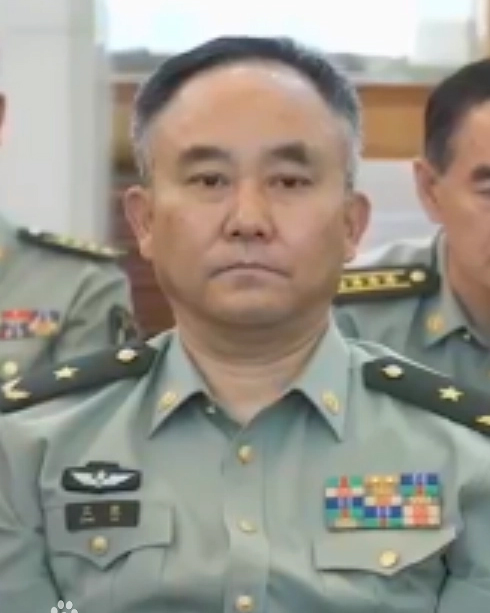
Lt  Gen Wang Haijiang
The Tibet Military District Commander Transferred
Though it may not directly be linked, on April 6, it was reported that Lt Gen Wang Haijiang, Commander of the Tibet Military District (TMD) had been transferred to Xinjiang (XMD).
The Caixin, which broke the news, said: “The specific position is yet to be announced.”
But it can only be XMD Commander.

On April 4, on the occasion of the Qingming (Tomb Sweeping) Festival at the Martyrs Cemetery in Urumqi, the capital of Xinjiang, while Chen Quanguo (Xinjiang’s Party boss and member of the CPP Politburo), Xuekelaiti Zakeer, Xiaokaiti Yiming, Nuerlan Abdumanjin, Wang Junzheng, Zhang Chunlin, Wang Haijiang, Yang Cheng, Xu Hairong, Elken Tuniyaz, Tian Wen, Li Yifei, Wang Mingshan, all members of the Standing Committee of the so-called Autonomous Region, were in attendance,  Wang Haijiang was not seen.
He must have just reached the capital of the restive province to take over his new job; it will give him over-all command over the Ladakh front against India, which reports to the South Xinjiang MD or SXMD. based in Kashgar.
Wang Haijiang, a native of Anyue, Sichuan,  born July 1963, must have pleased his bosses in Beijing (read Xi Jinping) during his tenure in the TMD.
According to Caixin, he has served in the frontier for a long time: “He was the commander of a division and the deputy commander of the Southern Xinjiang Military District; he was the deputy commander of the Tibet Military Region in 2016 and in the winter of 2019, he succeeded Lt Gen Xu Yong as commander of the Tibet Military Region. He was immediately promoted to the rank of Lieutenant General.

Gen Wang, a few days ago in front of the Potala in Lhasa, still commander TMD

The Ladakh Talks
This important change comes at a time when the 11th round of talks between the 14 Corps Commander based in Leh and Maj Gen Liu Lin, the Commander of the SXMD is scheduled to take place on the banks of the Pangong lake.
The successor of Gen Wang in Tibet is not yet known, but there are a few generals who fit the bill and could soon be nominated to replace Wang.
One of them is half Tibetan (from his mother side).

Lt Gen Wang Kai, TMD Commander
The New TMD commander (update)
After writing this post, some Chinese websites named the new Tibet Military District (TMD) commander.
Lt Gen Wang Kai, formerly one of the Deputy Commanders of the Western Theater Command has apparently taken over the TMD from Lt Gen Wang Haijiang.
From his CV, which appeared in Chinese websites, in April 2017, Wang Kai was appointed Deputy Commander of the Army in the Western Theater Command with the rank of Major General and at the end of March 2021, he was transferred to Lhasa and promoted lieutenant general.

Chinese name: Wang Kai
Country of Citizenship: China
Nationality: Han nationality
Date of birth: 1963
Job: Soldier
Place of birth: Sichuan Meishan on the marches of the Tibetan plateau
Belief: Communism
Major achievements: Deputy Commander of the Army of the Western Theater
Military rank: Lieutenant General 

Wang Kai served as brigade commander and commander of the 37th Division of the 13th Army.
During the 2008 Wenchuan earthquake, Wang Kai, then commander of the 37th Division, he led his troops to reach Beichuan, the hardest hit area, and commanded the men to advance to the epicenter of Yingxiu Town.
In 2009, he served as Chief of Staff of the Fourteenth Army of the Army.
He won the title of '5-12' National Model for Earthquake Relief.
'5-12' stands for May 12. It refers to the 2008 Sichuan earthquake, also known as the Great Sichuan earthquake or Wenchuan earthquake. It occurred at 14:20 hrs on May 12, 2008 and measured 8.0 on the Richter scale. The earthquake's epicenter was located 80 kilometres west-northwest of Chengdu, the capital of Sichuan. Strong aftershocks, some exceeding 6 Ms, continued to hit the area up to several months after the main shock, causing further casualties and damage. The earthquake also caused the largest number of geohazards ever recorded, including about 200,000 landslides and more than 800 quake lakes distributed over an area of 110,000 km2. Over 69,000 people lost their lives in the quake.
In July 2013, Wang Kai became the commander of the 13th Group Army. His ilustrious predecessors include Gen Zhang Youxia (2000.12-2005.12), now member of the Central Military Commission; Gen Zhao Zongqi (2007.09), former commander of the WTC of Doklam fame and Gen Xu Yong (2008-13), former TMD Commander.
In April 2017, Gen Wang was transferred to Chengdu as deputy commander of the Western Theater Army.
In 2019, he won the commemorative medal of "Celebrating the 70th Anniversary of the Founding of the People's Republic of China." 
At the end of March 2021, he moved to Lhasa as the Commander of the Tibet Military District and was promoted to the rank of lieutenant general.

The Situation in Tibet
It is clear that the situation is not easy in Tibet and one clearly see that Beijing is nervous, fearing a reaction of the Tibetan populations, who are supposed to have been 'liberated' 70 years ago by Mao’s troops.
On April 6, as Gen Wang had just reached Urumqi, The Global Times reported: “Tibet issues border activity bans.”

The Tibet Autonomous Region (TAR) announced a ban “on 15 border activities, further strengthening controls over illegal crossings.”
According to The Tibet Daily, the TAR Public Security Department and Foreign Affairs Office jointly issued a circular to other government departments, highlighting 15 acts that are prohibited at the border: “the strictly prohibited acts include entering the border management zone without valid documents, evading border inspection, organizing or helping others to be smuggled across the border, and hunting or collecting national protected rare animals and plants, etc.”
The circular added: “The bans also prohibit private small aircraft flight activities, damaging or moving of communications and water facilities, moving of markers that mark the location of the border, and damaging of military facilities. …Anyone who violates these prohibitions will be held accountable according to law, and will be transferred to the judicial authorities if the act constitutes a crime.”

Why suddenly?
The Global Times observed that at the Seventh Tibet Work Forum in August 2020, “the central government called for efforts to ensure national security and enduring peace and stability, steadily improve people's lives, maintain a good environment, solidify border defense and ensure frontier security. …the emphasis on the 15 border prohibitions can further implement this approach.”
It was stressed that carrying or disseminating newspapers, books or electronic products containing content that endangers national security and undermines ethnic unity is strictly prohibited."
It is rather drastic. This will undoubtedly alienate the Tibetans further.

What is causing such fear in the second most powerful nation of the planet?
The relations that the Indian populations in the Himalaya could have had with the Tibetans in Tibet?
It does not make sense, as there is presently hardly any contacts between the two.
The Global Times speaks of “Tibet's long border and its harsh geographical and natural conditions, the border was not fully guarded before and criminal activities.”
What criminal activities?
Some Chinese observers thought that Tibet's stricter border controls may help safeguard the region's COVID-19 prevention work “as India recorded an all-time high of 103,558 single day new coronavirus infections”.
Here too it does not make sense as the Himalayan states are not presently touched by the pandemic. Arunachal Pradesh in particular has hardly any cases.

Infiltrations from India?
It is also said that in recent years, “the region has also been infiltrated by some foreign forces.”
With the monitoring system in place on the plateau, it is not easy for ‘foreign forces’ to infiltrate; it is in fact impossible.
Minnie Chan in The South China Morning Post mentioned the Special Frontier Force, the Tibetan commandos associated with the Indian Army.
An insider, who requested anonymity due to the sensitivity of the matter, told the Hong Kong journalist: "All the bans are updated rules based on previous border regulations, with the key mission being to prevent exiled Tibetans trying to infiltrate Chinese borders." 

Chan added: "according to Chinese officials, more than 10,000 exiled Tibetan were being trained as 'special operation troops' by India."
Here again it is not serious.

More plausible is the fact that the PLA could be planning to open a new front against India to celebrate the 'liberation' of Tibet and the 100th anniversary of the Party. This should be watched seriously by the Indian Government.

The 70th anniversary of May 1951 

The main reason is that “Tibet is about to celebrate the 70th anniversary of its liberation, it is necessary to take appropriate precautions."
This is briefly mentioned by The Global Times' article.
The grandiose celebrations will take place on May 23 and in July, Tibet will ‘celebrate’ again, this time the 100th anniversary of the Communist Party of China.
Years ago, I wrote a long paper on the treacherous 17-Point Agreement. It can be downloaded from my website.
Each and every Tibetan knows that Tibet was not liberated in 1951.
China fears this.
The truth is that seventy years ago, a Tibetan delegation led by Ngabo Ngawang Jigme, a prisoner of war and former Governor of Kham,  was forced to sign 'under duress' a Seventeen-Point Agreement in Beijing. 

Article One says: "The Tibetan people shall unite and drive out imperialist aggressive forces from Tibet; the Tibetan people shall return to the big family of the Motherland-the People's Republic of China".
Since then, Tibet became a colony of China and the Tibetans slaves in their own country.

The Dalai Lama's Memoirs
In his memoirs Freedom in Exile, the Dalai Lama vividly recalls these dramatic events:

From my rooms in the monastery, I could look down towards the river where farmers came to graze their sheep, yaks and dzomos [mixture of a yak and a cow]. And I could watch, enviously, the groups of picnickers that came almost daily to build a little fire and cook down by the water's edge. I was so enchanted with all that I saw that I felt brave enough to ask Ling Rinpoche [his tutor] for some time off. He must have felt the same way as, to my surprise, he granted me a holiday. I could not remember being happier as I spent several days roaming around the area. On one of my excursions I visited a Bon monastery. My only sadness was that I knew that troubled times lay ahead. It could not be long now before we heard from Ngabo [Ngawang JIgme] in Peking [Beijing]. I half expected bad news, but nothing could have prepared me for the shock when it came.
At the monastery I had an old Bush radio receiver which ran off a six-volt battery. Every evening, I would listen to the Tibetan language broadcasts of Radio Peking. Sometimes I did so with one or other official, but often I listened alone. The majority of the broadcasts were taken up with propaganda about the 'Glorious Motherland', but I must say that I was very impressed with much of what I heard. There was constant talk of industrial progress and of the equality of all China's citizens. This seemed like the perfect combination of material and spiritual progress. However, one evening, as I sat alone, there was a very different sort of programme. A harsh, crackling voice announced that a Seventeen Point 'Agreement' for the Peaceful Liberation of Tibet had that day been signed by representatives of the Government of the People's Republic of China and what they called the 'Local Government' of Tibet.
I could not believe my ears. I wanted to rush out and call everybody in, but I sat transfixed. The speaker described how 'over the last hundred years or more' aggressive imperialist forces had penetrated into Tibet and 'carried out all kinds of deceptions and provocations'. It added that 'under such conditions, the Tibetan nationality and people were plunged into the depths of enslavement and suffering'. I felt physically ill as I listened to this unbelievable mixture of lies and fanciful clichés.
But there was worse to come.
Clause One of the 'Agreement' stated that 'The Tibetan people shall unite and drive out imperialist aggressive forces from Tibet. The Tibetan people all return to the big family of the Motherland - the People's Republic of China.'
What could it mean? The last foreign army to have been stationed on Tibetan soil was the Manchu army in 1912.
As far as I was aware (and now know), there was no more than a handful of Europeans in Tibet at that time. And the idea of Tibet 'returning to the Motherland' was shameless invention. Tibet had never been part of China. In fact, as I have mentioned already, Tibet has ancient claims to large parts of China. On top of which, our respective peoples are ethnically and racially distinct. We do not speak the same language, nor is our script anything like the Chinese script. As the International Commission of Jurists stated subsequently in their report:
'Tibet' s position on the expulsion of the Chinese in 1912 can fairly be described as one of de facto independence ...it is therefore submitted that the events of 19 II - 12 mark the re-emergence of Tibet as a fully sovereign state, independent in fact and in law of Chinese control.'
What was most alarming, however, was that Ngabo had not been empowered to sign anything on my behalf, only to negotiate. I had kept the seals of state with me at Dromo to ensure that he could not. So he must have been coerced. But it was several more months before I heard the whole story. In the meantime, all we had to go on was the radio broadcast (repeated several times), together with a number of self-congratulatory sermons about the joys of Communism, the glory of Chairman Mao, the wonders of the People's Republic of China and all the good things that the Tibetan people could look forward to now that our destinies were united. It was quite silly.
The details of the Seventeen-Point 'Agreement' were chilling all the same.
Clause Two announced that the 'Local Government' of Tibet would 'actively assist the People's Liberation Army to enter Tibet and consolidate the national defence'. This meant, so far as l could judge, that our farces were expected to surrender at once.
Clause Eight continued the theme by saying that the Tibetan army was to be absorbed into the Chinese army - as if such a thing were possible. Then in Clause Fourteen we learned that, from now on, Tibet was to be deprived of all authority aver the conduct of her external affairs. Interspersed with these more telling clauses were others assuring Tibet of religious freedom and protecting my position and the present political system. But far all these platitudes one thing was clear: from now on, the Land of Snows answered to the People’s Republic of China.
As the unhappy reality of our position began to sink in, several people, notably Taktser Rinpoche [the Dalai Lama's elder brother] in a long letter from Calcutta, urged me to leave far India at once. They argued that the only hope for Tibet lay in finding allies to help us fight the Chinese. When l reminded them that our missions to India, Nepal, Great Britain and the United States had already been turned back, they countered that once these countries realised the gravity of the situation, they would be sure to after their support. They painted out that the United States was implacably opposed to Communist expansionism and was already fighting a war in Korea far that very reason. l could see the logic of their arguments, but somehow felt the fact that America was already engaged in fighting an one front lessened the likelihood of her wanting to open up a second.
A few days later, a long telegram arrived from the delegation in Peking. It did not say very much beyond repeating what we had already heard on the radio. Obviously Ngabo was being prevented from telling the truth. Recently, same members of the delegation have related in their memoirs the full story of how they were forced to sign the 'Agreement' under duress and use counterfeit seals of the Tibetan state. But from Ngabo's telegram I could only guess at what had happened. However, he did say that the new Governor-General of Tibet, General Chiang Chin-wu [Zhang Jingwu], was en route to Dromo [Chumbi Valley] via India. We should expect him shortly.

The truth is that Tibet has never been liberated.
The Tibetan nation still lives under the yoke of the Chinese Communist Party, and Beijing has today a guilty consciousness; this creates a great uneasiness for Xi and his colleagues.
In the meantime, will Gen Wang Haijiang do better than his predecessor? 

Can he understand that India of 2021 is not India of 1962. The future weeks will tell us.  

Thursday, November 12, 2015

A rare letter from the Dalai Lama to Nehru

Tibetan Army in Lhuntse Dzong
Today, I am posting a very rare document, the translation of a letter sent by the Dalai Lama to the Prime Minister of India on March 26, 1959.
The letter is written from Lhuntse Dzong in Southern Tibet where the Tibetan leader had originally planned to take temporary refuge.
To give the background of the letter here what the Dalai Lama wrote in his autobiography, Freedom in Exile:
At first, it was my intention to halt at Lhuntse Dzong, not far from the Indian border, where I would repudiate the Seventeen-point 'Agreement', re-establish my Government as the rightful administration of all Tibet, and try to open negotiations with the Chinese. However, on about the fifth day [after he left Lhasa], we were overtaken by a posse of horsemen who brought terrible news. Just over forty-eight hours after my departure [on March 19, 1959], the Chinese had begun to shell the Norbulingka and to machine-gun the defenceless crowd, which was still in place. My worst fears had come true. I realised that it would be impossible to negotiate with people who behaved in this cruel and criminal fashion. There was nothing for it now but for us to get as far away as possible, though India still lay many days' journey distant, with several more high mountain passes in between.
When eventually we reached Lhuntse Dzong, after more than a week's travel, we paused for only two nights, just long enough for me formally to repudiate the Seventeen-Point 'Agreement' and to announce the formation of my own Government, the only legally constituted authority in the land. Over a thousand people attended the ceremony of consecration. I wanted very much to stay longer, but reports informed us that there were Chinese troop movements not far away. So reluctantly we prepared to move on to the Indian border, which now lay just sixty miles away in a straight line, though actually about double that on the ground. There was still another range of mountains to cross and it would take several more days to cover the distance, especially as our ponies were already worn out and there was very little fodder to give them. They would need frequent halts to conserve their energy. Before we left, I sent on a small party of the fittest men, who were to reach India as quickly as possible, find the nearest officials and warn them that I was planning to seek asylum there.
From Lhuntse Dzong we passed to the small village of Jhora and from there to the Karpo pass, the last before the border. Just as we were nearing the highest point of the track we received a bad shock. Out of nowhere, an aeroplane appeared and flew directly overhead. It passed quickly - too quickly for anyone to be able to see what markings it had - but not so fast that the people on board could have missed spotting us. This was not a good sign. If it was Chinese, as it probably was, there was a good chance that they now knew where we were. With this information they could return to attack us from the air, against which we had no protection. Whatever the identity of the aircraft, it was a forceful reminder that I was not safe anywhere in Tibet. Any misgivings I had about going into exile vanished with this realisation: India was our only hope.
A little later, the men I had sent on from Lhuntse Dzong returned with the news that the Indian Government had signalled its willingness to receive me. I was very relieved to hear this, as I had not wanted to set foot in India without permission.
For some unknown reasons, the Dalai Lama does not mention the letter that he had sent to Nehru on March 26 from Lhuntse Dzong.
Here is the translation of the original letter in Tibetan:
To Pt Jawaharlal Nehru
Prime Minister of India

Ever since Tibet went under the control of Red China and the Tibetan Government lost its powers in 1951, I, my Government officers and citizens have been trying to maintain peace in Tibet but the Chinese Government has been gradually subduing the Tibetan Government.
The Tibetans have great love for and faith in Buddhism and their religion is more precious to them than their lives. In order to root out Buddhism, the Chinese published some articles in the press against Lord Buddha’s teachings and circulated them widely. This has created unhappy atmosphere amongst the Tibetans and they have started disliking intensely the Chinese Administration.
On 10.3.1959, I, members of the Kashag and other high ranking officers were invited to the Chinese Army Headquarters in Lhasa ostensibly to attend a cultural show. The people of Lhasa came to me and requested me not to attend the function as they suspected foul play. They announced openly in the streets that they would not remain any longer under China and would become independent. After this a large armed party came to my residence to guard me.
The Government of Tibet have tried their best to maintain good relations with China but the Chinese have been trying to take away powers from the Tibetan Government and in some areas they are making preparations for war.
On 17.3.1959 at 4 p.m. the Chinese fired two shells in the direction of my residence. They could not do much damage. As our lives were in danger, I and some of my trusted [word missing] manage to escape the same evening at 10 p.m. and moving south to reach Lhuntse Dzong on 26.3.1959.
India and Tibet have had religious relations for thousand years and they are like brothers without any differences. Moreover Pt. Nehru as also the Indian people are known throughout the world for their support of humanitarian causes.
In this critical situation we are entering India via Tsona. I hope that you will please make necessary arrangements for us in the Indian territory.
Confident of your kindness and with good wishes,

Dalai Lama
Tenzin Gyasto
26.3.1959.
A Government of India report brings light on the momentous event:
On the 27th March, 1959, Shri T.S. Murty, Assistant Political Officer, Tawang, received instructions about the possibility of the Dalai Lama seeking entry into India. He reached Chuthangmu to receive the party at 09:00 hours on the 31st March, 1959.
The advance party of the Dalai Lama under a comparatively junior officer had already reached Chuthangmu on the 29th March. They stated that the main party consisting of the Dalai Lama, his family, ministers and tutors were expected to enter our territory at 14:00 hours on the 31st March, that there was no sign of the Chinese pursuit and that the party was bringing a small number of porters and would be needing many more from our area.
At 14:00 hours on the 31st March, the Dalai Lama and his party reached Kenze Mane [Khenzimane] which demarcates the frontier in Chuthangmu area. His Holiness was riding a yak and was received by the Assistant Political Officer, Tawang [Murty]. They proceeded to the checkpost without halting at the frontier.

I take this opportunity to inform my readers that I have posted a large series of historical documents related to the arrival of the Dalai Lama in India in March/April, on my website.

Click here to read...

Saturday, June 6, 2015

Can bygones be bygones?

Working for the 'masses'?
China has discreetly started appealing to the Tibetan Diaspora to join again the ‘motherland’.
The move was decided during Central United Front Work Conference held in Beijing from May 18 to 20. It was the 20th time, since the founding of the People’s Republic of China in 1949, that such ‘United Front Work Conference’ was held.
China Tibet Online commented: “Many politically savvy think that this shows the strengthening of the united front work (UFW) of the Communist Party of China. Meanwhile, international speculation was drawn by the conference: perhaps the CPC policies for ethnic minorities will be ‘tightened’?”
I think that it may not ‘tightened’, but more dangerously (for the Tibetans), the policies may be ‘loosened with Chinese Characteristics’.
Let me explain why?
During his intervention at the Conference, Xi Jinping spoke of strengthening of the unity of ‘three types of people’.
Who are these 3 types?
Xi named them: overseas students, media representatives, and non-public economy representatives. As already mentioned in this blog, Jack Ma of Alibaba was invited to join the collective efforts to build the Chinese Dream.
The younger generation was particularly targeted by Xi, “as the future focus of the united front work with the aim of achieving and maintaining unity."
China Tibet Online asked a pertinent (for Beijing) question: “do overseas Tibetans count in the ‘three types of people’?”
The website affirms that there are about 170,000 Tibetans living abroad in 33 different countries: “Many Tibetans fled from Tibet with the Dalai Lama in 1959, there are now second - or third - generation of Tibetans living overseas, and some left Tibet after the 1980s.”
Then the website gives their description of the Tibetan Diaspora: “Among the exiled Tibetans, only a handful of ‘high-ranking officials’ Tibetans can obtain the ‘nationality status’ or ‘green cards’ from their host countries, such as several Kalons (cabinet ministers) of the ‘Tibetan government-in-exile’. Most of the overseas Tibetans, especially those living in India and Nepal, are living in poverty and are basically dependent on others.”
The formulation is definitively not as offensive as usual. It does not say the ‘so-called Tibetan government-in-exile’, it just uses ‘ ’.

Let the bygones be bygones
The new Party’s policy seems to be a return to the Deng Xiaoping’s days, when China ‘opened-up’: “In 1978, the Chinese government formulated policies that ‘all patriots belong to one family, and that patriotism can be shown at any time’, as well as ‘freedom to come and go, letting bygones be bygones’ to welcome expatriate Tibetans to come home. Furthermore, Tibet’s economic development and the improvement of people’s living standards have also attracted overseas Tibetans to return home to visit their families and friends, make Buddhist pilgrimage, travel as tourists or do business.”
It is an open invitation to the Tibetan refugees to return, ‘let the bygones, be bygones’.
China Tibet Online says that the number of overseas Tibetans who are truly engaged in ‘Tibet independence’ and separatist activities is very small, though, it admits that the noise they make is big. It concludes that most Tibetans are not interested in ‘politics’.
In these conditions (as seen by Beijing), the United Front Work Conference “reiterated the bottom line that so long as overseas Tibetans are not involved in separatist activities, but safeguarding the unity of the motherland and maintaining unity instead, they are the targets of the united front’s work.”
In other words, the Tibetan refugees belong to one of the three types.
Under the new scheme the Tibetan refugees would be free birds, free to practice their ‘own’ religion, but, there is a ‘but’, it should be with Chinese characteristics.
Take the beginning of Saka Dawa Festival which was celebrated on June 2 this year (15th day of the 4th month). It marks the day of Buddha Sakyamuni's birth, enlightenment and Nirvana.
Zhao Puchu, a former president of the Buddhist Association of China, states that there was only one Buddha Sakyamuni in the world, so there should be only one definite time and date of his birth, enlightenment and nirvana: “However, due to the different calendars that are used in different countries and regions, the Buddhist records of this date vary.”
He proposed that Saka Dawa should be aligned with the Chinese lunar calendar. He explains: “During the development of some big religions as they expanded their geographical scope, they encountered new believers who were rooted in the culture of their individual regions. Thus, as time passed, the original religion gradually combined with the local culture, eventually forming a new sect.”
Zhao concludes: “In China, the question is how to adapt religions to a socialist society with Chinese characteristics.”
Soon, the Tibetan New Year, Losar will have to aligned with the Chinese Spring Festival for the sake of the ‘socialist society with Chinese characteristics’.
During the UWF Conference, Xi Jinping spoke of the legalization of religion work: “Authorities must value the influence of persons in the religious sphere and guild them to better serve for the nation's development, harmony and unification,” he said.
The Chinese President added: “Active efforts should be made to incorporate religions in socialist society,” but “religions in China must be Chinese. The development of religions in China should be independent from foreign influence.”
It means that Tibetan Buddhism, a ‘foreign’ religion which originated in the pains of India, should adapt to its Chinese environment and adopt ‘Chinese characteristics’.

The 17-Point-Agreement

The UWF Conference also passed new Regulations (‘Trial Implementation’) “marking a historical milestone in the development of the United Front”.
China Tibet Online affirmed that the United Front Work had been the key to the peaceful liberation of Tibet. It then brings the “17-Article Agreement which marked peaceful liberation of Tibet.”
After giving an historical background, it says “from Tibet’s peaceful liberation in 1951 until the Dalai Lama fled to India in 1959, the ‘17-Article Agreement’ was the binding legal document for the central government and Tibet local government to adhere to.”
The fact that the Chinese publication use ‘was’ is an admission from Beijing that the Agreement is no more 'binding'. Let us remember that it was denounced by the Dalai Lama in April 1959 when he reached Tezpur in Assam.
The article explains that “the CPC insisted on unity of principle and flexibility during the process of the liberation of Tibet, both to safeguard national interests and also to take care of the interests of the people of Tibet.”
It quotes Deng Xiaoping, then Political Commissar of Second Field Army, which entered Chamdo in October 1950: "In Tibet, we walk and eat relying on policies. Policies are life. We must work closely with and rely on the masses… We should unite the majority of the ecclesiastic and secular people who are patriotic under the anti-imperialist patriotic banner."
Then the Party “established and developed the anti-imperialist patriotic political foundation, with members of the upper class as the focus of the United Front Work,” says the China Tibet Online.
After giving this ‘historical’ background, Beijing appeals again for ‘forgiveness’ “For the pro-imperialists of the past, as long as they distance themselves from imperialism, sabotage and resistance, bygones can be bygones, and all can be united.”
It quotes the Tibetan collaborator, Ngabo Ngawang Jigme, who was co-opted in the UFW and would have suggested that in October 1950, Tibet should "Stop the offensive. Both Chinese and Tibetans will benefit from a peaceful settlement."
The Chinese website admits that when the PLA arrived in Chamdo, Ngabo “ordered the withdrawal of Tibetan troops from Chamdo and sent for contact with the PLA.”
Further, Ngabo would have encouraged some 40 monks and lay officials “to write to the Dalai Lama, to urge the Tibetan local [Lhasa] government to speedily send representatives to engage in peace talks with the Central Government based on their knowledge and experience.”
It is how the 17-Point Agreement was signed (‘under duress’ say the Tibetans)
Then, China Tibet Online gives several examples on how the PLA brought ‘relief’ to the masses and “the PLA troops in Tibet were also pioneers of production: repairing roads and bridges, providing free medical care, and helping people with laborious work.”
Well, the truth is that the PLA built roads for itself, to defend the borders; in other words, to be ready to take on Indian troops.
How the Diaspora will respond to the new ‘offer’ of the UFW Conference is an interesting question to follow.
Let us see if the bygones can be bygones once again.

Friday, July 15, 2011

Happy and Liberated?


The Tibetans are happy and liberated.
It is basically what Beijing affirms in a  White Paper on 'The Liberation of Tibet' recently released by the State Council's Information Office.
A communique says: "The 60 years following Tibet's peaceful liberation have proved that Tibet, as an inseparable part of China, shares its destiny with the motherland, and its development is also impossible without that of China".
One discovers astonishing information: "After the founding of the People's Republic of China in 1949, Tibet was peacefully liberated. Under the leadership of and with special care from the Central People's Government, and through democratic reform, the founding of the autonomous region, socialist construction and the reform and opening-up, Tibet abolished serfdom and theocracy, become a modern, democratic socialist society, achieved rapid and comprehensive economic and social development, and embarked on the road to modernity."
According to Beijing "Tibet's 60 years of development would have been impossible without the care of the Central Authorities".
Without commenting on the 'democratic socialist society' (it used to be called the 'dictatorship of the proletariat'), facts on the ground do not tally with the words of the White Paper.
Why should Tibet be closed to foreigners for any special 'celebration' if the life is so rosy and if the Tibetans are so grateful to the 'Motherland'?
As the White Paper was released, the Tibetan Centre for Human Rights and Democracy (TCHRD) announced that the Kardze County People’s Court sentenced 13 Tibetans out of many others arrested.
TCHRD says: "The Chinese Authorities have begun to restrict and suppress the monasteries and the common people in Kardze County. There has been an increase in the arrest on doubt cases. For example, on July 5th 2011, in Kardze Dhargyal Monastery, the local police came and interrogated the monks and especially the monks who returned from India. Monk Lobsang Choejor (35) and monk Jampa Wangchuk (46) were interrogated and then taken into Kardze Detention Centre and till date they are in detention center."
The TCHRD further stated that on July 5th, 2011 the Public security Bureau arrested Pema Rinchen, a famous writer from his house in Drango County of Kardze Prefecture,: "On July 6th, 2011, the second day of his arrest he had to be taken to the Drango County Hospital for emergency treatment, because he was reportedly savagely beaten by the police after his arrest. His injuries are believed to be caused by severe beatings by the police. On hearing the news, his family members rushed to hospital. However, several policemen were standing guard outside his hospital room and refused to allow his family to see him".
Examples in Kirti monastery and elsewhere could be multiplied.
What is flabbergasting is that Beijing continues to publish photos of 'happy Tibetans' enjoying life under their benevolent and compassionate 'Motherland'.

Tuesday, May 24, 2011

60 years of Tibetan 'liberation': From what? From whom?

My article 60 years of Tibetan 'liberation': From what? From whom? is posted on Rediff.com as slide-show. Click on the title to read.

Monday, May 23, 2011

Communist China and Democracy


Though sad, certain historical ironies tend to make me smile.
On May 23, the People’s Republic of China celebrates the 60th anniversary of the ‘Liberation’ of Tibet. According to Beijing, on that day in 1951, Tibet was ‘liberated peacefully’.
In October 1950, the Second Field Army of Marshal Lui Bosheng and Deng Xiaoping, his Political Commissar, entered Eastern Tibet and captured the city of Chamdo. That was a forced ‘liberation’.
On May 23 1951 in Beijing, a Tibetan delegation had no choice but to sign an “Agreement on Measures for the Peaceful Liberation of Tibet”; the Tibetans later said that they had to affix ‘under duress’ fake seals prepared for the occasion by the Communists. Even the China-enamoured Indian Prime Minister wondered in the Lok Sabha, ‘liberation from what, from whom, it is not clear?’
And now the irony: on the day Beijing celebrates the strange ‘liberation’ of Tibet, the Tibetan community in exile will undergo its largest ‘democratic’ experiment. A National General Meeting of a few hundred exiled Tibetans is held in Dharamsala, the seat of the Dalai Lama in Himachal Pradesh.
On May 21, the Tibetan website Payul.com announced: "418 Tibetans from various parts of the world gathered at the Tibetan Children Village school auditorium for the second Tibetan General Body Meeting which had been called by the Tibetan Parliament in exile after the Tibetan leader Dalai Lama announced his decision on March 10 this year to devolve his 'political authority' to an elected leadership."
This enlarged consultative group comprises of ‘senior’ Tibetans, serving and former officials and eminent members of the civil society.The meeting will ‘democratically’ discuss a draft for amending the Tibetan ‘constitution’ (known as ‘Charter’) which will provide the legal framework for the Dalai Lama’s proposed retirement.
The Meeting is also supposed to advise Dr Lobsang Sangay, the newly elected Prime Minister. Sangay born 43 years ago in India and educated at Harvard Law School will be Kalon Tripa (or Prime Minister of Tibet’s government-in-exile) for the next 5 years.
Already one month before the results were announced, an editorial of The People’s Daily assailed Sangay: “In 1992, Lobsang Sangay rose to fame and became the youngest leading member of Tibetan Youth Congress, a terrorist organization in nature. …The crimes made the organization look like a kin member of Al-Qaida, Chechnyan armed terrorists and ‘East Turkistan’ separatists.”
The fact is that the democratic process started by the Dalai Lama (which culminated in his retirement) exasperates Beijing. The very word ‘democracy’ makes the Communist leadership see red.
In a recent interview, Zhu Weiqun, Executive Vice Minister of the United Front Work Department of the CPC Central Committee and interlocutor of the Dalai Lama’s Envoys asserted: “The Peaceful Liberation of Tibet not only marked the crash of the attempt of the imperialism and a minority of Tibetan reactionary upper class to separate Tibet from the whole country, but also realized the complete liberation and reunification of the whole China.”
Unfortunately for Mr. Zhu, 60 years later, Tibet is not peaceful.
On 16 March 2011, the self-immolation of Phuntsok, a Tibetan monk belonging to Ngaba Kirti Monastery in Sichuan province triggered violent protests by several thousand monks in Eastern Tibet.
According to the Tibetan Center for Human Rights and Democracy: “Chinese security forces have cordoned the monastery and additional contingents of armed security forces (estimated to be around 800) have been brought in on 9 April 2011 to reinforce security clampdown in Ngaba County. The movement of the monks is totally restricted with no one being allowed to go in or come out of the monastery.”
Since then, more depressing news has emerged: the presence of Chinese security forces in all Tibetan areas of Sichuan, Gansu and Yunnan has increased; several monks have been arrested and tortured while Communist cadres roam around villages ‘talking about harmony and patriotism’.
Interestingly, modern Chinese historians concur to say that the Tibet issue has been the factor which provoked the 1962 Sino-Indian conflict in NEFA and Ladakh. After having ‘liberated’ Tibet in 1950, Mao and his colleagues could not swallow the fact that, in March 1959, Tibetan masses revolted against the Chinese occupiers and the India gave refuge to the Dalai Lama.
In November 1962, in a long diatribe, The People’s Daily accused Nehru of having “instigated and backed up the treason and rebellion of the reactionary clique of the upper social strata in the Tibet region”. The fact that the so-called ‘upper strata’ was mainly composed on ‘common men’ was hard to digest for the Communist Party.
China has now decided to celebrate the 60th anniversary of the ‘Liberation’ of Tibet. Sixty years, a full circle in the Tibetan (and Chinese) calendar makes the commemoration highly symbolic.
The Communist regime however keeps its aversion for democracy; one of their arguments is that democracy is an American invention.
The Communist publication Red Flag Manuscript recently analyzed what it terms ‘the chaos of democracy’ in most Asian countries: “The expansion of democracy that the US promotes has not brought about an economic boom or social development in these regions. On the contrary, it has led multiple countries or regions to fall into political instability and even chaos. In some areas and countries, with the progress of so-called democratization, ‘chaotic symptoms’ have developed such as ethnic conflict, splitting the nation, social turmoil, massive corruption, and an unstable political situation.”
For Beijing, these countries have blindly used Western democratic values without taking into consideration the local social and cultural environment.
Beijing is also unhappy with the US Secretary of State Hillary Clinton. In a recent interview, she dared to make a parallel between the recent turmoil in the Arab world and China's tough response to its opponents (a ‘fool's errand’, Beijing was attempting to stop the course of history, she said).
The Chinese Foreign Ministry spokeswoman Jiang Yu reacted strongly. She accused Clinton of using inappropriate language: the US had no business “to put China on a par with countries in Western Asia and North Africa."
Already on April 8, after the release by the US State Department's 2010 Annual Human Rights Report, Beijing had asked Washington to stop being a self-styled 'human rights preacher'; the Chinese leadership then went on to criticize the US human rights record.
Is it not a good tactical move to defame an opponent on his Achilles' heel?
Huanqiu, a publication in Chinese language answered the Western countries' criticism of Beijing's arrest of artist Ai Weiwei: “The interference in Ai Weiwei’s case is a total negation of China’s law”. Huanqiu described the Law in China as “the skeleton of this country”.
The harsh treatment inflicted on those who do not support the Communist Party (such Weiwei or Lui Xiabao, the Nobel laureate) is a sign that the ‘harmonious society’ often mentioned by President Hu is still far away in Communist China, which prefers to keep quiet on the ‘Indian experiment’.
We all witnessed the voters’ enthusiasm during the recent Legislative Assembly’s elections. It demonstrated once again that the people of India are not scornful of ‘democracy’. And the astounding results, particularly in West Bengal and Tamil Nadu vindicated the vibrant ‘system’; ultimately is it not by ‘democratically’ getting rid of the villains (at least temporarily) that one can hope to create a more harmonious and contented society?

Sixty Years Ago


Sixty year years, a Tibetan delegation led by Ngabo Ngawang Jigme was forced to sign a Seventeen-Point Agreement in Beijing.
I have already written about the conditions under which the Agreement was signed. 
Read about it in my previous postings.
I am posting today an extract from the biography of the Dalai Lama (Freedom in Exile). He was in Dromo in Chumbi valley near the Indian border (Sikkim). 
He vividly recalls these dramatic events.
Article One says: "The Tibetan people shall unite and drive out imperialist aggressive forces from Tibet; the Tibetan people shall return to the big family of the Motherland-the People's Republic of China".
It was a capitulation for the Tibetans. 
The Chinese call it 'liberation'. 
The recent events of Kirti monastery demonstrate that 60 years later the Tibetans have not capitulated.


(From Freedom in Exile)
From my rooms in the monastery, I could look down towards the river where farmers came to graze their sheep, yaks and dzomos. And I could watch, enviously, the groups of picnickers that came almost daily to build a little fire and cook down by the water's edge. I was so enchanted with all that I saw that I felt brave enough to ask Ling Rinpoche for some time off. He must have felt the same way as, to my surprise, he granted me a holiday. I could not remember being happier as I spent several days roaming around the area. On one of my excursions I visited a Bon monastery. My only sadness was that I knew that troubled times lay ahead. It could not be long now before we heard from Ngabo in Peking. I half expected bad news, but nothing could have prepared me for the shock when it came.
At the monastery I had an old Bush radio receiver which ran off a six-volt battery. Every evening, I would listen to the Tibetan language broadcasts of Radio Peking. Sometimes I did so with one or other official, but often I listened alone. The majority of the broadcasts were taken up with propaganda about the 'Glorious Motherland', but I must say that I was very impressed with much of what I heard. There was constant talk of industrial progress and of the equality of all China's citizens. This seemed like the perfect combination of material and spiritual progress. However, one evening, as I sat alone, there was a very different sort of programme. A harsh, crackling voice announced that a Seventeen Point 'Agreement' for the Peaceful Liberation of Tibet had that day been signed by representatives of the Government of the People's Republic of China and what they called the 'Local Government' of Tibet.
I could not believe my ears. I wanted to rush out and call everybody in, but I sat transfixed. The speaker described how 'over the last hundred years or more' aggressive imperialist forces had penetrated into Tibet and 'carried out all kinds of deceptions and provocations'. It added that 'under such conditions, the Tibetan nationality and people were plunged into the depths of enslavement and suffering'. I felt physically ill as I listened to this unbelievable mixture of lies and fanciful clichés.
But there was worse to come.
Clause One of the 'Agreement' stated that 'The Tibetan people shall unite and drive out imperialist aggressive forces from Tibet. The Tibetan people all return to the big family of the Motherland - the People's Republic of China.'
What could it mean? The last foreign army to have been stationed on Tibetan soil was the Manchu army in 1912.
As far as I was aware (and now know), there was no more than a handful of Europeans in Tibet at that time. And the idea of Tibet 'returning to the Motherland' was shameless invention. Tibet had never been part of China. In fact, as I have mentioned already, Tibet has ancient claims to large parts of China. On top of which, our respective peoples are ethnically and racially distinct. We do not speak the same language, nor is our script anything like the Chinese script. As the International Commission of Jurists stated subsequently in their report:
'Tibet' s position on the expulsion of the Chinese in 1912 can fairly be described as one of de facto independence ...it is therefore submitted that the events of 19 II - 12 mark the re-emergence of Tibet as a fully sovereign state, independent in fact and in law of Chinese control.'
What was most alarming, however, was that Ngabo had not been empowered to sign anything on my behalf, only to negotiate. I had kept the seals of state with me at Dromo to ensure that he could not. So he must have been coerced. But it was several more months before I heard the whole story. In the meantime, all we had to go on was the radio broadcast (repeated several times), together with a number of self-congratulatory sermons about the joys of Communism, the glory of Chairman Mao, the wonders of the People's Republic of China and all the good things that the Tibetan people could look forward to now that our destinies were united. It was quite silly.
The details of the Seventeen-Point 'Agreement' were chilling all the same.
Clause Two announced that the 'Local Government' of Tibet would 'actively assist the People's Liberation Army to enter Tibet and consolidate the national defence'. This meant, so far as l could judge, that our farces were expected to surrender at once.
Clause Eight continued the theme by saying that the Tibetan army was to be absorbed into the Chinese army - as if such a thing were possible. Then in Clause Fourteen we learned that, from now on, Tibet was to be deprived of all authority aver the conduct of her external affairs. Interspersed with these more telling clauses were others assuring Tibet of religious freedom and protecting my position and the present political system. But far all these platitudes one thing was clear: from now on, the Land of Snows answered to the People’s Republic of China.
As the unhappy reality of our position began to sink in, several people, notably Taktser Rinpoche in a long letter from Calcutta, urged me to leave far India at once. They argued that the only hope for Tibet lay in finding allies to help us fight the Chinese. When l reminded them that our missions to India, Nepal, Great Britain and the United States had already been turned back, they countered that once these countries realised the gravity of the situation, they would be sure to after their support. They painted out that the United States was implacably opposed to Communist expansionism and was already fighting a war in Korea far that very reason. l could see the logic of their arguments, but somehow felt the fact that America was already engaged in fighting an one front lessened the likelihood of her wanting to open up a second.
A few days later, a long telegram arrived from the delegation in Peking. It did not say very much beyond repeating what we had already heard on the radio. Obviously Ngabo was being prevented from telling the truth. Recently, same members of the delegation have related in their memoirs the full story of how they were forced to sign the 'Agreement' under duress and use counterfeit seals of the Tibetan state. But from Ngabo's telegram I could only guess at what had happened. However, he did say that the new Governor-General of Tibet, General Chiang Chin-wu [Zhang Jingwu], was en route to Dromo via India. We should expect him shortly.

Tuesday, May 10, 2011

A not too Peaceful Liberation of Tibet

This interview with Zhu Weiqun, the Executive Vice Minister of the United Front Work Department of the Communist Central Committee shows once again the guilty consciousness of the Chinese leadership.
Sixty years after the so-called 'Liberation', no-one is fooled, Beijing has not 'liberated' Tibet, Beijing has invaded Tibet. 
Zhu admits this fact when he says: "At the end of 1949, Chairman Mao indicated that 'the earlier we enter Tibet, the better'".  
If China needs to 'enter' Tibet, it means that China is 'outside' Tibet, isn't it? 
Then Zhu confirms: "In October 1950, the People's Liberation Army launched the 'Chamdo Battle', crushing down the scheme of the small number of upper-class reactionaries in Tibet who tried to resist the liberation of Tibet by taking advantage of the geographically fortified Jinshajiang [Yangtse] River Front and  the support of foreign forces". 
Though, Zhu and his colleagues perfectly know well that no foreigner was involved in Chamdo, they recurrently use this old argument. 
Further the fact they had to 'crush' the Tibetan Army shows that the PLA did not really 'liberate' Tibet.
Then Zhu continues: "After nearly one month's negotiation, the local government of Tibet signed 'the 17-Article Agreement' with the Chinese central government.  Thus Tibet was peacefully liberated." 
The 17-Point Agreement was signed under duress and the seals of the Tibetan government were forged. These are historical facts.
When Zhu states: "In fact, the Dalai Lama knew well the goodwill of the Central Government, but he insisted going further in a wrong way," referring to his flight to India, what choice had the Tibetan leader but to leave Tibet after having tried hard to 'cohabitate' with the Chinese occupiers. 
Incidentally, it is the 'masses' who revolted when the entire population of Lhasa surrounded his Norbulingka Palace in March 1959. They wanted to stop the Dalai Lama from attending a suspicious invitation ('unarmed' and without escort) in the Chinese military camp.
Zhu Weiqun asserts: "In 1995, after careful studies on the Dalai Lama's sabotage activities in the past decades, the Central Government affirms four allegations over the Dalai Lama: the leader of the separatist clique that conspires the independence of Tibet, a ready puppet of the international anti-China forces, the root of social disorder in Tibet, and the biggest obstacle against regular religious order of Tibet Buddhism".
These allegations are so childish that nobody can really believe them, though as I mentioned yesterday, if nobody believes the Chinese Government for internal matters, the people in China still have a tendency to have faith in their Government when it concerns external issues.
The interesting point is that Zhu Weiqun who is the official interlocutor of the Dalai Lama's Envoys for the Beijing-Dharamsala talks seems very short of decent arguments to prove Beijing bona-fide in invading (not liberating) Tibet and refusing to negotiate any 'middle path' solution with the Dalai Lama.
The Chinese have a basic problem: they invaded Tibet and they are ready to admit it. Who can believe, 60 years later, that they 'liberated' the Land of Snows? 
I still don't understand why the Tibetans in exile have chosen the 60th anniversary of the signature of the 17-Point Agreement for holding an important National General Meeting (see my previous posting on the subject). 
Perhaps to show the Chinese how vibrant their democracy is?


Peaceful Liberation of Tibet: Splendid Chapter in Chinese Annals of National Unity
China Tibet Online

2011-05-07
Editor's Note: At the request of "China's Tibet" magazine, Zhu Weiqun, Executive Vice Minister of the United Front Work Department of the CPC Central Committee, has accepted this exclusive interview with the magazine, just a couple of weeks before the 60th anniversary of the signing of the "Agreement on Measure for the Peaceful Liberation of Tibet"(the 17-Article Agreement) and the peaceful liberation of Tibet. The full text of this interview will be published on the May 15 edition of "China's Tibet". 

Peaceful liberation: Tibet never to separate from its motherland


Reporter: May 23 this year marks the 60th anniversary of the signing of the "Agreement of the Central People's Government and the Local Government of Tibet on Measures for the peaceful Liberation of Tibet". How do you evaluate this historical event?

Mr. Zhu Weiqun: The peaceful liberation of Tibet is a milestone in the national liberation undertaking of the Chinese people under the leadership of the Chinese Communist Party (CPC), as well as in the entire Chinese nation's century-long struggle for national unity.
Not long after the "three decisive victories" during the Chinese civil war, Chairman Mao proposed to settle the Tibet-related issues. In early 1949, he said "it is not difficult to settle the Tibet-related issues, yet we have to avoid being too hasty or imprudent" when meeting with USSR President Stalin's special envoy Mikoyan. At the end of 1949, Chairman Mao indicated that "the earlier we enter Tibet, the better" during his visit to USSR.
In October 1950, the People's Liberation Army launched the "Chamdo Battle", crushing down the scheme of the small number of upper-class reactionaries in Tibet who tried to resist the liberation of Tibet by taking advantage of the geographically fortified Jinshajiang River Front and  the support of foreign forces.
The victory of the PLA in Chamdo persuaded the Tibet local government headed by the 14th Dalai Lama to send a delegation to Beijing for peace talks. After nearly one month's negotiation, the local government of Tibet signed "the 17-Article Agreement" with the Chinese central government.  Thus Tibet was peacefully liberated.
This indicates the settlement of Tibet issue had been put on the top priority of the blueprint of the establishment of the People's Republic of China by the CPC leadership. Whether liberated in a peaceful way or in non-peaceful ways, Tibet must be liberated; otherwise the CPC would fail to accomplish its historical mission.
History has proved the correctness of the decision made by the CPC central committee and Chairman Mao, as we may have encountered more challenges if the PLA had not entered Tibet by then.
In my opinion, the Peaceful Liberation of Tibet not only marked the crash of the attempt of the imperialism and a minority of Tibetan reactionary upper class to separate Tibet from the whole country, but also realized the complete liberation and reunification of the whole China. As you know, Tibet is a part of China since the ancient time. From the Yuan Dynasty, the Central Government exercised direct and effective authority over Tibet.  In the modern history, western imperialists started to covet Tibet of China. The Britain launched two military attacks over Tibet in 1888 and 1904 respectively, and occupied Tibet in 1904. However, they discovered that military power could not only separate Tibet from China, in which Tibet locals and masses were all in obedience to the authority of the Central Government. Therefore, the British imperialism started to foster pro-Britain forces from the upper class of Tibet, by whom to plot "Tibet independence". There was no term of "independence" in Tibetan language before the, so it was absolutely made up by Western colonialists. On the eve of the great victory of people's liberation war, American and British imperialists and a batch of Tibetan reactionaries in Tibet's upper class feared that they may lose the last chance, then they plotted numbers of separatism incidents such as "banishing the Han people", and attempted to bring up the issue of "Tibet independence" to the Communist Party of China. However, the success of the "Chamdo Battle", the signing of the "17 Article Agreement" and the PLA's peaceful entry into Tibet all smashed western imperialism's illusions. The peaceful liberation of Tibet is the achievement made at the cost of many Chinese people's lives for their century-long pursuit of national reunification and ethnic dignity, which made the attempt of separating Tibet from China impossible forever.
Another significance of the peaceful liberation of Tibet lies in another fact that it provided preconditions for the democratic reform in Tibet from feudal serfdom into modern socialist system.
According to the actual situation in Tibet, the "17-Article Agreement" stipulates: "the Central Government will not change the existing political system of Tibet, nor will it change the Dalai Lama's inherent status and position", "In matters relating to reforms in Tibet, there would be no coercion on the part of the central authorities, and the reform would be carried out by the Tibetan local government of its own accord. Consultations with local Tibet leaders shall be made when the people show desire for the reform."
The Central Government abided by both promises. However, a minority of upper-class Tibetans wanted their system to last forever rather than to make changes later, so they started the armed rebellion. Yet the incident brought the democratic reform in Tibet into reality earlier than expected.
Without the prologue of the peaceful liberation of Tibet, the magnificent democratic reform would not have happened; and without the peaceful liberation of Tibet, the entry of the Chinese Communist Party and the PLA, those oppressed and enslaved Tibetan people would not have deeply understood the policy of the CPC, nor would they show a strong desire for the democratic reform themselves.
During the 8 years after the peaceful liberation of Tibet, a set of preconditions had been objectively created for the Democratic Reform in terms of ideology, support from both masses and cadres and even experience of military struggle. The success of the Democratic Reform of Tibet signifies that there would be no ground for either theocratic feudal serfdom or retroversion in the history of Tibet.
Now, it made the Dalai clique and western rivalries behind uncomfortable to see the national reunification and the prosperous development of all ethnic groups including Tibetans in China. They may disagree with me on this stand, and give it another try for verification as they have done many times. But I believe that any such chance-takers will not end up better than those resisters who went against the peaceful liberation of Tibet or launched armed rebels against their motherland.

Dalai Lama spoils his wisest decision
Reporter: At first, the 14th Dalai Lama agreed on and supported the signing of the "17-Article Agreement", but later he broke his promise and fled overseas to engage himself in separatism. What's your comment on that?

Mr. Zhu: The Dalai Lama was only 16 years old and just came into power when the "17-Article Agreement" was signed. He specially sent plenipotentiary to Beijing for negotiations with the Central Government.
After the agreement was signed, he stated openly that he completely accepted the "17-Article Agreement" on behalf of the local government of Tibet, and also expressed in his telegram to Chairman Mao Zedong that "the local government of Tibet and all Tibetan monks and laymen all support the agreement, willing to help the People's Liberation Army go into Tibet under the leadership of the CPC to fortify the national defense, expel imperialistic forces and safeguard the unified territorial sovereignty of the country."
The decision turned out to be one of the Dalai Lama's few wisest decisions in his life.
The Central Government has given many favorable treatments to the Dalai Lama. For example, in 1954, Chairman Mao Zedong and Premier Zhou Enlai specially met with him when he attended the first session of the National People's Congress. At the meeting, he was elected vice chairman of the Standing Committee of the National People's Congress. The position in the state's top legislative body was preserved for him until 1964 after he fled in 1959, which the Central Government claimed a forced escape with the consideration of his personal reputation.
Unfortunately, it was the Dalai Lama himself who smeared his own reputation. In 1959, he imprudently alleged to reject  the "17-Article Agreement" during his journey fleeing overseas with a group of upper-class splittists. More than fifty years have passed since then.
In fact, the Dalai Lama knew well the goodwill of the Central Government, but he insisted going further in a wrong way. Given that, the State Council passed the decision of removing the official post preserved for the Dalai Lama in 1964.
In 1995, after careful studies on the Dalai Lama's sabotage activities in the past decades, the Central Government affirms four allegations over the Dalai Lama: the leader of the separatist clique that conspires the independence of Tibet, a ready puppet of the international anti-China forces, the root of social disorder in Tibet, and the biggest obstacle against regular religious order of Tibet Buddhism".
With the following separatist and sabotage words and deeds, the Dalai Lama continued to prove the eligibility for the four allegations. I feel bad for him as he has to die with those "four labels".

The "Middle Way" equals "Tibet Independence"

Reporter: What's your comment on the 14th Dalai Lama's so-called "Middle Way"? And what's your opinion about the Dalai Lama's position in his contact with the Central Government?

Mr. Zhu: In the 1980s, the 14th Dalai Lama came up with his so-called "non-violence" and "middle way" approach. Such a "non-violence" claim did not mean that he did not want violence, but only he had to turn around at a dead-end corner due to his notoriety.
During 1960s, the clique had continuously organized armed attacks along China's border areas and caused bloodshed to undermine the stability of Tibet.
Even after he claimed to follow his "Middle Way" approach, the Dalai clique continued to move behind the scenes and provoke a series of riots such as the "Lhasa Incident" in 1989, "March14 Lhasa Incident" in 2008, etc.  Also the Dalai clique backed up separatist organizations such as Tibetan Youth Congress, which publicly claims "Tibet independence" and favors violent terrorist attacks.
However, the Central Government would like to resolve the Tibet issue through peaceful talks with the Dalai Lama who was officially recognized by the National Government of the Republic of China (1927-1949).
China's policy toward the Tibet issue has been consistent and open: the Central Government is always ready for contact and talks with the 14th Dalai Lama over his personal future as long as he gives up his separatist stance and activities against the motherland, publicly admits that Tibet and Taiwan are both inalienable parts of China and accepts that the People's Republic of China is the sole legitimate government of China.
Therefore, the contact with the Dalai Lama mainly happened in two periods of time: from the early period when China just adopted the "reform and opening-up policy" to early 1990s; and from the year of 2002 till now. Personally, I have taken part in all the ten rounds of talks since 2002.
We have two basic points for contact with the Dalai Lama. The first point is that we only contact private representatives sent by the Dalai Lama. His so-called "government in exile", whoever leads it, is only an illegitimate political group of splittists not eligible for a "dialogue" with the representatives of the Central Government. To dismiss itself is the only thing the "government in exile" should do. With our presence, the representatives of Dalai Lama never dared to say that they represent the "government in exile", but they set themselves up as representatives of "government in exile" as soon as they leave the country. This is not a decent act, but a deliberate move to spoil our talks.
The second point is that we only talk about the future of the Dalai Lama, and a small group of people around him at most. In other words, it is a talk about how the Dalai Lama gives up his ideas and actions of splittism completely and tries to gain  the understanding of the Central Government and people all over China. We will never talk about the so-called Tibet issue and "high-degree autonomy of  Greater Tibet" with them. To let the Dalai Lama further understand the principles of the central government and admit his mistakes, we can listen to his explanations, but it is only a test for any of his inclinations to give up his splittist approach and get closer to the Central Government.
During the contact in 2008, the private representatives of the Dalai Lama handed in a "Memorandum on Genuine Autonomy of the Tibetan People", which was rejected by us immdiately. But now the Dalai clique still shams that they are still "waiting for the central government's response". I would suggest they'd better stop such a self-delusional act.
Since we resumed our contact in 2002, we were once again disappointed by the Dalai Lama as he instigated a series of violent activities, including the March 14 Riots in Lhasa in 2008, interrupting the passing-on of the Beijing Olympic torch, inciting western countries to boycott Beijing Olympic Games and so on aiming to force us make a concession by taking advantage of the Beijing Olympic Games, which ended with nothing but another failure.
During the contact in 2008, the representatives of the Dalai Lama found that they could not achieve their goals, so they declared on site that they would never talk with the Central Government. This was already their second time to do so since 1993. Several months later, as expected, they asked for another round of contact because they found the situation was not favorable for them.
Recently, the unstable situation in the Middle East excited the Dalai Lama and Tibetan Youth Congress for another possbile opportunity.However, they never seem to make the right judgment or give the right action thus their decisions doom to failure over and over again.
In terms of the contact, we would like to stress that foreigners are not allowed to be involved. All Tibet-related issues are internal affairs of China, which should not be interfered by any other country. The Dalai clique insists on engaging foreigners in our contacts as some westerners actively offer to be "a third party". It is out of the question. I would suggest they reserve some respect for themselves.
Recently there are some discussions about the change of the office-term of the "government in exile" and the Central Government's attitude towards the contact. Now I want to make it clear: all the above basic points will not change. Of course, it will be a different matter if the Dalai Lama advocates publicly the "Tibet independence" or "armed riots".

Reporter: The Central Government has held five conferences on work in Tibet. What does it indicate?

Mr. Zhu: As far as I know, Tibet is the only provincial-level autonomous region for which the Central Government has held five conferences dedicated to its development since the implementation of the reform and opening-up policy. Why?
First of all, Tibet is located in a high-altitude, rigid, cold area where natural condition is extremely harsh, which is a special barrier for Tibet's economic and social development. Secondly, for a long time in history, Tibet had been ruled under the theocratic feudal serfdom system, which impeded its social development. So its development level is far behind the inland areas. Thirdly, the Dalai clique, under the support of anti-China western forces, has always conspired in splitting Tibet from its motherland and causing trouble to disturb the stability of Tibet, stifle its development, and threaten the national unity ,and territorial integrity of the country. Fourthly, Tibet in southwestern China shares long boarder borders with neighboring sub-continental South Asian countries. The stability and development of Tibet is important for China to maintain the friendly, cooperative and mutual beneficial relationships with those countries.
In a word, the above reasons determine the unique position of Tibet in the overall blueprint of the country. Both the Central Government and people are clear about the situation, so they are determined to stick to the policy of pooling national efforts to support the development of Tibet.
For example, the Central Government decided to call for all the government departments and 15 other provincial-level regions to aid Tibet at the third conference on work in Tibet held in 1994.  Altogether 62 key aid-Tibet projects have been implemented. In 2001, the fourth conference on work in Tibet decided to extend the planned aid-Tibet timetable from 10 years to 20 years, with 59 central government departments, 18 provincial-level regions and 17 state enterprises involved in the ambitious project to cover all prefecture-level cities and 74 counties  in Tibet. During the 11th Five-Year Plan period (2006-2010), the overall aid-Tibet fund amounted to 7.6 billion yuan. The fifth conference on work in Tibet stepped further ahead, calling for all aid-Tibet partner provinces and cities to use one thousandth of its disposable revenue to support the development of Tibet, which was accepted and accomplished without hesitation.
For so many years, a large number of inland cadres have left home to help Tibet enthusiastically. Facts show  that it has been a nationwide consensus to help with Tibet's progress.
We believe that the 3-million Tibetans who have taken aid and support from the whole nation are giving their own support to the country in return.
People of different minorities lived in Tibet from the ancient time have made unique material and cultural progress despite the high altitude, cold climate, thin air and extremely fragile eco-environment. They are also the guardians of the 1.2 million square-kilometer territory in the southwestern part of China.  In the past 60 years since the peaceful liberation of the region, Tibet has maintained stability and steady growth, turning itself into an important shield of security and ecological environment, a strategic resource reserve, a high-land distinctive agricultural product base of the country, as well as a Chinese ethnic culture protection center, and a world-renewed tourism destination. Officials and ordinary people from different ethnic backgrounds in Tibet have shown their lofty patriotism and hard-working spirit on the physically challenging plateau, which has served as an inspiration for the whole nation. This is what the Tibetans have returned to us all.
Tibetan culture gets along well with inland culture

Reporter: As secretary general of China Association for Preservation and Development of Tibetan Culture (CAPDTC), what's your comment on traditional Tibetan culture?


Mr. Zhu: The traditional Tibetan culture is an important part of the traditional Chinese culture. Over thousands of years, the Tibetan culture has been in complete harmony and closer bonds with the inland culture.
Let me show you an example. When you visit the Potala Palace or famous monasteries in Lhasa, look at the golden roof and bracket building style (a system of brackets inserted between the top of a column and a crossbeam), which is definitely similar to the architecture in inland areas of China. Also look at the painting, dance, sculpture, medicine, calendar, religion and so on, you can clearly feel the profound influence of inland culture (on the Tibetan culture) during the past thousands of years.
Just as you can also feel the great influence of Tibetan culture on the inland culture when visiting the Yonghegong Lamasery in Beijing or "Eight Temples" in Chengde (Hebei Province) or Bodhisattva Monastery at Mount Wutai (Shanxi Province). The Tibetan culture has been continuously instilling vigor to the inland culture, both in content and style.
The traditional Tibetan culture is also a distinctive part of traditional Chinese culture. It boasts plateau-featured lively regional characteristics which have drawn on the unique elements of the spirit of the Tibetan people and inspirations of the sub-continental South Asian culture.
Only with such factors can Tibetan culture and inland culture produce the best of itself through learning and attracting from each other and exchanges between both sides.

Reporter:What is the relationship between the traditional Tibetan culture and the socialistic new culture?

Mr. Zhu: It is a universal law in cultural development that traditional culture evolves with the social and economic development. Now our traditional culture is developing as we have entered the new phase of the country's socialistic construction with Chinese characteristics. The traditional Tibetan culture is for sure to progress with the times. And, the improvement of people's material life will no longer remain as it was. .
Former Chairman Mao once said, "To develop new national culture and elevate national confidence, it is necessary to sort out the old culture, and eliminate its feudal dross, and assimilate its democratic essence. But we should never take everything uncritically. It is imperative to differentiate democratic and revolutionary contents of the people in old times from all the rotten waste favored by the old feudal ruling class."
Traditional Tibetan culture originates from old times, inevitably carrying along some feudalistic serfdom dross belonging to the past, which should be abandoned as the society develops. Yet positive and advanced elements which can go along with the historical trend should be inherited and carried forward.
Now in an effort to build the socialistic new Tibet, we will definitely create unprecedented cultural substances and forms to reflect the new era and new society, offering the masses a kind of culture on the serving-the-people basis, readily accepted by the people.
Some westerners regard ancient Tibetan culture as incomparably sacred, not allowing any bit of change. In fact, what they want is to makeTibet as an antediluvian, keeping Tibetan people in a culturally outdated, even fatuous state so that they themselves could keep enjoying the superiority over ordinary people.
The Dalai clique blames us for  "destroying" Tibetan culture all along, but what they actually want is to recover their cultural superiority they had exclusively under the feudal serfdom.
Our proposition in cultural development is to meet the need of the people from all ethnic groups in living their new socialistic life, neither to satisfy the racial pride of some westerners nor to fulfill the desire of a handful of former privileged stratum in old Tibet.
Nowadays, the development of our country provides Tibetan culture with unprecedentedly favorable conditions and broad prospects.
New cultural forms and categories have emerged in large numbers in many fields of Tibetan culture, such as the language, newspaper, radio and TV broadcasting, architecture, art, photography, dancing, singing, and fashion, etc. Moreover, each cultural pattern is developing rapidly , stepping further to connect the traditional with  modern culture.
Artistic works reflecting Tibet and presenting Tibetan culture  such as  photography  or art exhibitions are almost seen everywhere across the country. The Tibetan songs such as "Ya la so" or "Ba zha hai" (Tibetan interjections) are commonly heard from professional or amateur singers, and also very popular among the people. Such cultural prosperity was unimaginable in old Tibet.
The CAPDTC will incumbently adapt to the historical trend, exerting more efforts in promoting Tibetan culture and  exhancing its nationwide and even global influence. At the same time we are also committed ourselves to introducing other excellent cultures to Tibet to enrich local Tibetan people's cultural life.