Showing posts with label Putin. Show all posts

Thursday, May 25, 2023

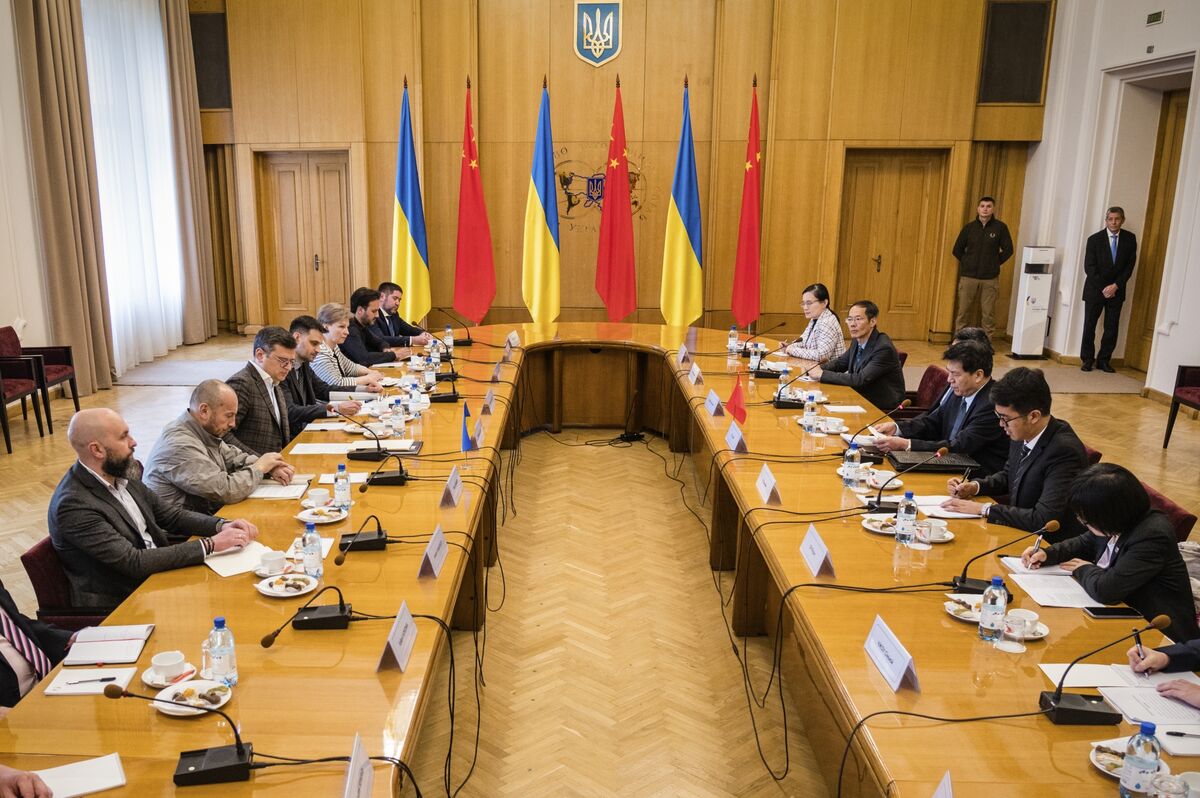
What lies behind China’s new role as ‘peacemaker’

My article What lies behind China’s new role as ‘peacemaker’ appeared in The Asian Age/Deccan Chronicle.


Beijing’s Global Security Initiative (GSI) is another move from Beijing which indicates that China wants to play a bigger international role

Here is the link...

China has become a peacemaker, or at least would like to project itself as the world’s new ‘peacemaker’; we have seen it in the Middle East (between Saudi Arabia and Iran), we witness it now in Moscow.
A year after the invasion of Ukraine by the Russian troops started, Beijing released a twelve-point document proposing a framework for a political settlement. The Carnegie Endowment for International Peace commented: "The document is a laundry list of familiar Chinese talking points about the war. It repeats Beijing’s support for the UN Charter and the territorial integrity of states, but at the same time condemns unilateral sanctions, and criticizes the expansion of U.S.-led military alliances. …China’s vague plan is aimed not at actually ending the war, but at impressing the developing world and rebutting accusations that Beijing has become a silent accomplice to Moscow.”
Beijing’s Global Security Initiative (GSI) is another move from Beijing which indicates that China wants to play an international role.
On February 21, at the Lanting Forum, Qin Gang, China’s Minister of Foreign Affairs, spoke of his country’s new role: “The world today is not a tranquil place: changes unseen in a century are fast evolving, major-country competition is intensifying, geopolitical conflicts are escalating, the global security governance system is woefully lagging behind. …The choice made by China is clear-cut.”
That is why, Qin explained, Xi Jinping proposed the Global Security Initiative (GSI) which upholds “the vision of common, comprehensive, cooperative and sustainable security, pursues the long-term objective of building a secure community, and advocates a new path to security featuring dialogue over confrontation, partnership over alliance and win-win over zero-sum.”

A growing Dichotomy

But a dichotomy is growing between Beijing’s totalitarian policies at home and the peacemaker role outside; it is striking and the question is: are the two stands reconcilable?
The hardening at home can be explained by the fact that China wants to assume the role of Power No 1 in the world and it believes that only the strictest adherence to the Communist Party lines can achieve this goal.
It is indeed a fact that the Chinese regime is becoming more and more authoritarian and autocratic.
One could take several examples, Reuters cites one: “China is increasingly barring people from leaving the country, including foreign executives, a jarring message as the authorities say the country is open for business.”
The US news agency quotes from a report for the Safeguard Defenders, a human rights group: "Since Xi Jinping took power in 2012, China has expanded the legal landscape for exit bans and increasingly used them, sometimes outside legal justification.”
It is estimated that tens of thousands of Chinese are banned from exit at any one time.
Reuters concludes: “This contrasts with China's message that it is opening up to overseas investment and travel, emerging from the isolation of some of the world's tightest COVID curbs.”
But why do more and more people want to leave the Middle Kingdom? Simply because they can’t express themselves freely.
The fact that people like Jack Ma, the founder of the Alibaba group has to exile himself in Japan and take an assignment at the University of Tokyo, is indeed speaking for itself. The School in Tokyo said: “Ma will work with researchers, serve as an adviser to the college and participate in seminars. He will also conduct research with university staff, especially in the field of sustainable agriculture and food production.” What a loss for a China, which today does not accept differing views.
In this context a new report from the Hoover Institution written by Matthew Johnson, expert on the Chinese Communist Party’s politics, about China’s strategy to achieve a global edge through the accumulation and control of data, is an eye-opener.
According to Johnson, China’s strategy is “to accumulate and control data at a global scale.” The scholar believes that the origin of this strategy is a 2013 speech given by Xi at the Chinese Academy of Sciences. The then new Chinese President said: “The vast ocean of data, just like oil resources during industrialization, contains immense productive power and opportunities. Who controls big data technologies will control the resources for development and have the upper hand.”
The way to do this is for Chinese commercial enterprises to “siphon data at a global scale,” explains Johnson who spoke of an “accumulation espionage ecosystem,” i.e. a network of internal data storage and processing facilities; data is later “absorbed into military, technology, and surveillance projects in China and is potentially shared with like-minded international partners such as the Russian Federation or the Islamic Republic of Iran.”
The point is that the same ‘vast ocean of data’ is used on the Chinese populations (particularly the so-called minorities like the Tibetans and the Uyghurs) to monitor their lives in minutest details.
Johnson concluded. “In this sense, China’s grand strategy for data is a case study which highlights the current gap that exists between the complexity of the challenge and the [US] current response.”
However, it is not clear what the free world can do for the Chinese people living in the Middle Kingdom.
At the meantime, ‘peaceful’ China is preparing to invade Taiwan, the democratically-run island. Like the GSI, it may however lead nowhere; the US strategic platform War on the Rock warns: “A worst-case Taiwan scenario for Chinese leader Xi Jinping would be a major military operation in which the People’s Liberation Army fails spectacularly or displays shocking incompetence akin to Russia’s in Ukraine. Could this happen?”
The specialized website believes that the bad news is that “even if China’s armed forces fail spectacularly, this does not necessarily mean a shorter, less bloody, or less costly conflict. If the People’s Liberation Army stumbles badly, Xi is unlikely to call off his military. Where Taiwan is concerned Xi can be expected to press his armed forces to persist in the fight, producing a protracted conflict in the center of the Indo-Pacific and profoundly disrupting commerce and stability across the region.”
So much for the ‘peace initiatives’!
The other question is of course: do the Taiwanese people, who have tasted freedom and democracy, have to go back to Mao’s dreadful days when everyone has to follow the Party …or else.
Certainly not. Hong Kongers themselves have started discovering the difference between freedom and the dictatorship of the Party.

Thursday, June 27, 2019

Of Allies, New & Forgotten

My article Of Allies, New & Forgotten was published by Mail Today.

The relations between World powers is getting more complicated, more difficult to comprehend, simply because they are often based on deep prejudices.
In an interview to media outlet Mir TV, Russian President Vladimir Putin spoke of the US-Russia relations: “They are in fact deteriorating, getting worse by the hour.”
President Donald Trump had earlier called Russia an ally: he had affirmed that he and Putin discussed “forming an impenetrable Cyber Security unit” to stop election hacking. But that was months ago.
Today all is not well! The relations between the West and Russia have reached an all-time low.
On the occasion of the commemoration of the 75th anniversary of D-Day, CNN asked: “Why wasn't Putin invited to D-Day event?”
Putin had been attending such functions in the past. In 2014, he had gone for the 70th anniversary of the landings of the Allies. When asked why he was not invited, Putin tried to cool down the situation: “Why do I have to be invited everywhere to some event? Am I a wedding general, or what? I have enough of my own business. This is not a problem at all.”
But the general impression was that President Trump had influenced his ‘allies’, first Emmanuel Macron of France not to invite Putin.
CCN said that there is a longstanding Russian grievance: “The perception that the Soviet population's massive sacrifices in World War II have been somehow overlooked in the West.”
Putting aside the Second Front in Normandy, Putin explained: “The first [front] was with us [the Soviets]. If you count the number of divisions, the strength of the Wehrmacht [the German army] who fought against Soviet troops on the Eastern Front, and the number of troops and equipment that fought on the Western Front from 1944 on, then everything will be clear.”
Sixteen heads of States and Governments were represented in Normandy; apart from Macron, Trump and Queen Elizabeth II, leaders from Slovakia, Canada, Poland, Luxembourg, Norway, Belgium, and others such as New Zealand's Governor-General and the German Chancellor were in attendance.
Russia should have been present, when the countries pledged: “We salute the surviving veterans of D-Day and we honour the memories of those who came before us. We will ensure that the sacrifices of the past are never in vain and never forgotten.”
Le Figaro said that the explanations given by the Elysée (French President’s Residence) were rather confused: “It is a choice which has been made,” the newspaper was told. Under US influence …or threat?
Though russophobia has been running high in Europe since a few years, The Figaro, like most of the French press was surprised.; the national daily quoted Jean de Gliniasty, former ambassador of France in Russia (2009-2013): “Explanations [from l’Elysée] are not convincing, this choice is incomprehensible.”
The former diplomat, a specialist in Russian issues at the Institute of International and Strategic Relations (Iris) noted that "instead of going to the West to celebrate the victory over Nazism, Putin will take care of the Chinese [president] in Moscow and St. Petersburg.”
That is the issue.
The Western nations’ ‘hatred’ of Putin will only push the Russians into the arms of the Chinese. While the Western leaders were on the windy beaches of Normandy, Vladimir Putin received President Xi Jinping in pomp in St Petersburg for the inauguration of the 23rd St. Petersburg International Economic Forum.
Xinhua reported: “Hailing the beautiful scenery and attractive art and culture, Xi said St. Petersburg has witnessed a lot of significant historical events.” He pointed to the “huge sacrifices for the victory of the world anti-Fascist war and important contributions, and is the pride of Russia and the Russian people.”
Xi also recalled that the October Revolution which played an important role in the birth of the Communist Party of China.
Perhaps more importantly for the world, the Chinese president observed: “Under the current circumstances, the two sides should deepen strategic coordination, not only to safeguard the interests of China and Russia, but also to defend basic international norms and justice as well as world peace, security and stability.” There might be few takers for these pledges, but Putin added: “The more complex and volatile the international situation is, the more Russia and China should consolidate and deepen political mutual trust, boost coordination and cooperation in international affairs, and safeguard international law and basic norms of international relations.”
The Russian president gave a vivid account of how the two good friends “drank a shot of vodka together and sliced sausages”.
The South China Morning Post commented: “[Putin’s] comments come at a time when Xi is edging closer to the authoritarian Russian leader as Beijing’s relations with the United States become increasingly fraught. Their increasingly tight-knit relations are also a result of Donald Trump’s aggressive and capricious foreign policy.”
In fact, Beijing is a far more authoritarian regime that Moscow; just look at the recent events in Hong Kong, China’s pressure on Taiwan, the happenings in the South China Sea, the tragic situation in Xinjiang or Beijing’s constant support to Pakistan.
Nobody in the West seems to grasp this aspect.
In this polarized atmosphere, Prime Minister Narendra Modi arrived in Bishkek, the Kyrgyz capital for the Shanghai Cooperation Organisation Summit. He met both the ‘good friends’.
Indeed it is an achievement for India’s foreign policy that the Indian Prime Minister managed to be positive with both; India’s Foreign Secretary even announced that Xi confirmed his visit to India later this year. Earlier, Prime Minister Modi had tweeted that his meeting with President Putin was ‘excellent’.
And in ten days time, Modi will receive Mike Pompeo, the US Secretary of State.
In today’s world, nobody can be excluded, even the so-called ‘bad guys’. The West will have to learn this lesson the hard way one day.

Friday, November 28, 2014

Is New Russia a Reliable Partner?

As Ukraine and NATO accused Russia of sending troops to launch a new offensive in eastern Ukraine, experts had warned of a showdown between Russian President Vladimir Putin and the Western leaders at the G20 summit held in Australia.
Before reaching Brisbane, Putin had denied sending tanks into Ukraine and said that he would not bring up the issue of the G20 meeting ‘it'll make no sense’. He however had a tough time.
But to show his muscles, Vladimir Putin had come to Australia accompanied by 4 warships, which he stationed off the country’s northeastern coast.
One can understand that in these circumstances Russia’s popularity has touched new lows. Tony Abbott, the Australian Prime Minster bluntly told the Russian President: “Russia would be so much more attractive if it was aspiring to be a superpower for peace and freedom and prosperity, if it was trying to be a superpower for ideas and for values, instead of trying to recreate the lost glories of tsarism or the old Soviet Union.”
The world media agreed that the West ‘lined up to browbeat him over Ukraine’; as a result, Putin left before the farewell lunch.
All is not well between India and Russia too. Take the project of a fifth generation fighter aircraft (FGFA). New Delhi is more and more concerned about the slow progress of the joint venture between India and Russia.
A few months ago, Mid Day reported: “Driving India's worries is the fact that the Russians are neither explaining why a prototype aircraft caught fire during a technology demonstration earlier this year nor addressing other technical doubts expressed by India.”
The worst is that despite being equal partners in the FGFA project, Moscow is not keen to share technical details about its next generation stealth fighter.
In 2010, officials of Hindustan Aeronautics Ldt. (HAL) and Russia’s Sukhoi Design Bureau had signed a preliminary agreement to jointly design and produce a FGFA to be later used by both countries. Delhi and Moscow are said to have invested US $ 295 million for the preliminary designs. Unfortunately, differences on the work share have cropped up between HAL and Sukhoi with the Indian side rightly insisting on parity. Ultimately the project is supposed to cost over $30 billion for about 400 aircraft, out of which India requires a total of 144. But when the IAF asked a twin-seat variant, Moscow demanded an additional $1 billion, which was refused by Delhi.
The precursor for the FGFA is the PAK-FA (an acronym for Perspektivnyi Aviatsionnyi Kompleks Frontovoi Aviatsy or Prospective Aircraft Complex of Frontline Aviation); also referred to as the T-50 by Sukhoi, the aircraft first flew in January 2010. Moscow says that five prototypes are currently being tested.
According to The Business Standard on January 15, 2014, during a meeting at the MoD in Delhi to review FGFA progress, some Indian officials affirmed that: “the FGFA's engine was unreliable, its radar inadequate, its stealth features badly engineered, India's work share too low, and that the fighter's price would be exorbitant by the time it enters service.”
In November, Russian Deputy Premier Dmitry Rogozin visited New Delhi (ahead of Vladimir Putin’s arrival in India in December) to discuss issues related to the FGFA. Some sources said that the differences have now been ironed out and that a deal is expected to be inked in December during Mr. Putin’s visit. It is highly improbable.
Another irritant has recently emerged in the bilateral relations between India and Russia; it will also have to be sorted out before Putin’s arrival: a ‘Chinese’ Brahmos appeared at the Zhuhai Airshow 2014 in China.
The new CX-1 supersonic anti-ship cruise missile (ASCM) developed by China Aerospace Science and Technology Corporation (CASC) strangely resembles the Russian-Indian BrahMos cruise missile.
Russia immediately rubbished the claim that it has offered to China the BrahMos missile technology. NPO Mashinostroyenia (NPOM), DRDO’s partner declared that reports saying that they had ‘given’ to China the BrahMos technology, in order to develop its CX-1 missile, are completely inaccurate. Another Russian military source is quoted by Russia and India Reporter (RIR): “NPOM believes that neither the BrahMos supersonic cruise missiles nor the Yakhont missiles manufactured in Russia have anything in common with the Chinese missiles except for some external characteristics …Judging by the photos, indeed, the missiles are observed as having a similar external shape.” It however admitted “the missiles have a similar maximum speed and flying range,” though “these characteristics cannot be used to make a judgment about the rocket. There are many other indicators.”
Well, the Government will have to look into the issue in greater detail and check if the Russians are as reliable partners as they have been in the past.
A small mercy, Air Chief Marshal Arup Raha announced that the Indian Air Force (IAF) was able to find the technical defects in the Sukhoi-30 (SU-30) aircraft which resulted in a crash of one aircraft and the grounding of the fleet.
Raha said: “The court of inquiry has not yet finalised the final findings. But preliminary findings we know and we know we will be able to tackle it. I don't want to tell you exactly the reason, but we know the reason."
On October 14, a Su-30 had crashed when both seats of the aircraft were ejected; fortunately both pilots survived. At that time, a MoD released a statement: "One Su-30 fighter of the IAF was involved in an accident … in which both ejection seats had fired whilst the aircraft was coming in to land. A Court of Inquiry (CoI) had immediately been constituted to investigate the cause of accident. Meanwhile, as is the procedure in such cases, the flying of the Su-30 fleet has been temporarily suspended [while] certain specific checks are being conducted on the aircraft."
The CoI has not been able to give its conclusions so far, as the Russians insist that it was a ‘pilot error’. Anyway, according to Raha, the IAF will start flying the aircraft in a few days.
This does not stop Russia to be more and more aggressive in its marketing ways. Alexander Kadakin, Russia's ambassador to India recently declared that “fighter planes fall into two categories – the hunters and the hunted.”
While the French “are pitching their Rafale as the dogfight duke that is the crème de la crème of jet fighters,” the Russians assert that Chinese-made Sukhoi-27s would be able to swat the Rafales like ‘mosquitoes on an August night.’
The Russians say that the Rafale is “a largely unknown commodity in aviation circles. Like most French fighters, it is most likely an unassuming, unspectacular but honest aircraft.”
Ambassador Kadakin explained to some Indian journalists: "We (Russia) are still very surprised that Rafale is being bought, because if the Rafale is intended to oppose Pakistani or Chinese planes, then the Sukhoi which the Chinese produce, or mobilizes, but which is only 50 percent of the Sukhoi which you (India) produce, then even for the Chinese Sukhoi, these Rafales will be like mosquitoes on an August night. They will be shot down like mosquitoes. That's why I don't understand why..."
Francois Richier, the French envoy to India wisely answered that he would not like to make any comments uttered by a ‘grumpy competitor’, adding “The negotiations [for the Rafales] are progressing well." He quoted statements made by Indian defence officials in the recent past about the progress and the recent visit to Delhi of Chairman of French Dassault Aviation:"It is a signal that it is moving in the right direction."
To conclude, an amazing story found on chinasmack.com: according to the website, which provides to English-speaking readers ‘glimpse into modern China and Chinese society by translating popular, trending Chinese internet content and netizen discussions’. The story shows the functioning of Old Soviet Union. Du Wenlong, a Chinese military expert admitted on Yunnan TV: “Back when we [the Chinese Air Force] were importing Su-27s, Russia was also having economic difficulties. They only wanted three things: One, flashlights; two, vacuum flasks; three, dog pelt coats. 10,000 dog pelt coats, that created a lot of pressure/difficulties for us. It takes 18 dog pelts to make one dog pelt coat. So that winter we killed all the dogs in the three provinces of Henan, Shandong, etc. in order to trade for Su-27s. So dogs in China had made significant contributions to China’s military and weapons modernization.”
Whether the story is true or not, the times have changed, though it is apparent that Vladimir Putin is still suffering from the Soviet Union ‘nostalgia’.
Let us hope that this will not disrupt India’s old partnership with Russia, though Delhi should remain firm with Moscow and refuse to take any bullying.

Monday, May 26, 2014

Will the wind blow from the East?

The tides are changing.
As Narendra Modi takes oath as the new Prime Minister of India, Asia is fast becoming the center of the world.
Agence France-Presse reported that China and Russia signed in Shanghai “a long-awaited natural gas supply deal, securing the world’s top energy user a major new source of the clean-burning fuel and opening a market to Moscow as Europeans look elsewhere for their energy”. A big big deal!
For Reuters, it represents a triumph for Putin “as he seeks to forge new markets in Asia as European countries reduce their reliance on Russian gas in the wake of the Ukraine crisis.”
Xi Jinping, the Chinese President and his visiting Russian counterpart Vladimir Putin said in a statement: “This is another major milestone achievement in China-Russia energy strategic cooperation.”
According to the terms of the deal between the Russian state-controlled company Gazprom and China National Petroleum Corp (CNPC), the Russian company will supply 38 billion cubic metres (bcm) of gas to CNPC each year for 30 years; a contract of more than 400 billion US dollars.
The gas will be transported along a new pipeline linking Siberian gas fields to China’s main industrial centres in southern China.
This comes at a time when a strong leader comes to the helm in India.
No doubt that the new occupant in the Minister’s room in South Block will have to take into account this new development.
The economic accord happened on the sideline of the 4th Summit of the Conference on Interaction and Confidence Building Measures in Asia (CICA). This not well-known grouping wants to be ‘a multi-national forum for enhancing cooperation towards promoting peace, security and stability in Asia.’
Behind the words and the string of ‘Confidence Building Measures’ to fight against new threats, one can see Beijing’s and Moscow’s will to counter the US presence in Asia.
President Xi Jinping urged the participants (mainly from Central Asia) “to settle differences and disputes through consultation and negotiation.”
This was good to hear after watching for months Chinese expansionism in the South China and East China Seas. How it will translate on the ground (or in the seas) is another question.
Xi also said: "We need to innovate in our security concept, establish a new regional security cooperation architecture, and jointly build a shared and win-win road for Asian security."
The South China Morning Post quotes Li Lifan, an expert in Russian affairs at the Shanghai Academy of Social Sciences who analyses: "The suspicions towards the US have pushed China and Russia to move closer, forming a 'sub-alliance' relationship that sees both sharing a common stance."
There is no doubt against whom the new ‘sub-alliance’ is directed: the US and Europe which ‘dared’ to slap sanctions against Putin after the developments in Ukraine.
Xi noted that Asia enjoys a rising status in the international landscape and the continent will “play an increasingly important role in promoting a multi-polar world and democracy in international relations.”
Promoting ‘democracy’ in China will make many observers smile. Interestingly for Delhi, Xi warned against “the establishment of military alliances in Asia and called for a new regional security co-operation mechanism.” Xi was probably delighted by Modi’s return call to Obama.
The new Chinese stance means that, while Beijing is ready to go for a alliance with Moscow and some of other Central Asian ‘friends’, India should not think to share its security concerns with Vietnam or Japan.
But what are the views on Modi in China?
Soon before the results of the Indian elections were announced, The Global Times, the English mouthpiece of the Communist Party said that Beijing expected ‘a tougher [Indian] stance on political disputes [i.e. the border, more particularly the disputed LAC], but [that Modi will] take a more flexible economic policy toward China.”
The Global Times asserted that “Modi, 63, who serves as chief minister of Gujarat in western India, is famed for his pro-business approach, and has made four trips to China to woo Chinese investment.”
Quoting The Economist, Gujarat was described as ‘India's Guangdong’, with “the state accounted for 5 % of India's population but 16 % of its industrial output and 22 % of its exports.”
After the announcement of the results, Liu Zongyi, a research fellow of Shanghai Institute for International Studies, admitted in the columns of the same newspaper: “This is a turning point in Indian politics because no party has managed to get a simple majority since 1984 when the Congress party won over 400 seats riding.”
The Chinese scholar affirmed: “This is Modi's victory. The prime minister-elect has won a thumping endorsement from Indian industrial and commercial circles, middle class, young people and the ‘low castes’ due to his resolute governance style, clean image, outstanding record, as well as his low caste background, which sharply contrast with his counterparts from the Congress.”
Where Liu is probably wrong, (like his US and Western colleagues) is when he said: “it's possible that he may fan religious conflicts”, though he acknowledged: “The narrow-minded and extreme nationalist stand of the BJP has changed and the major task facing Modi is to create a stable domestic and neighboring environment to revive the ailing economy.”
Liu believed that “some Western media are fomenting discord between China and India. They portrayed Modi as ‘India's Abe’ who will take a tough stance against China,” however, Liu predicted that “Modi is unlikely to act as vehemently as Abe, as it would be of no benefit to India's economy at all.”
Many observers in China see the border issue as the main obstacle to a smooth bilateral relationship. However, according to Liu: “China and India have established a spectrum of effective cooperation and communication mechanisms including China-India strategic dialogue, special representatives meet on border problem and trilateral talks among Russia, India and China.”
The new government is advised to “reflect on its relationship with the US over the past decade in which India has only been a chess piece of the US to contain China.”
Modi does not really need China’s advice.
There is however another important, not often mentioned, factor which is bound to play a role in case of tensions. While the situation on China’s borders (see the new bomb blast which killed some 30 people in Urumqi yesterday) is extremely instable, the Indian electorate (an unknown concept in China) has massively voted for Modi and the BJP in the Himalayan belt. From Ladakh (1/1) to Himachal (4/4), Uttarakhand (5/5) and Arunachal (1/2), 10 out of 12 Lok Sabha seats have gone to the BJP (Sikkim has voted for the Sikkim Democratic Front). As the local populations become more and more restive in Tibet and Xinjiang and often violently oppose Beijing’s rule, the Himalayans in India have massively voted for Modi and shown their strong patriotic fabric. One can easily imagine that it is a game changer in case of a conflict.
It will certainly play a crucial role if, in the months to come, China continues with its expansionist policies. The tide has changed here too.