Showing posts with label Indian Consulate in Xinjiang. Show all posts

Sunday, September 10, 2017

Shutting down of old Silk Road exposes China's OBOR hypocrisy

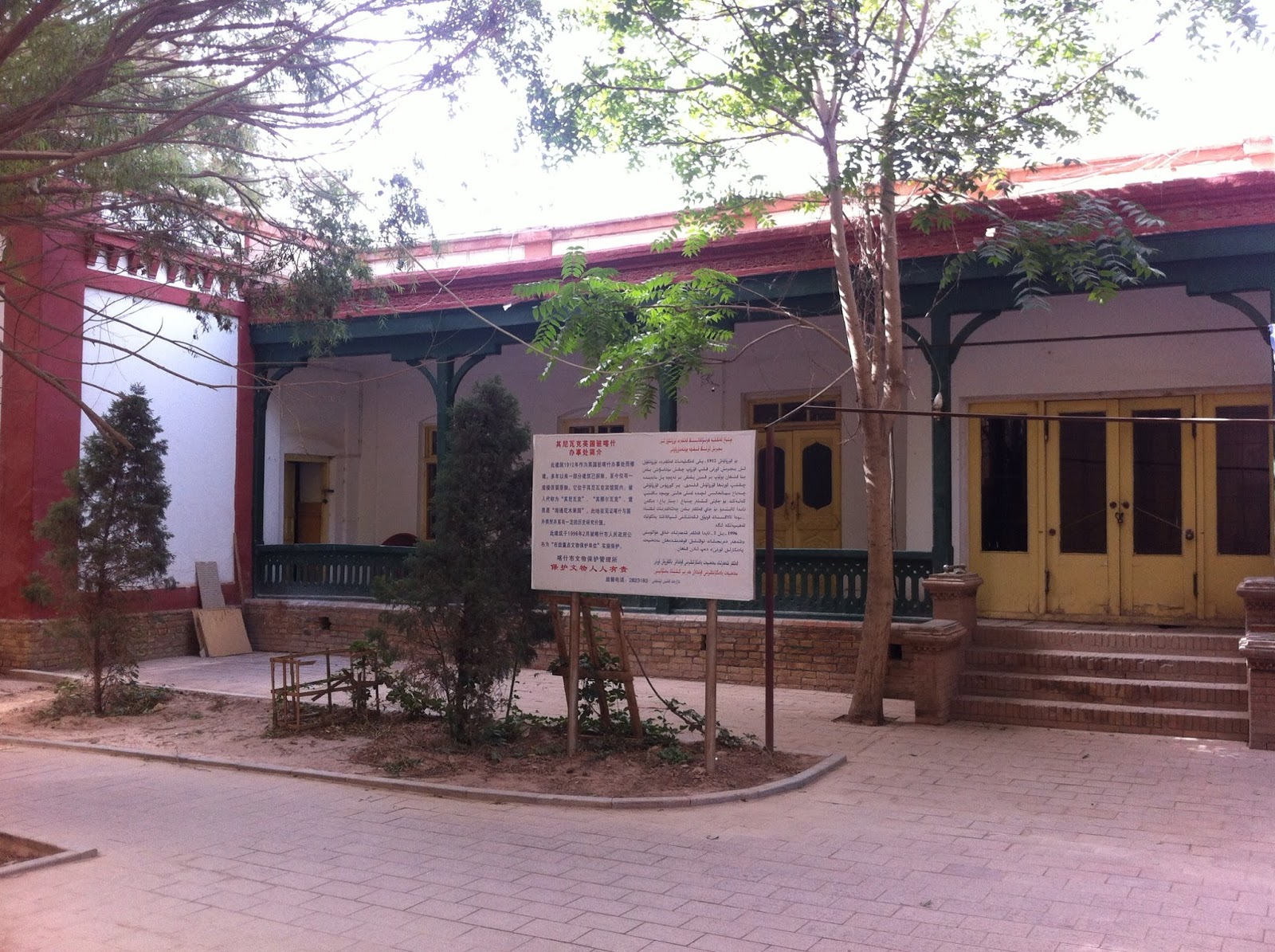
The Indian Consulate in Kashgar, now a restaurant
My article Shutting down of old Silk Road exposes China's OBOR hypocrisy appeared in Mail Today and DailyO.

Here is the link...

When Beijing today speaks of One Belt One Road, it omits to say there was once a flourishing commerce which it closed.

In the fall of 1950, PN Kaul, a young colonel, was posted in Leh. In his memoirs, he wrote about his life in Ladakh and mentioned a curious incident. He saw thousands of refugees arriving from Xinjiang (then Sinkiang or Eastern Turkestan): “(They) came with what little they could carry on their ponies. Many had lost family members in their journey over Karakoram or neighbouring passes. I had a hard time trying to see that they weren’t fleeced by those connected with their evacuation from Leh.”

Consequences

They were fleeing Kashgar, which a few months earlier had been taken over by the People’s Liberation Army (PLA). Kaul recalls, “Our consul general in Kashgar, Captain RD Sathe of the Indian Foreign Service and an ex-army officer, and his wife also arrived in Leh during the winter of 1950, after their difficult journey from Kashgar.”
This small sentence is fascinating, because the closure of the Indian consulate in Kashgar is one of the least-known historical facts, but which had tremendous consequences. Strangely, nothing can be found in the Indian archives about it.
However, I once came across a cable from KM Panikkar, the Indian ambassador in Beijing, to KPS Menon, the foreign secretary. Dated August 14, 1950, a few months before Captain Sathe reached Leh; Panikkar writes, “Re-opening of the consulate in Kashgar may take considerable time. In fact, I have serious doubts whether the Chinese government will agree to a consulate there, as even the Soviet have not so far been given permission to re-establish their consulate general. If we press for it, multiple-month negotiations will be unavoidable.”
Does it mean that in August 1950, the Indian Consulate in Sinkiang was already closed? Incidentally, in Kashgar, India and Pakistan shared the same building, the erstwhile British consulate.
To figure the background of the closure of the Indian Consulate in Kashgar, one has to fish into the Johns Hopkins University’s archives in the US.
On November 14, 1950, Isa Yusuf Alptekin, the former secretary general of the defunct Government of Turkistan, at that time a refugee in Srinagar, wrote to Owen Lattimore, an influential American scholar.
The Uyghur leader explained, “Lue Meng Cheng (Liu Mengqun), who was secretary general of the headquarters for military and political affairs, joined hands unofficially with the Chinese communists in 1949. General Tao Chih Yao (Tao Zhiyue), commander-in-chief of the nationalist army in Turkistan also joined hands with him and became party to his activities. Governor Burhan (Shahidi) also joined them.”
It means that the main nationalist leaders defected to the communists, who were received with open arms in Sinkiang; Alptekin said, “This surrender meant Russian control over our land again, the consequences of which were still fresh in our minds.”
He had no alternative but to escape to India over the most arduous pass, the Karakoram.
The Uyghur leader reached Leh on December 12, 1949. “After reaching Ladakh we came to know that 789 of our countrymen had also reached Ladakh as refugees after surrendering arms, ammunition, valuables and extra clothing to the ruthless Chinese soldiers at the border.”

Communist rule
In the following years, tens of thousands of refugees would flee the communist rule. It’s probably at this time that the new leadership in Sinkiang decided to close the Indian, Pakistani and Soviet missions. The latter would soon be reopened and by 1953, it was thriving with 300 "advisors" directing operations in the New Dominion; India’s consulate, however, would never reopen.
It was only in December 1953 that Nehru declared in Parliament, “Some major changes have taken place there (Kashgar). But when these revolutionary changes took place there, it is also perfectly true that the Chinese government, when they came to Tibet, told us that they intended to treat Sinkiang as a closed area.”
The communists’ decision, accepted by India, had tremendous implications: The entire trade with Central Asia from Srinagar and Leh, the lifeline of these regions, suddenly ended. When Beijing today speaks of the One Belt One Road, or an Economic Corridor, it omits to mention that there was a flourishing commerce which was deliberately closed by China itself.

Construction of the Aksai Chin Road

According to a CIA report of July 15, 1953, the PLA was busy with road construction (across the Indian territory in Aksai Chin area). “In late 1952, the 2 Cavalry Regiment, commanded by Han Tse-min, had its headquarters at Gartok (Western Tibet). This regiment had 800 camels. A unit of this regiment, with 150 men, was garrisoned at Rudok (near the Pangong lake). Han Tse-min said when these roads were completed, the Chinese communists would close the Tibet-Ladakh border to trade. The Chinese communists in Sinkiang were telling the people that Ladakh belongs to Sinkiang.”
It was definitively a premeditated action to close down the Indian consulate in Kashgar and then, the trade between Sinkiang and Kashmir and central Asia.
The conclusion? First, it’s ironic Beijing pretends to be upset about India’s non-participation to its OBOR project when the century-old Silk Road was closed more than 60 years ago and remains so today.
Next, like in 1950, China puts its neighbours in front of fait accomplis and later announces that it’s ready to "talk"; though in that particular case, the Indian consulate in Kashgar never came to the negotiating table. It’s perhaps high time it does.

And finally, why can’t Delhi declassify these old files, which would show the world how China acted and still acts?

Friday, March 24, 2017

We shut our eyes once, let’s not do so again

My article We shut our eyes once, let’s not do so again appeared in the Edit Page of The Pioneer.


Here is the link...

Nobody dares to question the viability of President Xi Jinping's dream of a ‘Revitalised China' through the mammoth OBOR initiative. But all the ancient trade routes between India and Central Asia remain closed

China is pressing India to jump on board the mega One Belt One Road (OBOR) initiative. The Global Times recently complained: “New Delhi has yet to sign up for the OBOR, and has claimed that there is a sovereignty issue with the China-Pakistan Economic Corridor (CPEC) passing through Pakistan-occupied Kashmir (PoK).”
The mouthpiece of Communist Party of China contemptuously added: “It should also be noted that New Delhi cannot prevent the growth of the OBOR’s influence. If India wants to exclude itself from the OBOR at a time when the initiative is receiving widespread support from the global community, India will end up simply watching the rise of China’s international reputation.” Beijing forgets to mention that for centuries, trade was flourishing between India and Central Asia, though not through a far-away corridor, but via the Himalayan passes.
Historians rarely mention an event which had the most serious strategic consequences for India. It is the 1953 closure of the Indian consulate in Kashgar (Xinjiang), which for centuries was the main trade hub between the sub-continent and Central Asia. China’s unilateral decision to close the consulate (and the trade) should have been seen as an ominous sign by the then Prime Minister Jawaharlal Nehru and his colleagues. Unfortunately, it was not.
As in several other cases, the Indian Prime Minister tried to justify the Chinese diktats, without taking any retaliatory or compensatory measures or even protesting. India’s interests were lost to the ‘revolutionary changes’ there.
In December 1953, Nehru declared in Parliament: “Some major changes have taken place there [Kashgar]… But when these changes, revolutionary changes, took place there [we had to close our consulate], it is perfectly true that the Chinese Government, when they came to Tibet, told us that they intended to treat Sinkiang [Xinjiang] as a closed area.” India had traded with Central Asia and more particularly Kashgar, Yarkand or Khotan for ages. But just because ‘revolutionary changes’ had occurred in China, New Delhi accepted the end of the trade as a fait accompli, without even a discussion. At that time, the Karakoram Pass still witnessed a large numbers of caravans carrying goods from Kashmir to Central Asia and back.
In April 1954, a few months after the closure of the consulate, India did not use the opportunity of the negotiations for the Panchsheel agreement to clarify the stoppage of the Central Asian trade, and the Chinese were allowed to walk away with making a vague statement. It was Beijing’s victory.
One of the main reasons for forcing Delhi to close its consulate in Kashgar was the road that China was building across the Aksai Chin area — on Indian territory. The communists did not want any witnesses. The Government of India never acknowledged it, but it had information about the Aksai Chin road as early as 1954-55. So did the Central Intelligence Agency (CIA), which recently released several lakhs of historical documents.
One of communist China’s main objectives was to control the trade routes to Central Asia. Two CIA Information Reports dating from 1953, throw some light on the issue. On July 15, 1953, a note deals with “Chinese Communist Troops, West Tibet” and “Road Construction, Sinkiang to Tibet and Ladakh”. It says that in late 1952, the 2 Cavalry Regiment, commanded by one Han Tse-min, had set up his headquarters at Gartok (the main trade centre in Western Tibet). It mentions that the regiment had 800 camels and 150 men garrisoned at Rutok, in the vicinity of the Pangong lake, shared with Ladakh. The same report affirms that another PLA regiment was stationed on the Tibetan side of the Tibet-Ladakh border, near Koyul in the Indus Valley in Ladakh.
The local Chinese commander, Han Tse-min, asserted that “when these roads were completed, the Chinese Communists would close the Tibet Ladakh border to trade”. They did it a few months later, by forcing India to close its Kashgar consulate. According to the same CIA source, Han had declared that “the Chinese Communists in Sinkiang [Xinjiang] were telling the people that Ladakh belongs to Sinkiang.” The Hindi-Chini bhai-bhai wave was most likely too strong; Nehru and his colleagues (BN Mullick, the IB chief in particular) had ‘more important’ isuses to deal with than a road!
Ten days later, another CIA note detailed the trade between Ladakh and Xinjiang, giving the coordinates for each place: “The Tibetan traders who visit Leh, are from the Chang Tang area, an arid plateau region in northern Tibet [plain between Xinjiang and Tibet]."
This shows how trade was still thriving in 1953. All this ended once the Aksai Chin road became fully operational. The CIA remarked: “The only Chinese in northwestern Tibet are the Chinese Communist troops, seven or eight hundred of whom are stationed along the Tibet-Ladakh border. They first appeared in northwestern Tibet in 1951, having come from the Khotan.” Though Delhi was still pretending not to know, the Aksai Chin road was opened on October 6, 1957. A Chinese newspaper, Kuangming Jihpao, reported: “The Sinkiang-Tibet has been completed. During the past few days, a number of trucks running on the highway on a trial basis have arrived in Gartok in Tibet from Yecheng in Xinjiang [near Yarkand]. The Xinjiang-Tibet Highway… is 1179 km long, of which 915km are more than 4,000 metres above sea level; 130 km of it over 5,000 metres above sea level, with the highest point being 5,500 metres.”
The reporter spoke of “thirty heavy-duty trucks, fully loaded with road builders, maintenance equipment and fuels, running on the highway on a trial basis” heading towards Tibet.
Once the Aksai Chin road officially opened, China did not need anymore the Indian trade; Tibet and Central Asia were linked.  It should have been obvious for everyone that India’s Kashgar consulate had been closed to hide the fact that the communists were building a road on Indian soil and that China did not want India to trade with Central Asia. In recent weeks, one question has often been raised by Indian think tanks: should India participate in the new trade routes initiated by China?
Nobody dares to question the viability of President Xi Jinping’s dream of a ‘Revitalised China’ through the mammoth OBOR initiative, which would connect Asia (read China) with Europe and Africa via the ancient trading centres of Central Asia and Eastern Europe. At the same time, all the ancient trade routes between India and Central Asia remain closed, particularly between India and Tibet and Xinjiang.
The time has perhaps come for India to ask China to re-open the Consulates in Kashgar and Lhasa, then India could sincerely think of participating in the Belt and Road project.

Tuesday, February 28, 2017

The closure of the Indian Consulate in Kashgar

Indian Consulate in Kashgar (now a restaurant)
Historians rarely mention an event which had the most serious strategic consequences for India; it is the 1953 closure of the Indian Consulate in Kashgar in Xinjiang, formerly Eastern Turkestan.
The Indian government was then not ready to read beyond the Chinese rhetoric and Zhou En Lai’s assurance of ‘eternal’ friendship; the closure of the trade with Xinjiang should have been seen as an ominous sign. It was not to be.
As in several other cases, Nehru tried to justify the Chinese diktats, without taking any retaliatory measures or even protesting. India’s interests were lost to the ‘revolutionary changes’ happening in China.
In December 1953, Nehru declared in the Parliament: “Some major changes have taken place there [Kashgar]. …But when these changes, revolutionary changes took place there [we had to close our Consulate], it is perfectly true that the Chinese Government, when they came to Tibet, told us that they intended to treat Sinkiang [Xinjiang] as a closed area.”
India agreed to close its Consulate without even a discussion.
India had been trading with Central Asia and more particularly Kashgar, Yarkand or Khotan for millennia. Just because ‘revolutionary changes’ had occurred in China, Delhi accepted the closure of the trade with Xinjiang as a fait accompli. At that time, the Karakoram Pass was still witnessing a large numbers of caravans, trading between Kashmir and Central Asia.
A few months later (April 1954), instead of using the opportunity of the negotiations for the Panchsheel Agreement to clarify the contentious border issue and the closure of the trade, the Chinese were allowed to walk away with making a vague statement. It was indeed a great victory for Beijing.
The main reason for wanting India to close the Kashgar Consulate was that China was building a road across the Aksai Chin area on Indian territory.
The Communists did not want any witness. The Government of India never acknowledged it, but it had information about the Aksai Chin road as early as 1954-55. So did the Central Intelligence Agency (CIA) which recently released several lakhs of historical documents.

A CIA note
A couple of Information Reports dating from 1953 bring some light on the issue. On July 15, 1953, a note deals with “Chinese Communist Troops, West Tibet” and “Road Construction, Sinkiang to Tibet and Ladakh”. It says that late 1952 the 2 Cavalry Regiment, commanded by one Han Tse-min, had set up his headquarters at Gartok (the main trade centre in Western Tibet). It mentions that the regiment had 800 camels and 150 men garrisoned at Rutok, in the vicinity of the Panggong lake, shared with Ladakh.
The same report affirms that another PLA’s regiment is stationed on the Tibetan side of the Tibet-Ladakh border, opposite Koyul in the Indus Valley in Ladakh. According to the US document, the 2 Cavalry’s commandant announced the Chinese intention to built new roads in the area.
  • A road from Rutok to Keriya, south of the Taklamakan desert in Xinjiang (the construction is ‘contemplated’ says the report); on the eastern edge of the Aksai Chin.
  • A motorable road from Khotan to Suget Karaul ending at Vanjilga (at the western end of the Aksai Chin)
  • A road from Khotan (or Hotan) to Rutok to be completed in June or July 1953.
The second road is clearly the Aksai Chin road (now National Highway 219), though the alignment may have been slightly different from the present one and it was then probably impracticable for heavy vehicles (only 4 years later, heavy trucks were able to ply on the road).
The Hindi-Chini bhai-bhai wave (or was it a tsunami?) was most likely too strong and Nehru’s collaborators (BN Mullick, the IB Chief in particular) had ‘more important’ subjects to deal with than a road!
The local Chinese commander Han Tse-min asserted that “when these roads were completed, the Chinese Communists would close the Tibet Ladakh border to trade.” It is what they did soon after the signature of the infamous Panchsheel Agreement. Worse, the CIA document says that Han declared that “the Chinese Communists in Sinkiang [Xinjiang] were telling the people that Ladakh belongs to Sinkiang.”
Ten days later, another CIA note detailed the trade between Ladakh and Xinjiang, giving the coordinates for each place: “The Tibetan traders who visit Leh, are from the Chang Tang area, an arid plateau region in northern Tibet [plain between Xinjiang and Tibet] …These traders follow the Chushul [in Ladakh] route from Tibet to Leh. Border check posts on this route are at Chushul and Koyul.”
This shows how flourishing the trade was in 1953 …for a few months more. All this ended once the Aksai Chin road became fully operational.
The CIA remarks: “The only Chinese in northwestern Tibet are the Chinese Communist troops, seven or eight hundred of whom are stationed along the Tibet-Ladakh border. They first appeared in northwestern Tibet in 1951, having come from the Khotan.”
The CIA papers tend to prove that the Indian Government knew about the Aksai Chin road much earlier that thought, but it only became official on October 6, 1957, when a Chinese newspaper, Kuangming Jihpao reported: “The Sinkiang-Tibet – the highest highway in the world – has been completed. During the past few days, a number of trucks running on the highway on a trial basis have arrived in Gartok in Tibet from Yecheng in Xinjiang [near Yarkand]. The Xinjiang-Tibet Highway… is 1179 km long, of which 915 km are more than 4,000 meters above sea level; 130 km of it over 5,000 meters above sea level, with the highest point being 5,500 meters.” The reporter spoke of: “thirty heavy-duty trucks, fully loaded with road builders, maintenance equipment and fuels, running on the highway on a trial basis” heading towards Tibet. The Aksai Chin road was officially opened.
It should have been obvious  for everyone, even for the blindfolded Intelligence Bureau Director, B.N. Mullick, that India’s Kashgar Consulate had been forced to close to hide the fact that the Communists were building a road on Indian soil; still, the government took nearly two more years to make the news public in India.
In recent weeks, one question has often been raised by Indian think tanks: should India participate in the new trade routes initiated by China?
Apart from the fact that nobody dares to question the viability of such a project, after all it is part of President Xi Jinping’s Dream of a ‘Revitalized China’ for which he has envisioned a mega “One Belt, One Road” (OBOR) project to connect Asia (read China) with Europe and Africa via the ancient trading centres of Central Asia and Eastern Europe, a modern Silk Road.
However, at the same time, all the ancient trade routes between India and Central Asia remain closed.
The time has perhaps come for India to ask China to reopen the Consulates in Kashgar and Lhasa, then India could sincerely participate in the Belt and Road project.